

ADVERTISEMENT

Stronger yen may lift Philippine peso, says MUFG

Published Aug 4, 2026 11:19 am

At A Glance

  • Japanese financial giant MUFG Bank Ltd. said the Philippine peso is among the Asian currencies, alongside the Thai baht, that stand to benefit from the Japanese yen's appreciation against the United States (US) dollar.
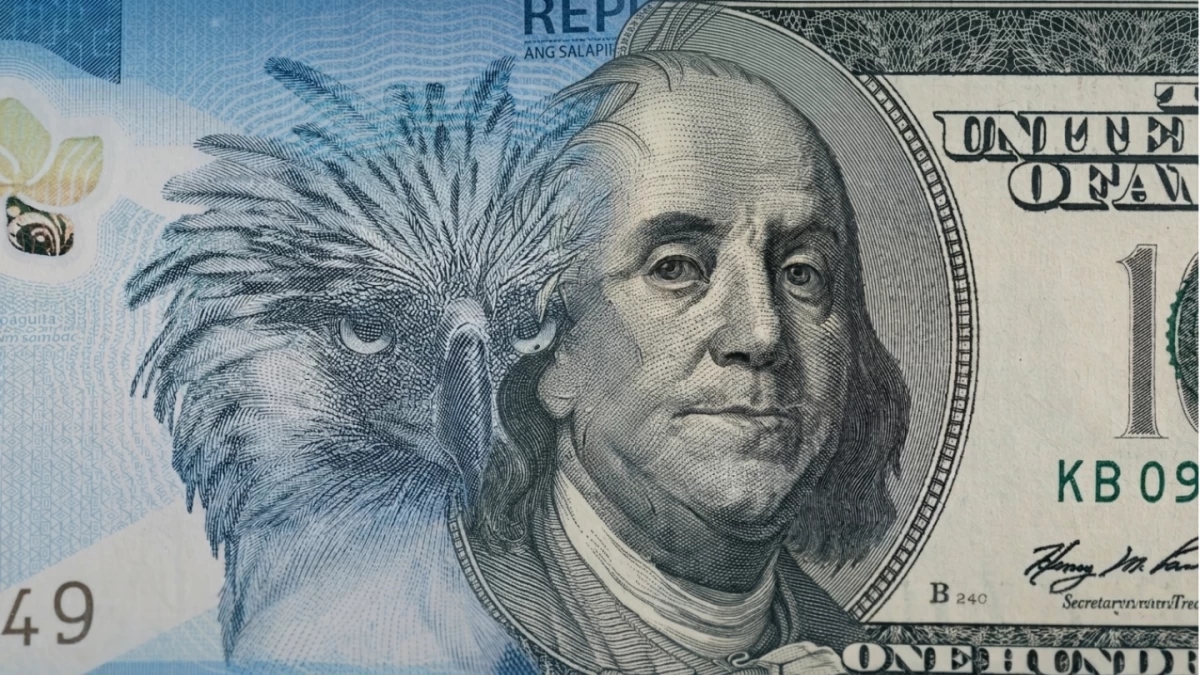
Japanese financial giant MUFG Bank Ltd. said the Philippine peso is among the Asian currencies that stand to benefit from the Japanese yen’s appreciation against the United States (US) dollar.

MUFG Global Markets Research senior currency analyst Michael Wan identified the peso, Thai baht, and Singapore dollar as among the regional currencies that react to the yen’s movements, particularly as market attention has shifted toward the Japanese currency and joint foreign exchange (forex) interventions.

“Looking across the Asian forex complex, our analysis shows that the South Korean won, and to a smaller extent the baht, Singapore dollar and peso, in that order, are more sensitive to yen moves,” Wan wrote in an Aug. 4 commentary.

“As such, if yen strengthening moves continue, we would expect the won, baht, Singapore dollar, and to a much smaller extent the peso to benefit in the Asia forex context,” Wan added.

He noted that in recent weeks, the peso, alongside the baht, Singapore dollar, and won, has maintained a closer relationship with the US dollar-yen exchange rate.

Japan and the US are intervening together to prevent Japan from having to sell its holdings of US Treasury bonds to support the yen. This joint cooperation helps maintain market stability by avoiding the need for large asset sales.

Meanwhile, Wan said Japan is “unlikely” to sell its US Treasury holdings, given the country’s ample cash reserves of $160 billion, reducing the need for such sales.

Additionally, the US has also hinted at expanding the foreign and international monetary authorities (FIMA) facility to provide easier access to short-term dollar liquidity.

MUFG’s assessment came as the local currency found support against the greenback on Monday, Aug. 3, closing at ₱60.93 to the US dollar from ₱61.24 last Friday, July 31.

Meanwhile, MUFG has revised its near-term exchange rate assumption, expecting the peso to weaken. However, the Japanese lender still expects the local currency to recover gradually and stabilize below the ₱61:$1 level.

“Our forecast change largely reflects global factors, and in particular the spikes in oil prices and the resumption in the US-Iran conflict, and as a consequence a slower and perhaps more volatile path towards lower oil prices than previously assumed,” MUFG said.

According to the Japanese lender, the US dollar-peso exchange rate is largely influenced by the trade deficit and interbank interest rate differentials, adding that for every 10-percent increase in oil prices, the peso depreciates by nearly one percent.

Oil price fluctuations remain among the Philippines’ key external vulnerabilities, given the country’s status as a net oil importer. When the US-Iran war re-escalates, oil supply is disrupted, pushing prices higher.

Another threat to the peso is the likelihood of a “super” El Niño, with MUFG citing an 80-percent chance of the weather phenomenon occurring.

To support the peso, MUFG has penciled in two more 25-basis-point (bp) increases in the Bangko Sentral ng Pilipinas’ (BSP) key borrowing costs by year-end, allowing the central bank to maintain its hawkish stance.

If realized, the key policy rate will reach 5.25 percent from the current 4.75 percent. The Monetary Board (MB) is scheduled to hold its fourth policy meeting of the year on Aug. 27, followed by meetings on Oct. 22 and Dec. 17.

This policy tightening, coupled with MUFG’s assumption of “some tentative improvement in government spending,” is expected to support the peso against the greenback.

Related Tags

MUFG Bank Ltd. Peso US Japan Michael Wan Japanese yen
ADVERTISEMENT
.most-popular .layout-ratio{ padding-bottom: 79.13%; } @media (min-width: 768px) and (max-width: 1024px) { .widget-title { font-size: 15px !important; } }

{{ articles_filter_1561_widget.title }}

.most-popular .layout-ratio{ padding-bottom: 79.13%; } @media (min-width: 768px) and (max-width: 1024px) { .widget-title { font-size: 15px !important; } }

{{ static_articles_1562_widget.title }}

.most-popular .layout-ratio{ padding-bottom: 79.13%; } @media (min-width: 768px) and (max-width: 1024px) { .widget-title { font-size: 15px !important; } }

{{ articles_filter_1563_widget.title }}

{{ articles_filter_1564_widget.title }}

.mb-article-details { position: relative; } .mb-article-details .article-body-preview, .mb-article-details .article-body-summary{ font-size: 17px; line-height: 30px; font-family: "Libre Caslon Text", serif; color: #000; } .mb-article-details .article-body-preview iframe , .mb-article-details .article-body-summary iframe{ width: 100%; margin: auto; } .read-more-background { background: linear-gradient(180deg, color(display-p3 1.000 1.000 1.000 / 0) 13.75%, color(display-p3 1.000 1.000 1.000 / 0.8) 30.79%, color(display-p3 1.000 1.000 1.000) 72.5%); position: absolute; height: 200px; width: 100%; bottom: 0; display: flex; justify-content: center; align-items: center; padding: 0; } .read-more-background a{ color: #000; } .read-more-btn { padding: 17px 45px; font-family: Inter; font-weight: 700; font-size: 18px; line-height: 16px; text-align: center; vertical-align: middle; border: 1px solid black; background-color: white; } .hidden { display: none; }
function initializeAllSwipers() { // Get all hidden inputs with cms_article_id document.querySelectorAll('[id^="cms_article_id_"]').forEach(function (input) { const cmsArticleId = input.value; const articleSelector = '#article-' + cmsArticleId + ' .body_images'; const swiperElement = document.querySelector(articleSelector); if (swiperElement && !swiperElement.classList.contains('swiper-initialized')) { new Swiper(articleSelector, { loop: true, pagination: false, navigation: { nextEl: '#article-' + cmsArticleId + ' .swiper-button-next', prevEl: '#article-' + cmsArticleId + ' .swiper-button-prev', }, }); } }); } setTimeout(initializeAllSwipers, 3000); const intersectionObserver = new IntersectionObserver( (entries) => { entries.forEach((entry) => { if (entry.isIntersecting) { const newUrl = entry.target.getAttribute("data-url"); if (newUrl) { history.pushState(null, null, newUrl); let article = entry.target; // Extract metadata const author = article.querySelector('.author-section').textContent.replace('By', '').trim(); const section = article.querySelector('.section-info ').textContent.replace(' ', ' '); const title = article.querySelector('.article-title h1').textContent; // Parse URL for Chartbeat path format const parsedUrl = new URL(newUrl, window.location.origin); const cleanUrl = parsedUrl.host + parsedUrl.pathname; // Update Chartbeat configuration if (typeof window._sf_async_config !== 'undefined') { window._sf_async_config.path = cleanUrl; window._sf_async_config.sections = section; window._sf_async_config.authors = author; } // Track virtual page view with Chartbeat if (typeof pSUPERFLY !== 'undefined' && typeof pSUPERFLY.virtualPage === 'function') { try { pSUPERFLY.virtualPage({ path: cleanUrl, title: title, sections: section, authors: author }); } catch (error) { console.error('ping error', error); } } // Optional: Update document title if (title && title !== document.title) { document.title = title; } } } }); }, { threshold: 0.1 } ); function showArticleBody(button) { const article = button.closest("article"); const summary = article.querySelector(".article-body-summary"); const body = article.querySelector(".article-body-preview"); const readMoreSection = article.querySelector(".read-more-background"); // Hide summary and read-more section summary.style.display = "none"; readMoreSection.style.display = "none"; // Show the full article body body.classList.remove("hidden"); } document.addEventListener("DOMContentLoaded", () => { let loadCount = 0; // Track how many times articles are loaded const offset = [1, 2, 3, 4, 5, 6, 7, 8, 9, 10]; // Offset values const currentUrl = window.location.pathname.substring(1); let isLoading = false; // Prevent multiple calls if (!currentUrl) { console.log("Current URL is invalid."); return; } const sentinel = document.getElementById("load-more-sentinel"); if (!sentinel) { console.log("Sentinel element not found."); return; } function isSentinelVisible() { const rect = sentinel.getBoundingClientRect(); return ( rect.top < window.innerHeight && rect.bottom >= 0 ); } function onScroll() { if (isLoading) return; if (isSentinelVisible()) { if (loadCount >= offset.length) { console.log("Maximum load attempts reached."); window.removeEventListener("scroll", onScroll); return; } isLoading = true; const currentOffset = offset[loadCount]; window.loadMoreItems().then(() => { let article = document.querySelector('#widget_1690 > div:nth-last-of-type(2) article'); intersectionObserver.observe(article) loadCount++; }).catch(error => { console.error("Error loading more items:", error); }).finally(() => { isLoading = false; }); } } window.addEventListener("scroll", onScroll); });

Sign up by email to receive news.