







Marcos wants tax reform passed within the year
Published Aug 4, 2026 04:28 pm


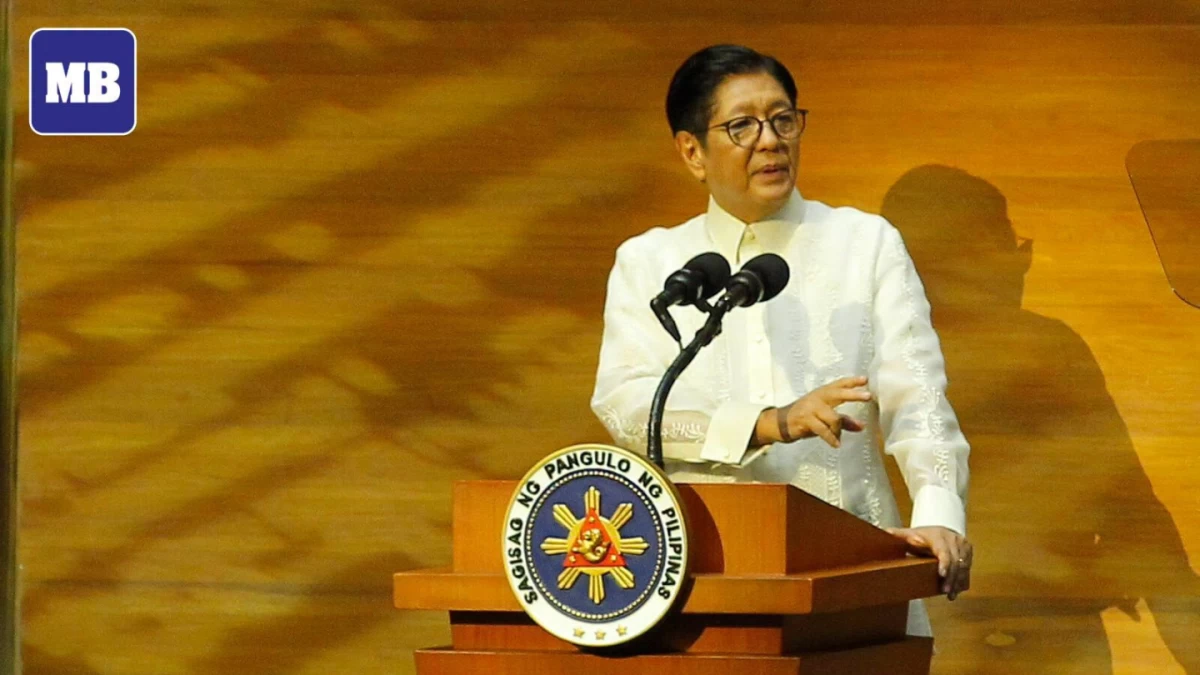
President Ferdinand R. Marcos Jr. outlines his administration’s economic accomplishments, key policy priorities, and upcoming legislative agenda during his fifth State of the Nation Address at the Batasang Pambansa in Quezon City on Monday, July 27, 2026. (Photo by Mark Balmores | MB)
President Marcos wants the proposed tax reform package passed within the year, Malacañang said.
In a Palace briefing, Palace Press Officer and Communications Undersecretary Claire Castro said the President wants the measure enacted sooner, stressing that the measures are intended to provide tax relief while ensuring ordinary Filipinos will not bear additional tax burdens.
“Ang gusto po ng Pangulo, sana ngayong taon (What the President wants is for it to happen this year)," Castro said on Tuesday, Aug. 4, when asked if the administration is targeting the passage of the measure next year.
According to Castro, the Department of Finance (DOF) is still refining the proposed Progress Bill and other tax reform measures.
“Sa ngayon po ay inaaral pa, working on it ang DOF. At alam naman po ng Pangulo na kasalukuyan itong binubusisi ng DOF, kasi nais po ng Pangulo na ito ay maipasa sa pinakamabilis na panahon (At present, DOF is still studying and working on it. The President is aware that the DOF is currently reviewing the matter because he wants it to be passed at the soonest possible time)," the Palace official said.
Castro also allayed concerns that the proposed tax reform package would impose additional burdens on ordinary taxpayers, saying the planned measures are being crafted to affect luxury consumption primarily.
"Iyong iba po kasing tax na nababanggit ay hindi po ang mga pangkaraniwang mamamayan ang maapektuhan. Mas maapektuhan nito iyong bumibili ng mga mamahaling sasakyan. So ito ay inaaral, so hindi naman po iyong mga middle income ang usually maaapektuhan nung mga binabalak po na tax reform (Some of the taxes being mentioned will not affect ordinary citizens. These will have a greater impact on those who purchase expensive vehicles. So this is still being studied. The middle-income sector will generally not be the ones affected by the tax reforms being considered),” she said.
When asked about proposed taxes on sugary drinks, single-use plastics, and vape products, Castro said the government's objective extends beyond revenue generation to promoting public health.
“Ito naman po ay patungkol sa kalusugan. Mas maganda nga pong maiwasan kung tayo po ay laging magko-consume ng napakatamis na mga kakanin o pagkain o inumin (This is also related to health. It would be better to prevent health issues by avoiding the frequent consumption of very sweet delicacies, food, or beverages),” Castro said.
Responding to concerns that lower-middle- and middle-income workers shoulder a significant tax burden without receiving direct subsidies, Castro said the administration has already rolled out programs benefiting the sector even before the proposed tax reforms are enacted.
The Palace spokesperson cited the zero-balance billing program implemented in DOH hospitals and the fare discounts offered on the LRT and MRT.
She added that the President's agenda, outlined during his recent State of the Nation Address, includes additional measures aimed at easing the financial burden of working Filipinos, including the plan to lower electricity cost, tax relief and incentives, and expanded healthcare benefits.