ADVERTISEMENT

PIDS urges farm policy shift as food insecurity, malnutrition persist

Published Aug 3, 2026 12:00 am  |  Updated Aug 1, 2026 03:22 pm
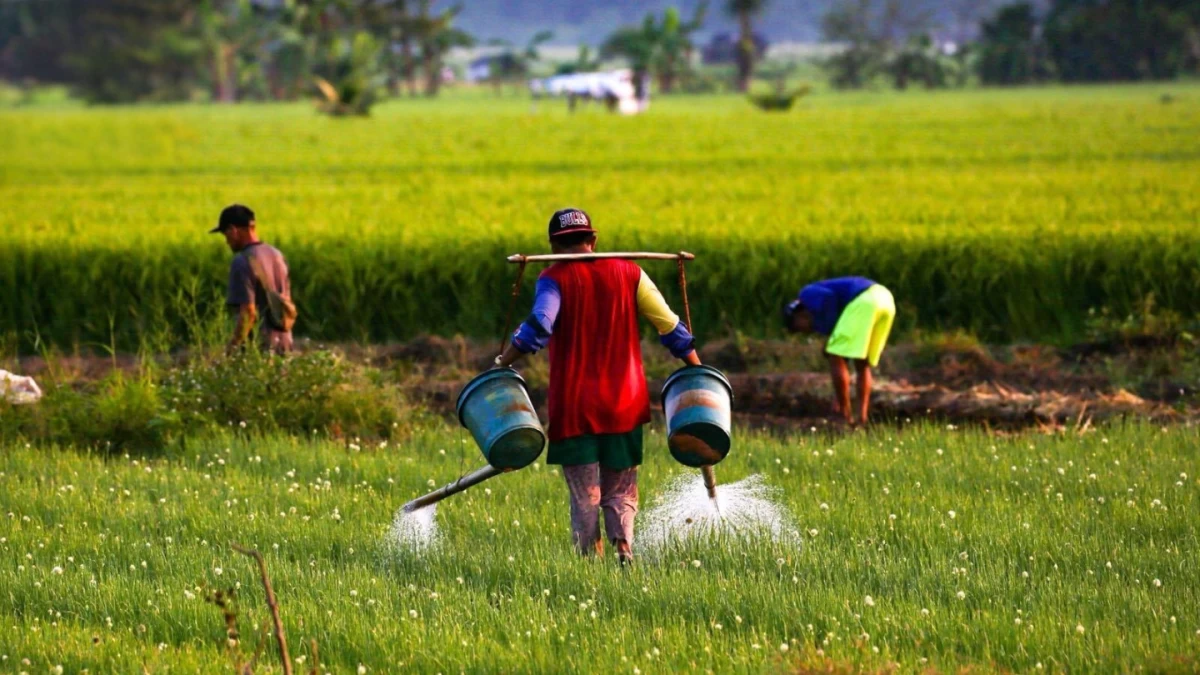
Farmers cultivate the land and water spring onions in Brgy. Sulib, Pangil, Laguna on April 12, 2026. This preparation ensures the plots are ready for the next planting cycle. (Photo by John Louie Abrina I Manila Bulletin)

Despite increased government spending on agriculture and social protection, the Philippines continues to grapple with persistent malnutrition, high food prices, and weak agricultural productivity, underscoring the need for a major overhaul of food security policies, according to state-run policy think tank Philippine Institute for Development Studies (PIDS).

The PIDS discussion paper, “Food Security Sectoral Analysis: Strengthening Access to Safe and Nutritious Food for Every Filipino,” published last July 30 and authored by PIDS senior research fellow Roehlano M. Briones and supervising research specialist Agnes Kristine A. Quilinguing, said food security programs remain heavily concentrated on agricultural development, yet implementation and spending inefficiencies continue to limit their effectiveness.

Although food security interventions account for 4.4 percent of the ₱6.793-trillion 2026 national budget, agricultural programs alone receive 3.4 percent, compared with just one percent for social protection initiatives.

The study found that the Department of Agriculture’s (DA) spending continues to be dominated by rice programs. In 2026, 88.3 percent of the national rice program budget was allocated to production support services, primarily for in-kind subsidies such as seeds and fertilizers.

However, the authors said weak budget execution has reduced the effectiveness of many government programs.

“The failure to utilize funds [has] been traced to poor project selection, inadequate prioritization, improper choice of project location, and inability of LGUs [local government units] to provide its cost share,” the authors wrote.

The study noted that the Department of Social Welfare and Development (DSWD) and the Department of Education (DepEd) consistently posted the highest budget utilization rates, with disbursement ratios exceeding 80 percent, reflecting their capacity to implement feeding and other social protection programs. By contrast, the DA, the Department of Agrarian Reform (DAR), and National Nutrition Council (NNC) continued to post lower utilization rates due to procurement delays, administrative bottlenecks, and other implementation issues.

Beyond spending, the study found that agricultural productivity has barely improved.

Total factor productivity (TFP) in Philippine agriculture in 2023 was only four percent higher than its 2008 level, far behind Indonesia’s 41-percent increase and Vietnam’s 25-percent gain over the same period.

The country has also become increasingly dependent on imported rice, with the rice import dependency ratio rising from 11.1 percent in 2015 to 23 percent in 2022.

Meanwhile, the study found that 44 percent of Filipinos could not afford a healthy diet in 2024—the highest proportion among Southeast Asian countries.

Chronic malnutrition likewise remains a major concern, with the prevalence of stunting among children under five increasing to 25.3 percent in 2025 from 23.6 percent in 2023.

While significant progress has been made in improving food availability and accessibility, persistent gaps in food utilization, stability, and equity continue to undermine the country’s overall food security, the study said.

To address these challenges, the study recommended shifting public spending away from subsidies toward productivity-enhancing investments such as research and development (R&D), irrigation, farm-to-market infrastructure, and other public goods. It also urged reforms in trade policy, stronger support systems for LGUs, improved monitoring of public spending, and a temporary moratorium on further increases in the DA budget until implementation capacity improves.

The study also noted that in 2022, the Philippines ranked 67th out of 113 countries in the Global Food Security Index, with a score of 59.3, reflecting below-average food security performance. - Danielle T. Bayani

Related Tags

Philippine Institute for Development Studies (PIDS) Department of Agriculture (DA) malnutrition food insecurity rice imports
ADVERTISEMENT
.most-popular .layout-ratio{ padding-bottom: 79.13%; } @media (min-width: 768px) and (max-width: 1024px) { .widget-title { font-size: 15px !important; } }

{{ articles_filter_1561_widget.title }}

.most-popular .layout-ratio{ padding-bottom: 79.13%; } @media (min-width: 768px) and (max-width: 1024px) { .widget-title { font-size: 15px !important; } }

{{ static_articles_1562_widget.title }}

.most-popular .layout-ratio{ padding-bottom: 79.13%; } @media (min-width: 768px) and (max-width: 1024px) { .widget-title { font-size: 15px !important; } }

{{ articles_filter_1563_widget.title }}

{{ articles_filter_1564_widget.title }}

.mb-article-details { position: relative; } .mb-article-details .article-body-preview, .mb-article-details .article-body-summary{ font-size: 17px; line-height: 30px; font-family: "Libre Caslon Text", serif; color: #000; } .mb-article-details .article-body-preview iframe , .mb-article-details .article-body-summary iframe{ width: 100%; margin: auto; } .read-more-background { background: linear-gradient(180deg, color(display-p3 1.000 1.000 1.000 / 0) 13.75%, color(display-p3 1.000 1.000 1.000 / 0.8) 30.79%, color(display-p3 1.000 1.000 1.000) 72.5%); position: absolute; height: 200px; width: 100%; bottom: 0; display: flex; justify-content: center; align-items: center; padding: 0; } .read-more-background a{ color: #000; } .read-more-btn { padding: 17px 45px; font-family: Inter; font-weight: 700; font-size: 18px; line-height: 16px; text-align: center; vertical-align: middle; border: 1px solid black; background-color: white; } .hidden { display: none; }
function initializeAllSwipers() { // Get all hidden inputs with cms_article_id document.querySelectorAll('[id^="cms_article_id_"]').forEach(function (input) { const cmsArticleId = input.value; const articleSelector = '#article-' + cmsArticleId + ' .body_images'; const swiperElement = document.querySelector(articleSelector); if (swiperElement && !swiperElement.classList.contains('swiper-initialized')) { new Swiper(articleSelector, { loop: true, pagination: false, navigation: { nextEl: '#article-' + cmsArticleId + ' .swiper-button-next', prevEl: '#article-' + cmsArticleId + ' .swiper-button-prev', }, }); } }); } setTimeout(initializeAllSwipers, 3000); const intersectionObserver = new IntersectionObserver( (entries) => { entries.forEach((entry) => { if (entry.isIntersecting) { const newUrl = entry.target.getAttribute("data-url"); if (newUrl) { history.pushState(null, null, newUrl); let article = entry.target; // Extract metadata const author = article.querySelector('.author-section').textContent.replace('By', '').trim(); const section = article.querySelector('.section-info ').textContent.replace(' ', ' '); const title = article.querySelector('.article-title h1').textContent; // Parse URL for Chartbeat path format const parsedUrl = new URL(newUrl, window.location.origin); const cleanUrl = parsedUrl.host + parsedUrl.pathname; // Update Chartbeat configuration if (typeof window._sf_async_config !== 'undefined') { window._sf_async_config.path = cleanUrl; window._sf_async_config.sections = section; window._sf_async_config.authors = author; } // Track virtual page view with Chartbeat if (typeof pSUPERFLY !== 'undefined' && typeof pSUPERFLY.virtualPage === 'function') { try { pSUPERFLY.virtualPage({ path: cleanUrl, title: title, sections: section, authors: author }); } catch (error) { console.error('ping error', error); } } // Optional: Update document title if (title && title !== document.title) { document.title = title; } } } }); }, { threshold: 0.1 } ); function showArticleBody(button) { const article = button.closest("article"); const summary = article.querySelector(".article-body-summary"); const body = article.querySelector(".article-body-preview"); const readMoreSection = article.querySelector(".read-more-background"); // Hide summary and read-more section summary.style.display = "none"; readMoreSection.style.display = "none"; // Show the full article body body.classList.remove("hidden"); } document.addEventListener("DOMContentLoaded", () => { let loadCount = 0; // Track how many times articles are loaded const offset = [1, 2, 3, 4, 5, 6, 7, 8, 9, 10]; // Offset values const currentUrl = window.location.pathname.substring(1); let isLoading = false; // Prevent multiple calls if (!currentUrl) { console.log("Current URL is invalid."); return; } const sentinel = document.getElementById("load-more-sentinel"); if (!sentinel) { console.log("Sentinel element not found."); return; } function isSentinelVisible() { const rect = sentinel.getBoundingClientRect(); return ( rect.top < window.innerHeight && rect.bottom >= 0 ); } function onScroll() { if (isLoading) return; if (isSentinelVisible()) { if (loadCount >= offset.length) { console.log("Maximum load attempts reached."); window.removeEventListener("scroll", onScroll); return; } isLoading = true; const currentOffset = offset[loadCount]; window.loadMoreItems().then(() => { let article = document.querySelector('#widget_1690 > div:nth-last-of-type(2) article'); intersectionObserver.observe(article) loadCount++; }).catch(error => { console.error("Error loading more items:", error); }).finally(() => { isLoading = false; }); } } window.addEventListener("scroll", onScroll); });

Sign up by email to receive news.