






 Philippines
National
Palace unfazed by China's objections, new rules over Bajo de Masinloc
Philippines
National
Palace unfazed by China's objections, new rules over Bajo de Masinloc
Palace unfazed by China's objections, new rules over Bajo de Masinloc


At A Glance
- Malacañang appeared unfazed by China's objections to the Philippines' baselines around Bajo de Masinloc and Beijing's new implementing rules for its declared nature reserve at the disputed shoal.
- The Palace said Manila would continue adhering to Philippine law, UNCLOS, and the 2016 South China Sea Arbitral Award, stressing that the country is only defending what legally belongs to it.
- Malacañang also backed Defense Secretary Gilberto Teodoro Jr. amid his row with Davao City Rep. Paolo Duterte over officials allegedly echoing China's position on the West Philippine Sea.
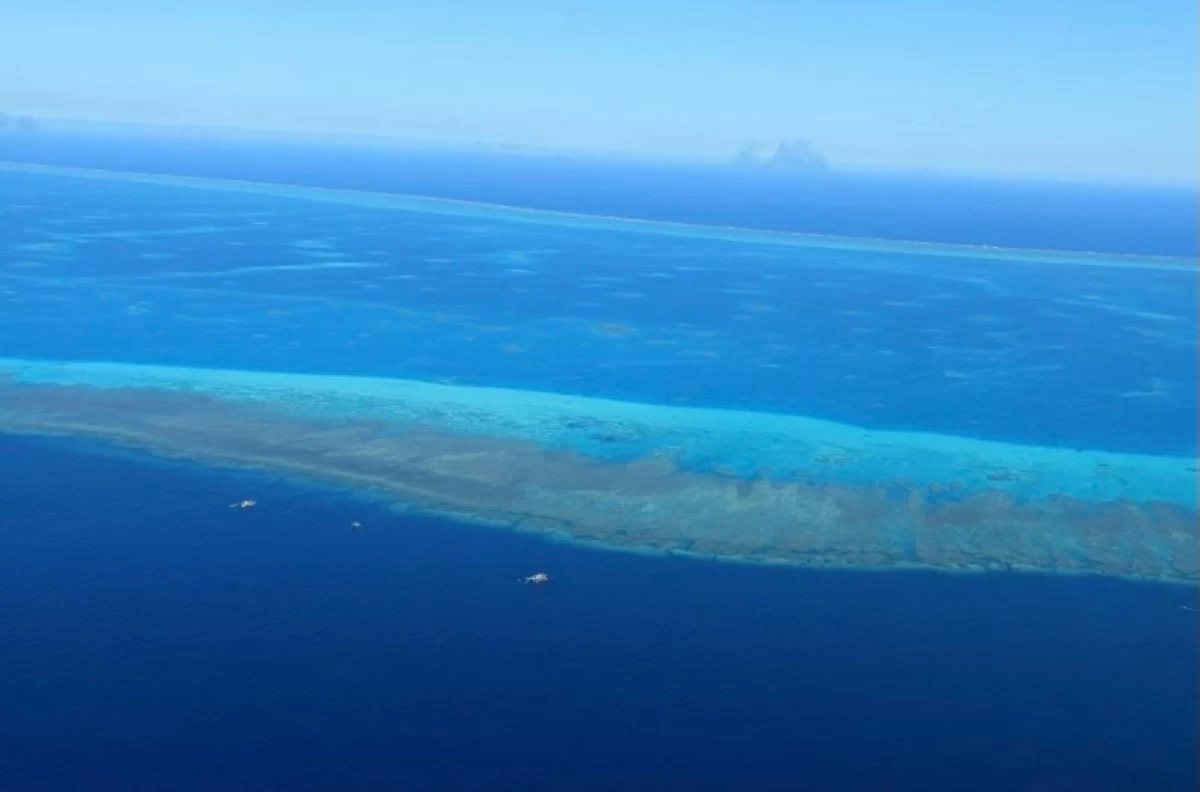
Malacañang appeared unfazed by China's objections and new rules covering Bajo de Masinloc, saying the Philippines would continue asserting its rights based on its own laws, the United Nations Convention on the Law of the Sea (UNCLOS), and the landmark 2016 South China Sea Arbitral Award.
Presidential Communications Office (PCO) Undersecretary Claire Castro said this following China's condemnation of the Philippines' baselines around Bajo de Masinloc after Manila formally deposited with the United Nations its official nautical chart showing the baselines and surrounding maritime zones of the shoal.
In a press briefing on Monday, Aug. 3, Castro maintained that China's rejection of Manila's legal position would not change the Marcos administration's approach of defending the country's maritime rights through peaceful, diplomatic, and legal means.
"Tayo lamang, ang Pangulo, at ang administrasyon ay tumutupad kung ano ang sinasabi ng ating batas, kung ano ang sinasabi ng UNCLOS at kung ano ang nasabi na sa arbitral ruling (The President and the administration are simply complying with what our laws provide, what UNCLOS provides, and what has been stated in the arbitral ruling)," she said.
Castro said the Philippines will not claim a territory that it doesn’t own.
"Hindi tayo lalagpas diyan, hindi tayo mang-aangkin ng teritoryo, ng anumang karapatan ng iba (We will not go beyond that, and we will not claim the territory or rights of others),” she said.
“Ang ipinaglalaban lang ng ating pamahalaan ay kung ano ang nasa atin, kung ano ang sinasabi ng batas, kung ano ang sinasabi ng arbitral ruling at ng UNCLOS (Our government is only fighting for what belongs to us, what the law provides, and what the arbitral ruling and UNCLOS say)," she added.
China’s nature reserve rules
Asked about China's recently released implementing rules for its declared nature reserve at Bajo de Masinloc, the Palace Press Officer stressed that Beijing's domestic rules would not override the Philippines' own laws and maritime entitlements.
"Batas nila iyan pero mayroon tayong sariling batas—batas natin na puwede ding ipatupad at ang batas natin ay naaayon sa UNCLOS, sa sarili nating batas, sa sarili nating pagkilala, pati na rin ang arbitral ruling (Those are their laws, but we have our own laws—laws that we can also enforce, and our laws are consistent with UNCLOS, our own laws, our own recognition, as well as the arbitral ruling)," Castro said.
"So, wala tayong nilalabag na anumang batas at wala tayong inaangking anumang teritoryo (So, we are not violating any law, and we are not claiming any territory that does not belong to us)," she added.
The rules reportedly provide for routine patrols within China's declared nature reserve at the shoal, impose penalties for violations, and require prior approval before certain activities may be conducted within the area.
China announced the establishment of what it calls the Huangyan Dao National Nature Reserve at Bajo de Masinloc as Beijing continues to assert sovereignty and administrative control over the shoal despite Manila's rejection of its claims.
China rejects PH baselines
Beijing earlier rejected the Philippines' delimitation of territorial sea baselines around Bajo de Masinloc, describing the move as a "grave infringement" of Chinese sovereignty and a violation of international law, including UNCLOS.
China's Ministry of Foreign Affairs declared the Philippine baselines "illegal, null, and void," and warned Manila to refrain from what it described as infringement and provocation around the shoal or face a "resolute" response from Beijing.
The Chinese government maintains that Bajo de Masinloc, which it calls Huangyan Dao, is its "inherent territory" and has likewise rejected the Philippines' Maritime Zones Act and the 2016 Arbitral Award.
The 2016 tribunal, however, ruled that there was no legal basis for China's sweeping claims to historic rights within its so-called "nine-dash line" under UNCLOS, while finding that Bajo de Masinloc is a high-tide feature capable of generating a 12-nautical-mile territorial sea but not an exclusive economic zone or continental shelf of its own.
The tribunal also found that Filipino and Chinese fishermen had traditional fishing rights at the shoal and that China had unlawfully prevented Filipino fishermen from engaging in traditional fishing there beginning in May 2012.
PH deposits chart with UN
The latest exchange came after the Philippines formally deposited with the UN Secretariat on July 29 its official nautical chart of Bajo de Masinloc and its surrounding maritime zones, placing Manila's baseline information on the public international record.
The Department of Foreign Affairs (DFA) said National Mapping and Resource Information Authority Chart No. 1567, entitled "Bajo de Masinloc and Approach," depicts the normal baselines of the shoal, together with the outer limits of its territorial sea and contiguous zone, in accordance with UNCLOS and Philippine law.
According to the DFA, the Philippines maintains under the Maritime Zones Act, UNCLOS, and the 2016 Arbitral Award that Bajo de Masinloc generates a territorial sea extending up to 12 nautical miles from its normal baselines and a contiguous zone extending from 12 to 24 nautical miles.
The deposit followed another Philippine move at the United Nations in which Manila formally presented before the UN Commission on the Limits of the Continental Shelf its partial submission concerning the country's entitlement to an extended continental shelf in the West Philippine Sea covering the West Palawan Region.
Palace backs Teodoro
Meanwhile, Malacañang backed Department of National Defense (DND) Secretary Gilberto Teodoro Jr.’s remarks that elected officials siding with China's position on the West Philippine Sea should consider resigning because they had sworn to uphold the Constitution and Philippine laws.
Castro said the Marcos administration saw nothing wrong with Teodoro's remarks, stressing that defending Philippine interests should be separate from maintaining economic and diplomatic relations with China.
"Totoo na mayroon tayong magandang relasyon sa China patungkol sa trade, investment, negosyo—hindi iyan usapin (We indeed have good relations with China when it comes to trade, investment, and business—that is not the issue),” she said.
“So, hindi puwedeng pagsamahin ang pagnenegosyo, magandang relasyon sa China sa pagpoprotekta sa interes ng Pilipinas (So, business and good relations with China cannot be conflated with protecting Philippine interests)," she added.
Castro also described as "very alarming" Davao City Rep. Paolo "Pulong" Duterte's criticism that Teodoro appeared to be imposing a loyalty test, saying Filipinos should put the country's interests first.
She said it would be better if all officials who are siding with China came out in the open.
"Mas maganda po siguro talaga kung kayo po ay nagpapakita ng katulad na pananaw ni Congressman Pulong Duterte, mas magandang lumantad na sila para makita natin kung sino ba talaga ang totoong nagmamahal sa bansang Pilipinas (Perhaps it would be better if those who share views similar to Congressman Pulong Duterte would come out in the open so we can see who truly loves the Philippines)," Castro said.