






 Philippines
National
Palace open to stakeholder consultations on proposed system loss charge removal
Philippines
National
Palace open to stakeholder consultations on proposed system loss charge removal
Palace open to stakeholder consultations on proposed system loss charge removal


At A Glance
- Malacañang said it is open to hearing all stakeholders as the government studies the proposed removal of the systems loss charge from consumers' electricity bills.
- The Department of Energy (DOE) is reviewing existing regulations and consulting stakeholders to craft policies aimed at lowering electricity rates.
- The Palace said reforms should protect consumers without placing an undue burden on investors, utility companies, and electric cooperatives.
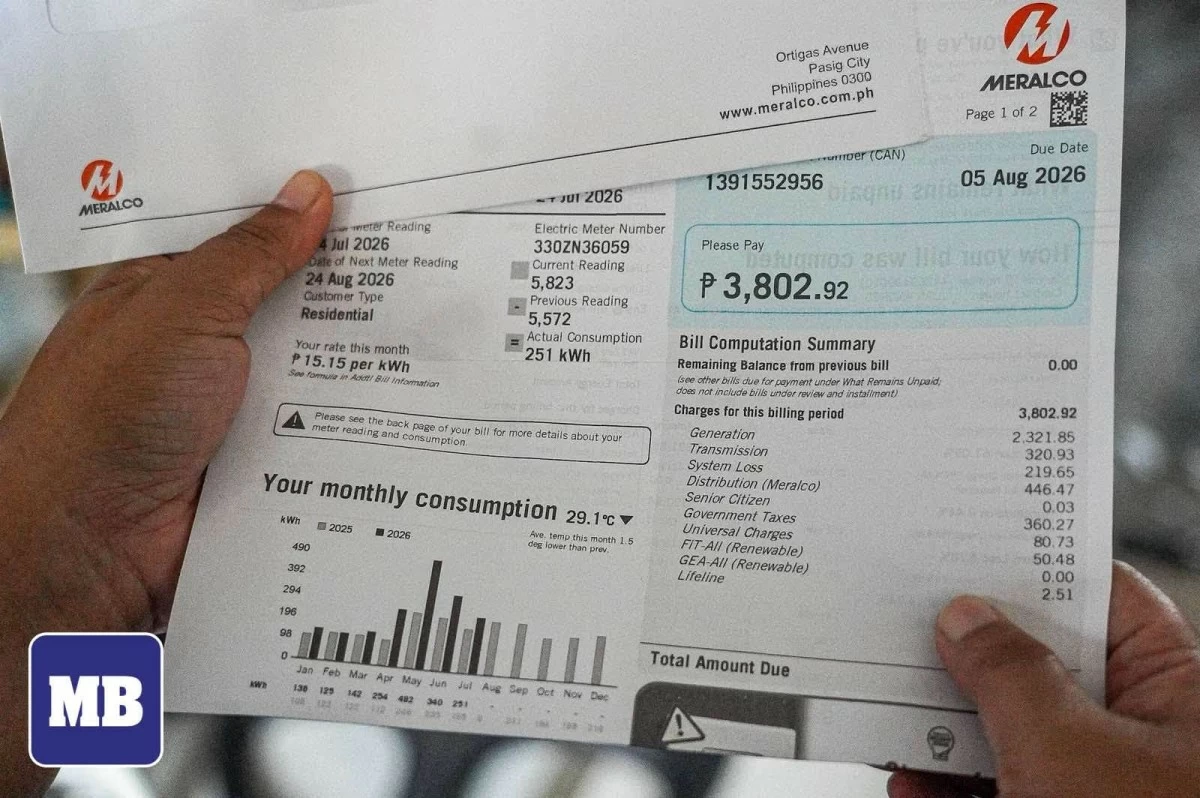
Malacañang said it is open to hearing all stakeholders as the government studies the proposed removal of the systems loss charge from consumers' electricity bills, following President Marcos' call to amend the Electric Power Industry Reform Act (EPIRA).
Presidential Communications Office (PCO) Undersecretary Claire Castro said this after Meralco Chairman Manuel Pangilinan described the proposal as a major issue for the power sector.
In a press briefing on Thursday, July 30, Castro said the Palace welcomes the willingness of power industry players to participate in discussions, saying consultations are necessary to address concerns from all affected sectors.
"Maganda po na senyales iyan although marami po talagang pagdaraanan na pag-aaral at maaaring maraming maapektuhan but at least nakikita po natin na open sila for discussion (That is a good sign, although it will still go through extensive study and may affect many sectors, but at least we can see that they are open to discussion)," she said.
Pangilinan earlier said that the proposal was “a big deal” for the industry because it cuts across generation, transmission, and distribution.
“The bill is too big for the industry to absorb all of it. So, there's got to be that discussion. It's going to impact the entire power industry in this country,” he said.
DOE consulting stakeholders
Department of Energy (DOE) Secretary Sharon Garin said the agency is reviewing existing regulations, legislation, and other policies while consulting stakeholders before finalizing the government's approach.
"We are currently studying the regulations of ERC legislations and other policies and doing consultations with stakeholders. The objective is to lower electricity rates, and I ask for patience and cooperation of all stakeholders while we craft the policies," she said.
According to Castro, the administration wants to ensure the policy lowers electricity costs without creating unnecessary burdens for consumers, investors, and utility companies.
"So, lahat po ito ay inaaral at bubuuin po nang hindi naman po masyadong burdensome din sa iba nating mga kababayan at sa mga investors and utility companies (All of these are being studied and will be crafted in a way that will not be too burdensome for our fellow Filipinos, investors, and utility companies)," she said.
Rural electric cooperatives' concerns
Asked whether Malacañang is open to proposals from rural electric cooperatives seeking conditions, including possible tax exemption mechanisms, Castro said all stakeholders should be given the opportunity to present their concerns.
"Kaya nga po lahat po ng stakeholders na mayroong mga ganiyang concern mas maganda po talaga na madinig kayong lahat kasi para kung anuman iyong maaaring maging issue ay maresolba (That is why it is important that all stakeholders with such concerns are heard so that whatever issues may arise can be resolved),” she reiterated.
"Tutulong tayo sa ating mga kababayan pero siyempre po iyong mga involved sa ganitong industry ay hindi naman din po dapat na makarga ng sobra ang mga maaaring maging isyu patungkol dito (We want to help our people, but at the same time, those involved in the industry should not be made to carry an excessive burden from these issues),” she said
“So lahat po iyan ay dapat bigyan ng solusyon (All of these concerns should be addressed),” she added.
Marcos seeks EPIRA amendment
President Marcos, in his fifth State of the Nation Address (SONA) on July 27, called on Congress to immediately amend EPIRA to prohibit the collection of systems loss charges from consumers, arguing that households and businesses should not shoulder losses incurred in the transmission and distribution of electricity.
"At kung pagbawas ng presyo ang usapan, sa aking palagay, panahon na para tanggalin na ang systems loss na ipinapasa sa consumer (And if we are talking about lowering prices, I believe it is time to remove the systems loss charge that is being passed on to consumers)," the President said.
"Hindi naman kasalanan ng consumer kung bakit nagkaroon ng systems loss. Kaya hindi naman tama na sila pa ang pagbabayarin dito (The systems loss is not the consumer's fault. It is therefore not right that they should be made to pay for it)," he added.
Under the current provisions of Republic Act No. 9136, or the Electric Power Industry Reform Act of 2001, distribution utilities are allowed to recover a portion of systems losses from consumers through charges reflected in monthly electricity bills.
On Wednesday, Castro said Marcos had carefully studied the administration's proposed amendments to EPIRA before announcing them and stressed that major policy proposals included in the President's legislative agenda are backed by thorough review.