ADVERTISEMENT

World Bank calls for Philippine fleet, port upgrades

Published Jul 28, 2026 02:54 pm
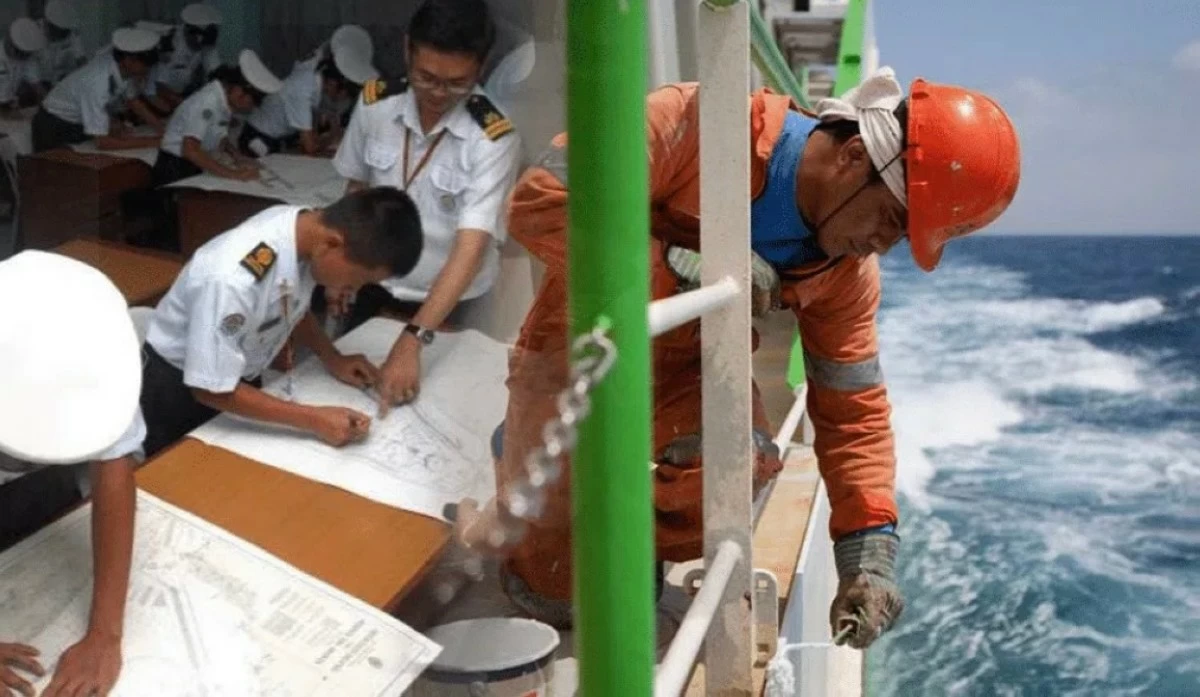
Filipino seafarers (Photos from the Maritime Industry Authority)

The World Bank has urged East Asia and Pacific (EAP) countries to strengthen the efficiency, safety, and sustainability of their maritime sectors, saying the Philippines and its regional peers need reforms to support economic growth, improve trade competitiveness, and create more jobs amid aging fleets and mounting infrastructure challenges.

In a regional report published last Monday, July 27, titled “Ports, Ships, and Fuels: Maritime Efficiency, Safety, and Sustainability in East Asia and the Pacific,” the Washington-based multilateral lender said maritime transport remains a key driver of trade, employment, and economic activity across the region, but warned that aging fleets, port congestion, safety risks, and the transition to cleaner fuels require urgent policy action.

The report estimated that the region will require more than $460 billion in maritime investments between 2025 and 2040, including about $280 billion for fleet renewal and upgrades and around $180 billion to modernize and expand ports. According to the World Bank, mobilizing this level of financing will require coordinated public and private sector action backed by clear and predictable policy frameworks.

The World Bank said the maritime sector directly employs up to nine million people and supports as many as 18 million livelihoods across EAP. Maritime trade in the region exceeded six billion tons in 2025, supporting up to $3.7 trillion in economic activity.

For the Philippines, the report underscored the country’s role as one of the world’s largest suppliers of seafarers. It said EAP economies supplied more than 40 percent of the world’s seafarers in 2021, with the Philippines accounting for about 210,000 seafarers—around 13 percent of the world’s officers and ratings serving on international voyages. The report noted that seafaring remains a major source of employment, remittances, and foreign exchange (forex) earnings for the country.

The report also identified several areas for improvement in the Philippine maritime sector.

It noted that many domestic cargo vessels operating in the Philippines and Indonesia are more than 30 years old and continue to operate without modern safety equipment or fuel-efficient engines, increasing operating costs as well as the risk of breakdowns and accidents.

To improve safety and operational reliability, the World Bank recommended replacing vessels older than 20 to 25 years with newer ships designed for archipelagic routes. It noted that about 98 percent of inter-island trade in the Philippines depends on domestic shipping, making fleet modernization critical to the country’s economy. The report also backed the Maritime Industry Development Plan (MIDP) 2028, which sets a maximum operating age of 30 years for steel vessels and 20 years for wooden vessels.

The report further recommended providing tax incentives for importing secondhand vessels less than 15 years old while exploring public leasing schemes or pooled procurement arrangements to help operators reduce costs and accelerate fleet renewal.

For archipelagic economies such as the Philippines, the World Bank said conventional efficiency metrics alone may not be sufficient, adding that reforms to inter-island ferry services could improve economic efficiency while maintaining essential connectivity.

The report also cited the Maritime Industry Authority’s (MARINA) investments in maritime education, training simulators, and certification systems covering navigation, engineering, safety, and emergency response. It recommended that the agency continue strengthening curricula and certification procedures to meet international standards and enhance standardized safety practices across the industry.

In the ports sector, the World Bank highlighted Manila International Container Terminal’s (MICT) adoption of an artificial intelligence (AI)-driven gate automation system, saying it has helped reduce urban congestion. It recommended expanding port community systems (PCS), including truck appointment systems, to distribute container deliveries more evenly and better align port operations with urban infrastructure and traffic management to ease congestion caused by truck bans in Metro Manila.

The report also encouraged the Philippines to accelerate its transition to cleaner maritime fuels. Citing the country’s nationally determined contributions (NDCs), it noted the government’s commitment to reduce greenhouse gas (GHG) emissions by up to 70 percent by 2030. It recommended expanding trials of coconut-based biodiesel blends, building on pilot projects in Cebu-Bohol ferry services, while also testing electrification and hybrid technologies for smaller vessels to improve air quality in coastal communities and develop a viable domestic biofuel market.

To support these efforts, the World Bank urged governments to leverage public-private partnerships (PPPs) to finance maritime infrastructure, including onshore power supply facilities and alternative-fuel infrastructure in coastal areas.

“With the right investments and policy reforms, EAP can convert these challenges into gains in productivity, resilience, and long-term competitiveness. Inaction or delay carries significant risks: Congestion, aging fleets, and poorly managed fuel transitions could harden into structural constraints that raise logistics costs, undermine reliability, and erode economic performance,” the report said.

“Maritime supply chains are the circulatory system of regional economies. When they function well, businesses become more competitive, markets become more accessible, and communities prosper,” Carlos Felipe Jaramillo, World Bank vice president for EAP, said in a statement.

Related Tags

World Bank Maritime Industry Authority maritime industry East Asia and Pacific (EAP)
ADVERTISEMENT
.most-popular .layout-ratio{ padding-bottom: 79.13%; } @media (min-width: 768px) and (max-width: 1024px) { .widget-title { font-size: 15px !important; } }

{{ articles_filter_1561_widget.title }}

.most-popular .layout-ratio{ padding-bottom: 79.13%; } @media (min-width: 768px) and (max-width: 1024px) { .widget-title { font-size: 15px !important; } }

{{ static_articles_1562_widget.title }}

.most-popular .layout-ratio{ padding-bottom: 79.13%; } @media (min-width: 768px) and (max-width: 1024px) { .widget-title { font-size: 15px !important; } }

{{ articles_filter_1563_widget.title }}

{{ articles_filter_1564_widget.title }}

.mb-article-details { position: relative; } .mb-article-details .article-body-preview, .mb-article-details .article-body-summary{ font-size: 17px; line-height: 30px; font-family: "Libre Caslon Text", serif; color: #000; } .mb-article-details .article-body-preview iframe , .mb-article-details .article-body-summary iframe{ width: 100%; margin: auto; } .read-more-background { background: linear-gradient(180deg, color(display-p3 1.000 1.000 1.000 / 0) 13.75%, color(display-p3 1.000 1.000 1.000 / 0.8) 30.79%, color(display-p3 1.000 1.000 1.000) 72.5%); position: absolute; height: 200px; width: 100%; bottom: 0; display: flex; justify-content: center; align-items: center; padding: 0; } .read-more-background a{ color: #000; } .read-more-btn { padding: 17px 45px; font-family: Inter; font-weight: 700; font-size: 18px; line-height: 16px; text-align: center; vertical-align: middle; border: 1px solid black; background-color: white; } .hidden { display: none; }
function initializeAllSwipers() { // Get all hidden inputs with cms_article_id document.querySelectorAll('[id^="cms_article_id_"]').forEach(function (input) { const cmsArticleId = input.value; const articleSelector = '#article-' + cmsArticleId + ' .body_images'; const swiperElement = document.querySelector(articleSelector); if (swiperElement && !swiperElement.classList.contains('swiper-initialized')) { new Swiper(articleSelector, { loop: true, pagination: false, navigation: { nextEl: '#article-' + cmsArticleId + ' .swiper-button-next', prevEl: '#article-' + cmsArticleId + ' .swiper-button-prev', }, }); } }); } setTimeout(initializeAllSwipers, 3000); const intersectionObserver = new IntersectionObserver( (entries) => { entries.forEach((entry) => { if (entry.isIntersecting) { const newUrl = entry.target.getAttribute("data-url"); if (newUrl) { history.pushState(null, null, newUrl); let article = entry.target; // Extract metadata const author = article.querySelector('.author-section').textContent.replace('By', '').trim(); const section = article.querySelector('.section-info ').textContent.replace(' ', ' '); const title = article.querySelector('.article-title h1').textContent; // Parse URL for Chartbeat path format const parsedUrl = new URL(newUrl, window.location.origin); const cleanUrl = parsedUrl.host + parsedUrl.pathname; // Update Chartbeat configuration if (typeof window._sf_async_config !== 'undefined') { window._sf_async_config.path = cleanUrl; window._sf_async_config.sections = section; window._sf_async_config.authors = author; } // Track virtual page view with Chartbeat if (typeof pSUPERFLY !== 'undefined' && typeof pSUPERFLY.virtualPage === 'function') { try { pSUPERFLY.virtualPage({ path: cleanUrl, title: title, sections: section, authors: author }); } catch (error) { console.error('ping error', error); } } // Optional: Update document title if (title && title !== document.title) { document.title = title; } } } }); }, { threshold: 0.1 } ); function showArticleBody(button) { const article = button.closest("article"); const summary = article.querySelector(".article-body-summary"); const body = article.querySelector(".article-body-preview"); const readMoreSection = article.querySelector(".read-more-background"); // Hide summary and read-more section summary.style.display = "none"; readMoreSection.style.display = "none"; // Show the full article body body.classList.remove("hidden"); } document.addEventListener("DOMContentLoaded", () => { let loadCount = 0; // Track how many times articles are loaded const offset = [1, 2, 3, 4, 5, 6, 7, 8, 9, 10]; // Offset values const currentUrl = window.location.pathname.substring(1); let isLoading = false; // Prevent multiple calls if (!currentUrl) { console.log("Current URL is invalid."); return; } const sentinel = document.getElementById("load-more-sentinel"); if (!sentinel) { console.log("Sentinel element not found."); return; } function isSentinelVisible() { const rect = sentinel.getBoundingClientRect(); return ( rect.top < window.innerHeight && rect.bottom >= 0 ); } function onScroll() { if (isLoading) return; if (isSentinelVisible()) { if (loadCount >= offset.length) { console.log("Maximum load attempts reached."); window.removeEventListener("scroll", onScroll); return; } isLoading = true; const currentOffset = offset[loadCount]; window.loadMoreItems().then(() => { let article = document.querySelector('#widget_1690 > div:nth-last-of-type(2) article'); intersectionObserver.observe(article) loadCount++; }).catch(error => { console.error("Error loading more items:", error); }).finally(() => { isLoading = false; }); } } window.addEventListener("scroll", onScroll); });

Sign up by email to receive news.