ADVERTISEMENT

Philippines seeks nearly $9-billion in fresh loans from ADB, AIIB, World Bank

Published Jul 27, 2026 12:00 am  |  Updated Jul 25, 2026 03:26 pm

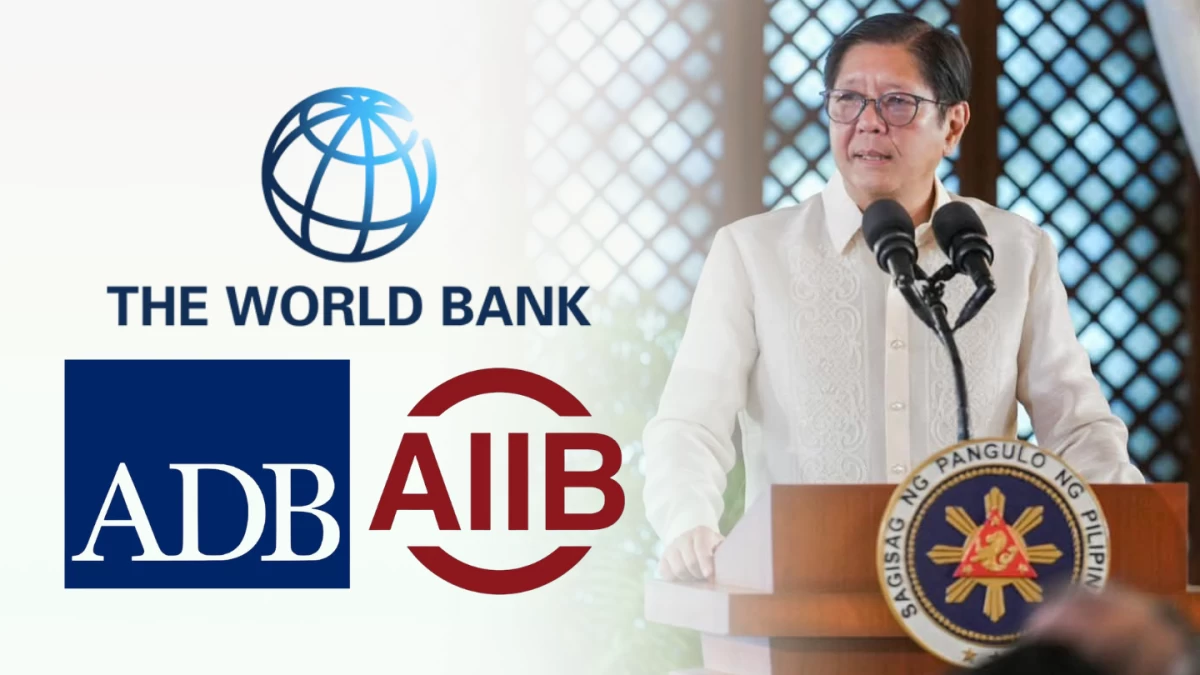
Three multilateral lenders are expected to greenlight up to $8.9 billion, equivalent to about ₱549 billion, in new loans over the next two years before the Philippines’ upper-middle-income-country (UMIC) status limits the country’s access to concessional financing in the coming years.

According to documents reviewed by Manila Bulletin, the forthcoming $250.87-million loan for the Philippines Accelerated Water and Sanitation Project in Selected Areas (AWSPSA) is scheduled to be the Philippines’ first World Bank loan following its transition to UMIC status.

Up for approval by the Washington-based multilateral lender’s board this coming Friday, July 31, AWSPSA aims to increase access to safely managed water supply and sanitation services, as well as improve the performance of water service providers in selected areas.

For the World Bank’s current fiscal year (FY) 2027, which covers the period from July 1 this year to June 30 next year, the other loans in its Philippine pipeline include $800 million for the Social Protection for Economic Inclusion, Empowerment, and Digital Innovation (SPEED) Project, for approval on Nov. 30; and $358 million for the Improving Micro, Small, and Medium Enterprise (MSME) Access to Finance and Resilience to Climate Shocks Project, for approval on Dec. 8.

Last week, Manila Bulletin reported that the government is also seeking a $1-billion loan for the Philippines Sixth Disaster Risk Management Development Policy Loan (DPL) with a Catastrophe Deferred Drawdown Option (CAT-DDO), which is scheduled for World Bank approval on Dec. 16.

For FY 2028, which begins on July 1 next year and ends on June 30, 2028—the last day of the Marcos Jr. administration—the World Bank is scheduled to approve the following: the $322-million Philippines Government Modernization Project; $350-million Clean Metro Manila; $250-million Boosting Employability in Strategic TVET Sectors (BEST) Project; $274.62-million Technology-driven, Human-centered Climate and Disaster Resilience through Innovation for Vulnerable Empowerment (THRIVE) Project; $351.71-million Inclusive Partnerships for Agrarian Reform Communities (IPARC); $301.11-million Philippines COMPETE Plus for SMEs; and $647-million Philippines Multisectoral Nutrition Project-Converging Nutrition Efforts for our Children’s Tomorrow (PMNP-CONNECT).

As Manila Bulletin earlier reported, the Philippines also sought from the Beijing-based Asian Infrastructure Investment Bank (AIIB) a $200-million climate policy-based financing (CPBF) that will supplement the record $1.02-billion Philippines Second Energy Transition and Climate Resilience Development Policy Loan (DPL) and grant already approved by the World Bank last June.

This counterpart AIIB loan is expected to be approved by the China-backed lender by November this year.

Meanwhile, the Manila-based Asian Development Bank (ADB) has at least eight upcoming loans in the pipeline for its host country, the Philippines.

Documents showed that for 2026, the proposed Philippine loans subject to ADB approval include the $100-million Digital Transformation for the Bureau of Internal Revenue (BIR); $500-million Promoting Financial Market Deepening and Innovation Program, Subprogram 1; $875.64-million Improving Growth Corridors in Mindanao Road Project Phase 2; $61-million Promoting Sustainability and Productivity for Enterprise Resilience and Upscaling in the Philippines (ProsPER) Project; and $750-million Build Universal Health Care (UHC) Program, Subprogram 3.

According to ADB documents, its loan for Build UHC Program, Subprogram 3, will be supplemented by $187.9 million in counterpart financing from the Japan International Cooperation Agency (JICA).

For 2027, the ADB is expected to approve the $210-million National Energy Efficiency and Conservation Program; $461-million National Total Electrification Support Program; and $800-million North-South Commuter Railway (NSCR) Operations and Maintenance (O&M) Public-Private Partnership (PPP) Availability Payment Partial Credit Guarantee Project.

As a UMIC, the Philippines will gradually lose access to the World Bank’s, the ADB’s, and the AIIB’s low-interest loans, making it more difficult to secure large-scale financing on favorable terms and requiring the government to increasingly rely on market-based borrowing with higher interest rates and shorter repayment periods. - Danielle T. Bayani

Related Tags

World Bank Asian Development Bank (ADB) Asian Infrastructure Investment Bank (AIIB)
ADVERTISEMENT
.most-popular .layout-ratio{ padding-bottom: 79.13%; } @media (min-width: 768px) and (max-width: 1024px) { .widget-title { font-size: 15px !important; } }

{{ articles_filter_1561_widget.title }}

.most-popular .layout-ratio{ padding-bottom: 79.13%; } @media (min-width: 768px) and (max-width: 1024px) { .widget-title { font-size: 15px !important; } }

{{ static_articles_1562_widget.title }}

.most-popular .layout-ratio{ padding-bottom: 79.13%; } @media (min-width: 768px) and (max-width: 1024px) { .widget-title { font-size: 15px !important; } }

{{ articles_filter_1563_widget.title }}

{{ articles_filter_1564_widget.title }}

.mb-article-details { position: relative; } .mb-article-details .article-body-preview, .mb-article-details .article-body-summary{ font-size: 17px; line-height: 30px; font-family: "Libre Caslon Text", serif; color: #000; } .mb-article-details .article-body-preview iframe , .mb-article-details .article-body-summary iframe{ width: 100%; margin: auto; } .read-more-background { background: linear-gradient(180deg, color(display-p3 1.000 1.000 1.000 / 0) 13.75%, color(display-p3 1.000 1.000 1.000 / 0.8) 30.79%, color(display-p3 1.000 1.000 1.000) 72.5%); position: absolute; height: 200px; width: 100%; bottom: 0; display: flex; justify-content: center; align-items: center; padding: 0; } .read-more-background a{ color: #000; } .read-more-btn { padding: 17px 45px; font-family: Inter; font-weight: 700; font-size: 18px; line-height: 16px; text-align: center; vertical-align: middle; border: 1px solid black; background-color: white; } .hidden { display: none; }
function initializeAllSwipers() { // Get all hidden inputs with cms_article_id document.querySelectorAll('[id^="cms_article_id_"]').forEach(function (input) { const cmsArticleId = input.value; const articleSelector = '#article-' + cmsArticleId + ' .body_images'; const swiperElement = document.querySelector(articleSelector); if (swiperElement && !swiperElement.classList.contains('swiper-initialized')) { new Swiper(articleSelector, { loop: true, pagination: false, navigation: { nextEl: '#article-' + cmsArticleId + ' .swiper-button-next', prevEl: '#article-' + cmsArticleId + ' .swiper-button-prev', }, }); } }); } setTimeout(initializeAllSwipers, 3000); const intersectionObserver = new IntersectionObserver( (entries) => { entries.forEach((entry) => { if (entry.isIntersecting) { const newUrl = entry.target.getAttribute("data-url"); if (newUrl) { history.pushState(null, null, newUrl); let article = entry.target; // Extract metadata const author = article.querySelector('.author-section').textContent.replace('By', '').trim(); const section = article.querySelector('.section-info ').textContent.replace(' ', ' '); const title = article.querySelector('.article-title h1').textContent; // Parse URL for Chartbeat path format const parsedUrl = new URL(newUrl, window.location.origin); const cleanUrl = parsedUrl.host + parsedUrl.pathname; // Update Chartbeat configuration if (typeof window._sf_async_config !== 'undefined') { window._sf_async_config.path = cleanUrl; window._sf_async_config.sections = section; window._sf_async_config.authors = author; } // Track virtual page view with Chartbeat if (typeof pSUPERFLY !== 'undefined' && typeof pSUPERFLY.virtualPage === 'function') { try { pSUPERFLY.virtualPage({ path: cleanUrl, title: title, sections: section, authors: author }); } catch (error) { console.error('ping error', error); } } // Optional: Update document title if (title && title !== document.title) { document.title = title; } } } }); }, { threshold: 0.1 } ); function showArticleBody(button) { const article = button.closest("article"); const summary = article.querySelector(".article-body-summary"); const body = article.querySelector(".article-body-preview"); const readMoreSection = article.querySelector(".read-more-background"); // Hide summary and read-more section summary.style.display = "none"; readMoreSection.style.display = "none"; // Show the full article body body.classList.remove("hidden"); } document.addEventListener("DOMContentLoaded", () => { let loadCount = 0; // Track how many times articles are loaded const offset = [1, 2, 3, 4, 5, 6, 7, 8, 9, 10]; // Offset values const currentUrl = window.location.pathname.substring(1); let isLoading = false; // Prevent multiple calls if (!currentUrl) { console.log("Current URL is invalid."); return; } const sentinel = document.getElementById("load-more-sentinel"); if (!sentinel) { console.log("Sentinel element not found."); return; } function isSentinelVisible() { const rect = sentinel.getBoundingClientRect(); return ( rect.top < window.innerHeight && rect.bottom >= 0 ); } function onScroll() { if (isLoading) return; if (isSentinelVisible()) { if (loadCount >= offset.length) { console.log("Maximum load attempts reached."); window.removeEventListener("scroll", onScroll); return; } isLoading = true; const currentOffset = offset[loadCount]; window.loadMoreItems().then(() => { let article = document.querySelector('#widget_1690 > div:nth-last-of-type(2) article'); intersectionObserver.observe(article) loadCount++; }).catch(error => { console.error("Error loading more items:", error); }).finally(() => { isLoading = false; }); } } window.addEventListener("scroll", onScroll); });

Sign up by email to receive news.