







PIDS: Philippines risks growing old before getting rich


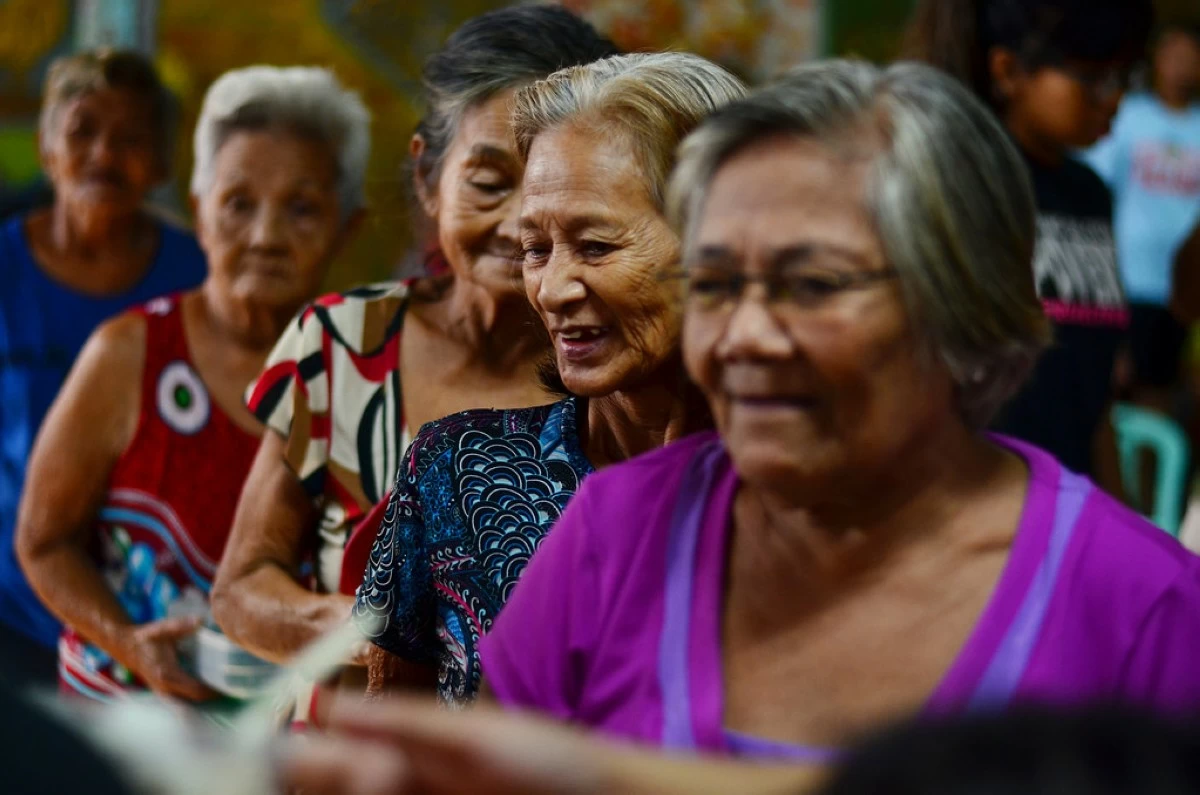
The Philippines risks “growing old before becoming rich” unless policymakers shift their focus from population control to investing more in children, boosting productivity, and preparing for an aging society, according to state-run policy think tank Philippine Institute for Development Studies (PIDS).
In a policy note titled “The Vanishing Filipino Baby: Implications for Development and Investments in Children” published last Monday, July 20, PIDS senior research fellows Jose Ramon G. Albert and Michael R.M. Abrigo said the country’s below-replacement fertility has fundamentally changed its long-term development outlook, requiring a new policy approach centered on human capital and economic productivity.
According to the 2025 National Demographic and Health Survey (NDHS), the country’s total fertility rate (TFR) has fallen to 1.7 children per woman—well below the replacement level of 2.1 and less than half the 1993 level of 4.1 children. At the same time, the Philippines’ gross national income (GNI) per capita stood at only $4,470 in 2024, far below the income levels at which most aging economies began their demographic transition.
“This underscores the urgency of strengthening pension, healthcare, and long-term care systems while the dividend window remains open,” the authors said.
According to PIDS, the Philippines has benefited from the so-called demographic dividend since the 1970s, as a growing working-age population helped drive economic expansion. However, lower-than-projected fertility means favorable demography can no longer be relied upon as the country’s primary growth engine.
Instead, PIDS said economic growth will increasingly depend on productivity gains, job creation, savings, and stronger investments in human capital—the foundations of the country’s second demographic dividend.
The think tank also warned that, based on a TFR of 1.7, the Philippine population could begin contracting by 2060, increasing pressure on pensions and public finances as the ratio of workers to retirees declines. It recommended extending healthy and productive working lives, investing in age-friendly infrastructure, and promoting greater accumulation of savings and assets during workers’ productive years.
While the country’s fertility decline presents long-term fiscal challenges, PIDS said it also offers an opportunity to improve investments in children.
“With fewer births, achieving universal, high-quality early childhood services becomes more attainable. Investments in early childhood yield high returns and are especially critical in a future with a shrinking workforce,” the report said.
The 2025 NDHS showed that 78.3 percent of Filipino children aged 24 to 59 months are developmentally on track, although the figure falls to 70.9 percent among the poorest households and to only 47.2 percent in Bangsamoro Autonomous Region in Muslim Mindanao (BARMM). Children who attended early childhood education also performed markedly better. However, progress remains uneven, with basic immunization coverage ranging from 22.1 percent in BARMM to 95.6 percent in Ilocos Region.
To prepare for the country’s demographic transition, PIDS recommended expanding the first 1,000 days program, strengthening child development centers, ensuring universal prekindergarten education, and providing parenting support, particularly in BARMM, parts of Mindanao, and poorer households where fertility, teenage pregnancy, developmental delays, and service gaps remain concentrated.
The think tank also urged the full implementation of the Expanded Solo Parents Welfare Act under Republic Act (RA) No. 11861, alongside affordable childcare and flexible work arrangements to improve children’s well-being while supporting greater female labor force participation. It likewise called for sustained investments in comprehensive sexuality education, adolescent-friendly services, and family planning to consolidate the gains made in reducing teenage pregnancy.
“The challenge now is not to reverse this trend, but to adapt by investing in children and supporting families,” the authors said. - Danielle T. Bayani