ADVERTISEMENT

PIDS: Rains cut workers' productivity, incomes

Published Jul 21, 2026 04:47 pm
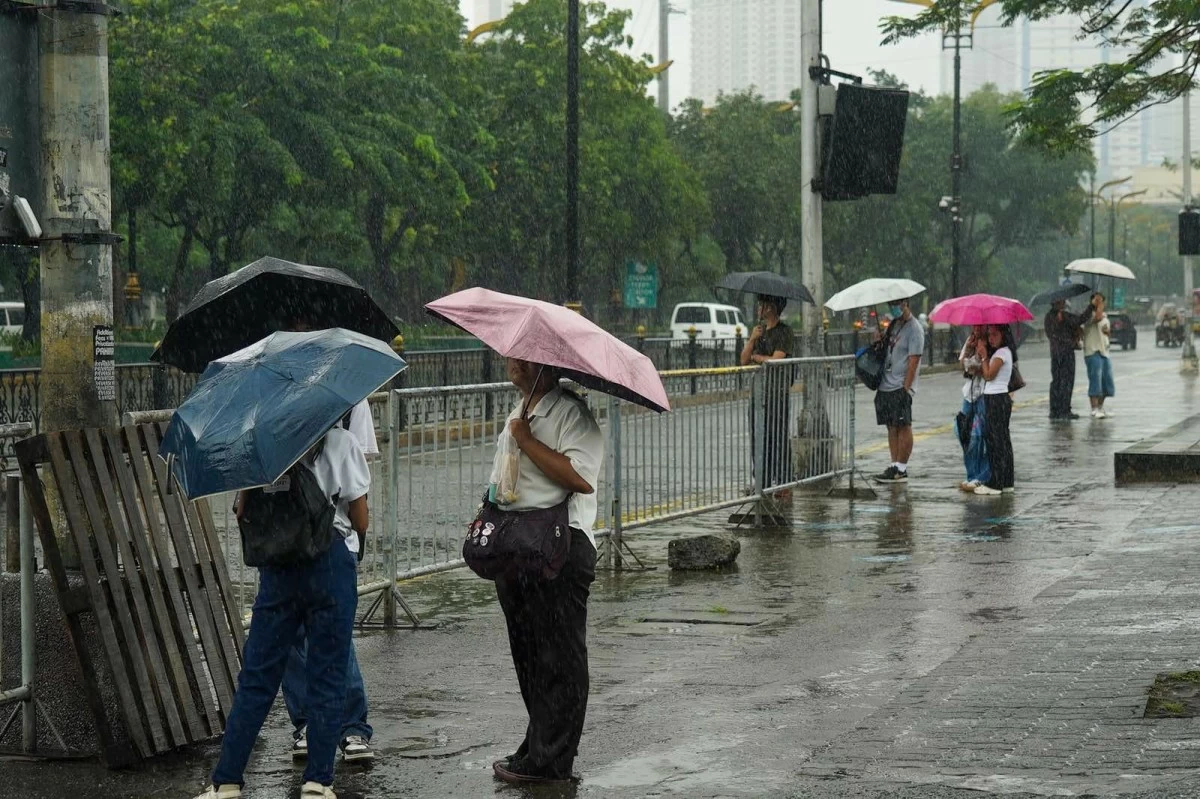
PAGASA monitors cloudy skies and rainfall across parts of the Philippines as the northeast monsoon (amihan) and shear line bring moderate to heavy rains on January 25, 2026. (Manila Bulletin / file)
Frequent rainfall reduces the labor productivity and income of day-to-day and short-term workers, according to state-run policy think tank Philippine Institute for Development Studies (PIDS).

In a statement on Tuesday, July 21, PIDS said its recent discussion paper “When Rain Falls, Work Slows: Rainfall Variability and Working Hours in the Philippine Labor Market,” authored by PIDS research specialist John Joseph S. Ocbina and senior research fellow John Paolo R. Rivera, found that farm laborers, fishery workers, construction laborers, and transport workers are among those most affected by weather-related reductions in working hours compared with permanent workers.

“Rainfall variability influences labor markets not only through short-term workplace disruptions but also through longer-term household and migration decisions,” the authors wrote.

The study also found that workers in day-to-day and short-term employment arrangements are more vulnerable to weather-related disruptions than those in permanent positions.

“The pronounced sensitivity among precarious workers underscores the interaction between environmental shocks and labor market segmentation, with informal and casual workers bearing a disproportionate share of adjustment costs,” the authors said.

Among workers whose hours were reduced due to bad weather, nearly 32 percent worked only 21 to 30 hours during the reference week, while about 31 percent worked only 11 to 20 hours. Another 17 percent managed 10 hours or less, highlighting substantial losses in working time during rainy periods.

“At the aggregate level, rainfall exerts a statistically significant but modest negative association with weekly hours worked,” the authors noted.

“When considered cumulatively across repeated weather events and large numbers of workers, even small reductions in weekly hours may translate into meaningful losses in labor input, productivity, and earnings at the sectoral and regional levels,” they added.

The study also cited the Philippine Statistics Authority (PSA), which records “bad weather, floods, or storms” as a reason for work absence or reduced working hours in the monthly labor force survey (LFS), underscoring the link between weather conditions and labor market disruptions.

From 2018 to April 2023, male workers were more affected by bad weather than female workers, with 19,590 male respondents reporting weather-related work disruptions compared with 4,182 female respondents.

“Many male-dominated sectors involve location-bound, physically intensive work that cannot be performed during periods of heavy rainfall or hazardous weather. As a result, adverse weather conditions are more likely to translate directly into shortened workdays, temporary work stoppages, or lost shifts for male workers,” the authors said.

The study also highlighted regional disparities, noting that high-rainfall areas such as Cordillera Administrative Region (CAR), Caraga, Eastern Visayas, and Bicol regions are more vulnerable because many livelihoods depend on agriculture, fisheries, and other weather-sensitive industries.

Based on Philippine Atmospheric, Geophysical, and Astronomical Services Administration (PAGASA) data on average regional rainfall from 2018 to 2023, CAR recorded the highest average rainfall at about 325 millimeters (mm), while National Capital Region (NCR) averaged about 170 mm. SOCCSKSARGEN recorded the lowest average rainfall at about 75 mm.

“Rainfall-induced reductions in working time are therefore best understood not simply as temporary productivity losses but as manifestations of deeper labor market vulnerabilities linked to sectoral composition, employment informality, and geographic exposure,” the authors wrote.

The study recommended strengthening climate-responsive labor regulations, expanding flexible work arrangements where feasible, investing in flood-resilient transport and workplace infrastructure, and providing targeted social protection for workers in weather-sensitive occupations. - Danielle T. Bayani

Related Tags

Philippine Institute for Development Studies (PIDS) rainfall
ADVERTISEMENT
.most-popular .layout-ratio{ padding-bottom: 79.13%; } @media (min-width: 768px) and (max-width: 1024px) { .widget-title { font-size: 15px !important; } }

{{ articles_filter_1561_widget.title }}

.most-popular .layout-ratio{ padding-bottom: 79.13%; } @media (min-width: 768px) and (max-width: 1024px) { .widget-title { font-size: 15px !important; } }

{{ static_articles_1562_widget.title }}

.most-popular .layout-ratio{ padding-bottom: 79.13%; } @media (min-width: 768px) and (max-width: 1024px) { .widget-title { font-size: 15px !important; } }

{{ articles_filter_1563_widget.title }}

{{ articles_filter_1564_widget.title }}

.mb-article-details { position: relative; } .mb-article-details .article-body-preview, .mb-article-details .article-body-summary{ font-size: 17px; line-height: 30px; font-family: "Libre Caslon Text", serif; color: #000; } .mb-article-details .article-body-preview iframe , .mb-article-details .article-body-summary iframe{ width: 100%; margin: auto; } .read-more-background { background: linear-gradient(180deg, color(display-p3 1.000 1.000 1.000 / 0) 13.75%, color(display-p3 1.000 1.000 1.000 / 0.8) 30.79%, color(display-p3 1.000 1.000 1.000) 72.5%); position: absolute; height: 200px; width: 100%; bottom: 0; display: flex; justify-content: center; align-items: center; padding: 0; } .read-more-background a{ color: #000; } .read-more-btn { padding: 17px 45px; font-family: Inter; font-weight: 700; font-size: 18px; line-height: 16px; text-align: center; vertical-align: middle; border: 1px solid black; background-color: white; } .hidden { display: none; }
function initializeAllSwipers() { // Get all hidden inputs with cms_article_id document.querySelectorAll('[id^="cms_article_id_"]').forEach(function (input) { const cmsArticleId = input.value; const articleSelector = '#article-' + cmsArticleId + ' .body_images'; const swiperElement = document.querySelector(articleSelector); if (swiperElement && !swiperElement.classList.contains('swiper-initialized')) { new Swiper(articleSelector, { loop: true, pagination: false, navigation: { nextEl: '#article-' + cmsArticleId + ' .swiper-button-next', prevEl: '#article-' + cmsArticleId + ' .swiper-button-prev', }, }); } }); } setTimeout(initializeAllSwipers, 3000); const intersectionObserver = new IntersectionObserver( (entries) => { entries.forEach((entry) => { if (entry.isIntersecting) { const newUrl = entry.target.getAttribute("data-url"); if (newUrl) { history.pushState(null, null, newUrl); let article = entry.target; // Extract metadata const author = article.querySelector('.author-section').textContent.replace('By', '').trim(); const section = article.querySelector('.section-info ').textContent.replace(' ', ' '); const title = article.querySelector('.article-title h1').textContent; // Parse URL for Chartbeat path format const parsedUrl = new URL(newUrl, window.location.origin); const cleanUrl = parsedUrl.host + parsedUrl.pathname; // Update Chartbeat configuration if (typeof window._sf_async_config !== 'undefined') { window._sf_async_config.path = cleanUrl; window._sf_async_config.sections = section; window._sf_async_config.authors = author; } // Track virtual page view with Chartbeat if (typeof pSUPERFLY !== 'undefined' && typeof pSUPERFLY.virtualPage === 'function') { try { pSUPERFLY.virtualPage({ path: cleanUrl, title: title, sections: section, authors: author }); } catch (error) { console.error('ping error', error); } } // Optional: Update document title if (title && title !== document.title) { document.title = title; } } } }); }, { threshold: 0.1 } ); function showArticleBody(button) { const article = button.closest("article"); const summary = article.querySelector(".article-body-summary"); const body = article.querySelector(".article-body-preview"); const readMoreSection = article.querySelector(".read-more-background"); // Hide summary and read-more section summary.style.display = "none"; readMoreSection.style.display = "none"; // Show the full article body body.classList.remove("hidden"); } document.addEventListener("DOMContentLoaded", () => { let loadCount = 0; // Track how many times articles are loaded const offset = [1, 2, 3, 4, 5, 6, 7, 8, 9, 10]; // Offset values const currentUrl = window.location.pathname.substring(1); let isLoading = false; // Prevent multiple calls if (!currentUrl) { console.log("Current URL is invalid."); return; } const sentinel = document.getElementById("load-more-sentinel"); if (!sentinel) { console.log("Sentinel element not found."); return; } function isSentinelVisible() { const rect = sentinel.getBoundingClientRect(); return ( rect.top < window.innerHeight && rect.bottom >= 0 ); } function onScroll() { if (isLoading) return; if (isSentinelVisible()) { if (loadCount >= offset.length) { console.log("Maximum load attempts reached."); window.removeEventListener("scroll", onScroll); return; } isLoading = true; const currentOffset = offset[loadCount]; window.loadMoreItems().then(() => { let article = document.querySelector('#widget_1690 > div:nth-last-of-type(2) article'); intersectionObserver.observe(article) loadCount++; }).catch(error => { console.error("Error loading more items:", error); }).finally(() => { isLoading = false; }); } } window.addEventListener("scroll", onScroll); });

Sign up by email to receive news.