






Manila Bulletin
 Business
The Economy
ING: Political threat stalling Philippines' post-inflation recovery
Business
The Economy
ING: Political threat stalling Philippines' post-inflation recovery
Business
The Economy
ING: Political threat stalling Philippines' post-inflation recovery
ING: Political threat stalling Philippines' post-inflation recovery
By Derco Rosal
Published Jul 16, 2026 05:30 pm
|
Updated Jul 16, 2026 03:41 pm


At A Glance
- Dutch financial giant ING warned that mounting political uncertainty surrounding the impeachment case could delay key reforms, slow the Philippines' economic recovery, and keep the peso under pressure.
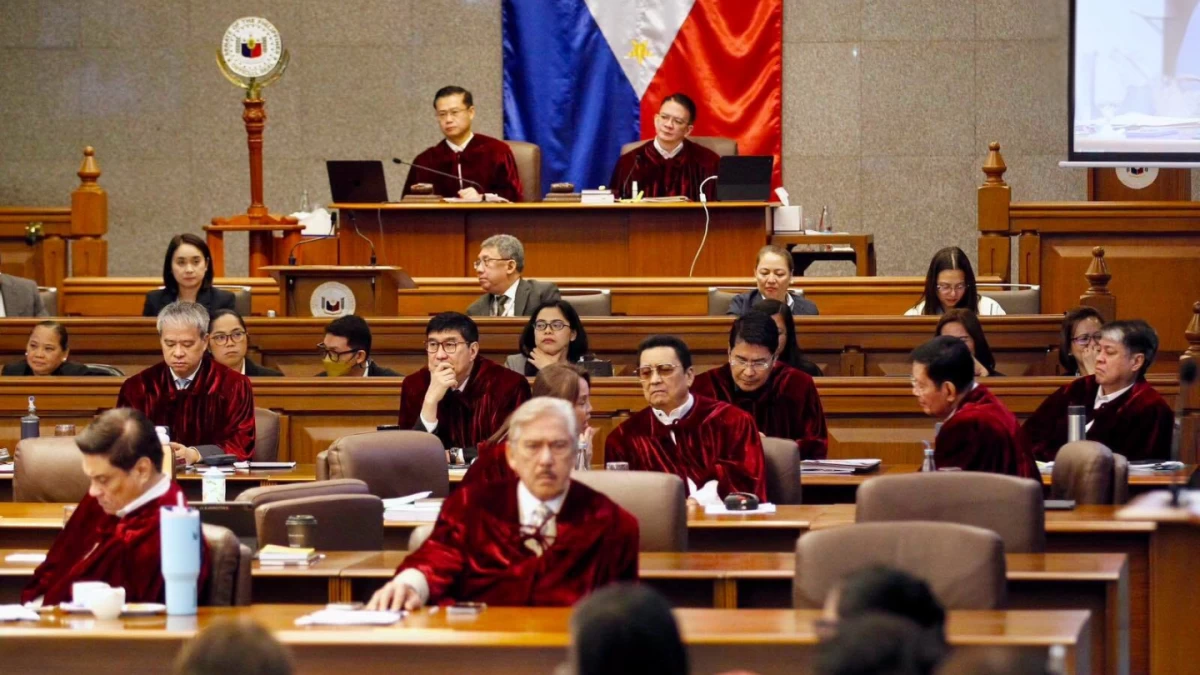
The country’s economic recovery and its currency face prolonged pressure as escalating political instability from the Senate impeachment trial of Vice President Sara Duterte risks stalling economic reforms, according to Dutch financial giant ING.
Deepali Bhargava, ING’s regional head of research for Asia-Pacific, wrote in a report that this growing political gridlock is weighing heavily on investor sentiment. The friction could delay legislative progress, slow gross domestic product (GDP) growth, and keep the local currency under pressure.
The political tension comes as Duterte faces trial before the Senate over allegations of misusing ₱612.5 million in confidential funds, unexplained wealth, bribery, and procurement irregularities during her tenure as education secretary. The trial has been further complicated by extraordinary public threats made against President Ferdinand Marcos Jr., First Lady Liza Araneta-Marcos, and former House Speaker Martin Romualdez.
“Rising political uncertainty following the vice president’s impeachment is weighing on investor sentiment, potentially delaying reforms, slowing the growth recovery, and maintaining downward pressure on the peso,” Bhargava said.
These political developments are unfolding as the Philippine economy faces persistent inflationary challenges. Headline inflation peaked at 7.2 percent in April before easing for two consecutive months to 6.4 percent in June.
While headline inflation cooled in June due to a correction in global oil prices, ING cautioned against early optimism, noting that “the central bank [does not have] enough evidence yet to declare victory on inflation.”
Analysis from think tank Capital Economics supports this caution, suggesting the Philippines remains an outlier among emerging economies.
William Jackson, chief emerging markets economist at Capital Economics, noted in a July 15 commentary that the country is one of “a handful of countries where strong inflation pressures could prompt interest rate hikes in the coming months, irrespective of developments in the Middle East.”
Jackson noted that while most emerging markets saw consumer prices cool in June, inflation in the Philippines remained above the government’s target ceiling of four percent. “What ties these countries together is that inflation has continued to rise and is above their central banks’ targets,” he said.
Capital Economics cautioned that the pressure is not merely a result of fluctuating oil costs. Instead, “inflation is accelerating in a broad range of sub-categories—not just those related to energy,” which points to deepening second-round effects. Given these persistent pressures, the think tank believes the Bangko Sentral ng Pilipinas (BSP) may have to maintain a hawkish stance even as other central banks pause. “Inflation developments make the case for monetary tightening, regardless of how events in the Middle East pan out,” Jackson said.
Recently announced wage increases and an acceleration in core inflation are further complicating this outlook. Core inflation quickened to 4.4 percent in June from 4.1 percent the previous month, signaling that price pressures remain deeply embedded in the economy. It also remained above the BSP’s inflation target of 3.0 percent and its tolerance band of 2.0 to 4.0 percent.
ING said this rise in core inflation underscores “the persistence of second-round effects.” These risks are expected to keep monetary authorities focused on anchoring inflation expectations. This supports ING’s projection of an additional 50 basis points (bps) of rate hikes by year-end, up from the current 4.75 percent policy rate.
Looking ahead, ING forecasts that the peso's downward bias will persist in the near term, potentially pushing the currency to ₱61.70 to $1 within the next month. However, it projects the local currency will gradually recover to ₱61.50 over the next quarter before settling at ₱61.00 over the following six months.