






Manila Bulletin
 Philippines
National
'Paulit-ulit sinasabi': Diokno rebuts Poa's 'fishing expedition' claim
Philippines
National
'Paulit-ulit sinasabi': Diokno rebuts Poa's 'fishing expedition' claim
Philippines
National
'Paulit-ulit sinasabi': Diokno rebuts Poa's 'fishing expedition' claim
'Paulit-ulit sinasabi': Diokno rebuts Poa's 'fishing expedition' claim
Published Jul 15, 2026 05:35 pm


At A Glance
- Rep. Chel Diokno cites the 2022 Supreme Court ruling Republic v. Rabusa to rebut defense lawyer Michael Poa's claim that subpoenas for Vice President Sara Duterte's bank, tax, and AMLC records amount to a "fishing expedition".
- Diokno stresses that impeachment proceedings fall under statutory exceptions to bank secrecy, making the requested records crucial to proving allegations of unexplained wealth against Duterte.
- He maintains that issuing subpoenas does not violate due process since the trial is only at the stage of determining whether documents may be produced.
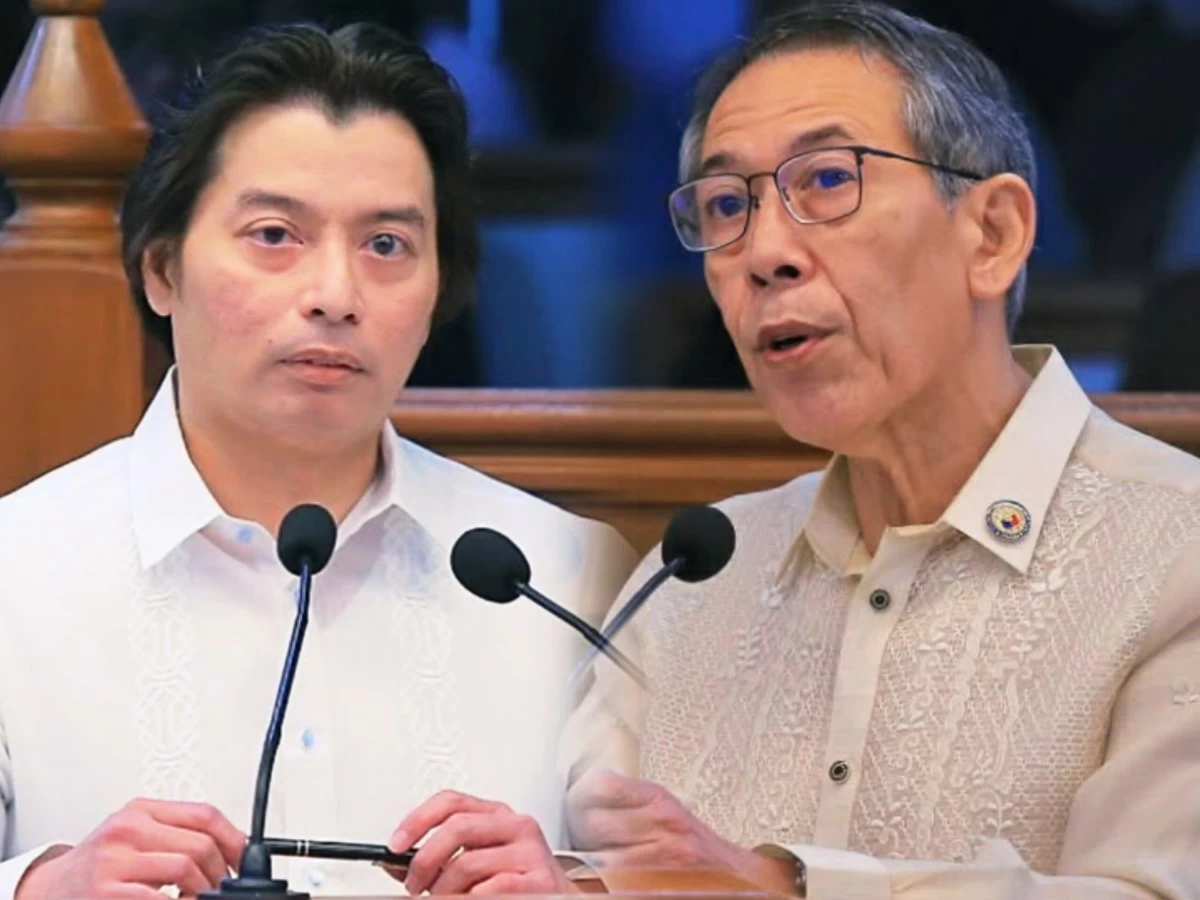
Defense lawyer Michael Poa (left), Akbayan Party-list Rep. Chel Diokno (Senate PRIB)
Akbayan Party-list Rep. Chel Diokno invoked a 2022 Supreme Court (SC) ruling to rebut Vice President Sara Duterte lawyer Michael Poa's claim that seeking the banks and tax records of the respondent in her Senate impeachment trial was a "fishing expedition".
According to Diokno, the particular ruling--Republic v. Rabusa--rejects this particular argument in the context of an unexplained wealth case.
The sought bank and tax records, as well as Anti-Money Laundering Council (AMLC) reports, were said to be crucial in proving allegations of unexplained wealth against the respondent, as mentioned in article IV of the articles of impeachment.
“Paulit-ulit din po nilang sinasabi na ang ginagawa po ng prosecution ay ‘fishing expedition'. Actually po, mayroon nang desisyon ang [SC] that addresses squarely this point,” Diokno, one of the solon-prosecutors in the trial, said during the scheduled oral arguments on Wednesday, July 15.
(They also keep repeating that what the prosecution is doing is a "fishing expedition". Actually, there is already a [SC] decision that squarely addresses this point.)
The case involved a government forfeiture action seeking to recover wealth allegedly accumulated by former military comptroller George Rabusa beyond his lawful earnings, with the [SC] eventually ordering the trial court to consider evidence obtained from the questioned bank accounts.
“Just like here, the prosecution in that case requested subpoenas for the production of bank records. Just like here, the argument was raised that this is a mere fishing expedition,” Diokno pointed out.
Quoting the ruling, he recounted that the lower courts had initially treated the request to examine the accounts as an arbitrary attempt to search for evidence, but the SC held that proceedings involving unexplained wealth fell within the statutory exceptions to bank secrecy.
“As the present proceedings on unexplained wealth are now encompassed within the exceptions of Republic Act (RA) No.1405, the court orders subject of this case clearly fall within the orders that would enable the examination of the respondents’ bank accounts, as contemplated in the first exception,” Diokno said.
“Given the existence and propriety of the subpoenas, the evidence procured through the same should have been duly considered by the lower courts. This court cannot agree with the Court of Appeals’ supposition that the examination of the respondents’ bank accounts was but a mere fishing expedition to pin liability on them,” he continued.
It was Poa who stood and spoke for the defense in Wednesday’s oral arguments, particularly on why the prosecution’s request for subpoena for the bank, tax, and AMLC records should not be granted by the court. He said it amounts to a fishing expedition.
During the main phase of his argument, the prosecutor underscored that the Bank Secrecy Law itself, as spelled out in RA No.1405, recognizes impeachment proceedings as an exception to the confidentiality of bank deposits.
Diokno pointed to the law’s express language: “The law explicitly states, and I quote its pertinent portions: ‘All deposits… are hereby considered as of an absolutely confidential nature… except… in cases of impeachment.’”
Right to due process intact
Diokno separately rejected the claim that the issuance of subpoenas would violate VP Duterte’s right to due process.
He explained that the prosecution was merely asking the Senate impeachment court to order the production of documents that had yet to be identified by witnesses or formally offered as evidence.
“First of all, we are not yet at the stage where any evidence is being put in the trial or offered to the honorable court. Nandito pa lang po tayo sa punto na kung maaari bang ipa-produce natin itong mga dokumentong ito,” he explained.
(We are still at the point of determining whether these documents may be produced.)
“The defense will have every opportunity to make objections, if and when, particular exhibits or documents are identified by a witness and offered in evidence. Therefore, wala pong due process violation ang pag-issue ng subpoena,” Diokno maintained.
(Therefore, the issuance of a subpoena does not constitute a violation of due process.)
The requested records relate to the prosecution’s allegations that Duterte accumulated unexplained wealth disproportionate to her lawful income, omitted assets from her statements of assets, liabilities and net worth (SALN) and engaged directly or indirectly in business while holding public office.
Diokno stressed that confidentiality laws should not be invoked prematurely to prevent the senator-judges from obtaining records that may ultimately confirm or disprove the allegations.