






Manila Bulletin
 Philippines
National
VP Duterte's bank, tax records will show her 'true colors'--Diokno
Philippines
National
VP Duterte's bank, tax records will show her 'true colors'--Diokno
Philippines
National
VP Duterte's bank, tax records will show her 'true colors'--Diokno
VP Duterte's bank, tax records will show her 'true colors'--Diokno
Published Jul 15, 2026 04:29 pm


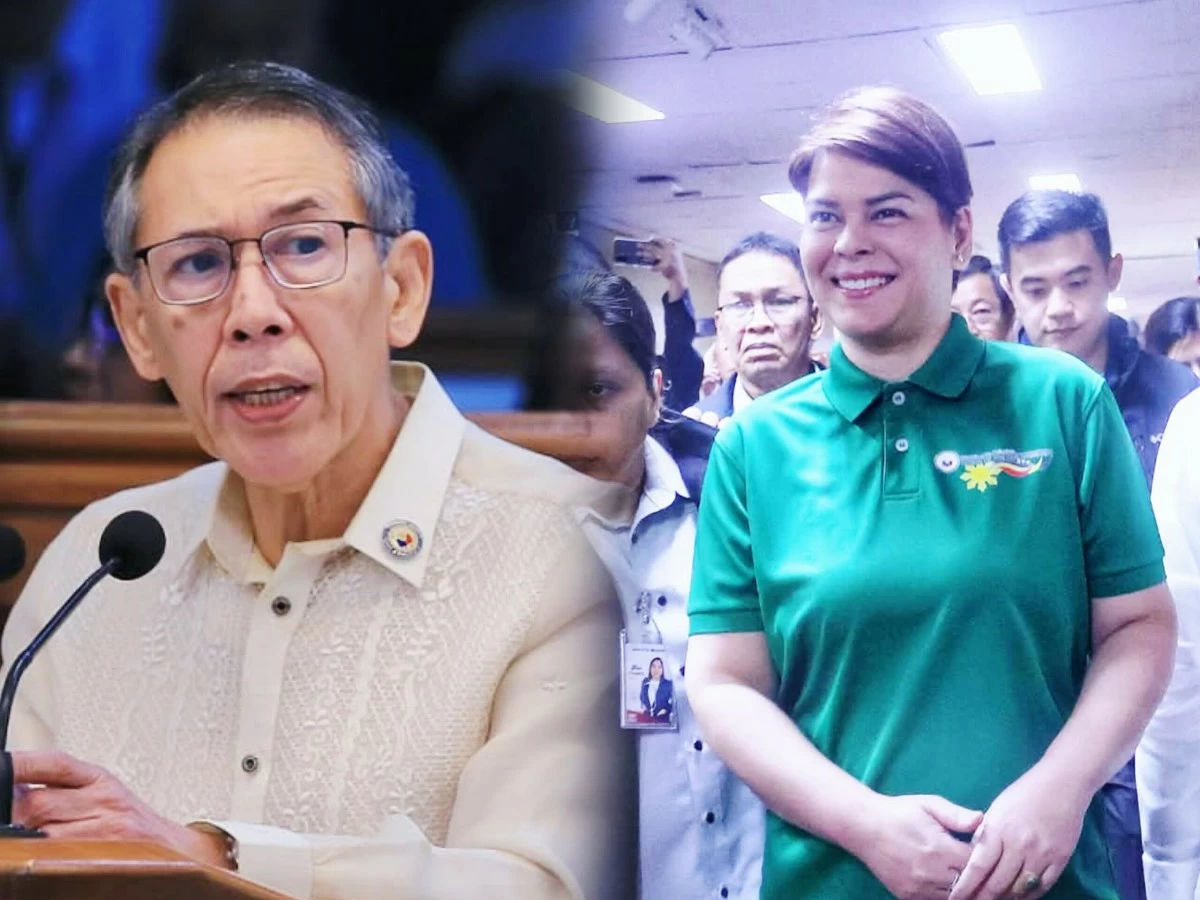
Akbayan Party-list Rep. Chel Diokno (left), Vice President Sara Duterte (Senate PRIB)
The subpoena for Vice President Sara Duterte's bank records, tax records, and Anti-Money Laundering Council (AMLC) reports will help unveil the impeachment trial respondent's "true colors".
Thus, said House prosecutor Akbayan Party-list Rep. Chel Diokno as he implored the Senate impeachment court during the scheduled oral arguments Wednesday afternoon, July 15 to grant the prosecution’s subpoena request.
The bank and tax records, which include those from the Vice President’s husband lawyer Manases Carpio, are said to be crucial in proving allegations of unexplained wealth against the respondent.
Being sought by the prosecution panel are Duterte’s records dating back to 2007 when she was still Davao City vice mayor. Three years later, she would be elected as city mayor.
"The Vice President’s financial activity as Vice Mayor and Mayor of Davao City relates directly to the main fact in issue in this case: her fitness or unfitness to serve as Vice President. Let me explain," Diokno told the senator-judges.
"The framers of the 1987 Constitution added betrayal of public trust as a ground for impeachment and I quote - 'to include all acts which…render the officer unfit to continue in office'," he noted.
Diokno said that the Senate impeachment court to determine whether or not Duterte was unfit to continue in office, it must have a clear picture of the respondent as a public servant.
"Kailangang makita ng publiko at ng mga senator-judge ang tunay na kulay ng Bise Presidente at larawan ng kanyang buong pagkatao bilang isang lingkod-bayan," stressed the lawyer-lawmaker.
(The public and the senator-judges must see the true colors of the Vice President and the full picture of her character as a public servant.)
Diokno emphasized that this authority comes directly from the Constitution and cannot be diminished by ordinary laws or administrative rules..
He warned that adopting the defense’s position to block the subpoena request would have consequences far beyond the present motion for subpoenas. “I repeat: no one can handcuff this court’s power to try and decide this impeachment case."
“Kayo lang po, Your Honors, ang may kapangyarihan magpasya kung ano ang impeachable offense at kung anong ebidensya ang maaaring tanggapin para patunayan ito," he said.
(You alone, Your Honors, have the power to decide what constitutes an impeachable offense and what evidence may be accepted to prove it.)
During the House Committee on Justice's hearings on the Vice President’s impeachment complaints last April, the AMLC told congressmen that it had flagged nearly P6.8 billion worth of transactions from bank accounts linked to Duterte and her husband from 2006 to 2025.
SC jurisprudence
Citing Supreme Court (SC) jurisprudence, Diokno argued that determining what constitutes an impeachable offense is a political question entrusted by the Constitution to the Legislature.
"Since this impeachment court has the sole power to determine what constitutes an impeachable offense, no one—not the [SC], much less the defense—can impose limitations on that power. No one can dictate to this impeachment court how to exercise the exclusive power to decide what constitutes an impeachable offense,” he pointed out.
Diokno says the prosecution’s request for subpoenas is anchored on the court’s constitutional duty to decide the case based on a complete factual record.
“Ang hiling ng prosekusyon ay mailabas ang buong katotohanan, so that this honorable ourt may decide the case based on the truth, the whole truth, and nothing but the truth," he said.
(The prosecution’s request is to bring out the whole truth, so that this honorable court may decide the case based on the truth, the whole truth, and nothing but the truth.)
The Akbayan solon reminded the court that impeachment proceedings are ultimately governed by the Constitution’s principle of public accountability.
“Sa proseso ng impeachment, ang pananagutan sa taumbayan ang pinakamahalaga sa lahat. Mas matimbang ito kaysa personal na interes ng sinumang opisyal na inaakusahan," he said.
(In the impeachment process, accountability to the people is the most important of all. It outweighs the personal interest of any official being accused.)