






Manila Bulletin
 Philippines
Metro Manila
Mandaluyong launches contact tracing, monitoring after mpox case confirmed
Philippines
Metro Manila
Mandaluyong launches contact tracing, monitoring after mpox case confirmed
Philippines
Metro Manila
Mandaluyong launches contact tracing, monitoring after mpox case confirmed
Mandaluyong launches contact tracing, monitoring after mpox case confirmed
Published Jun 30, 2026 08:01 am


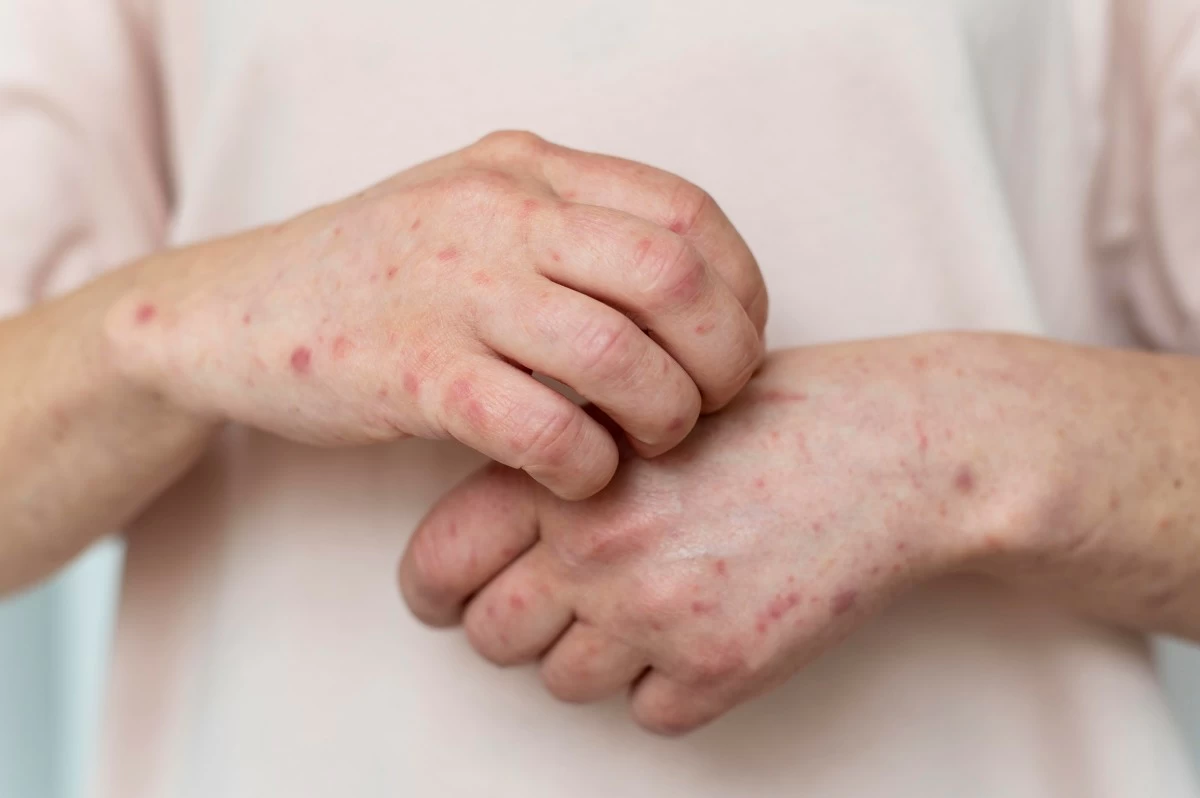
HOW TO SPOT MPOX Infected individuals commonly have rashes, fever, and swollen lymph nodes.
The Mandaluyong City government, through the City Epidemiology and Surveillance Unit (CESU), has started contact tracing, monitoring, and other necessary measures after confirming a case of mpox (monkeypox).
On Monday, June 29, the CESU issued a public advisory confirming a case in the city, saying the local government is closely monitoring the situation with the City Health Department, the Department of Health Regional Epidemiology and Health Statistics Section (DOH-REHSS), and other concerned offices to ensure the disease does not spread.
The office is also conducting a case investigation and intensive disease surveillance.
“The situation is being actively managed, and the public is encouraged to remain informed through official government channels while continuing to observe the following preventive measures,” it said.
The health unit also urged the public to respect the privacy of the individual involved and avoid sharing unverified information that may cause confusion within the community.
No further details were provided about the case.
Meanwhile, the health unit reminded the public to observe preventive measures, including washing hands frequently with soap and clean water or an alcohol-based hand sanitizer, avoiding direct skin-to-skin contact with individuals with unexplained rashes or skin lesions, covering the mouth and nose when coughing or sneezing while maintaining good personal hygiene, and seeking immediate medical consultation if they experience fever, swollen lymph nodes, or unexplained rashes or skin lesions.
“The CESU remains committed to protecting public health through continuous disease surveillance, timely response, and transparent communication. Updates will be provided through official channels as necessary,” it said.
What is mpox?
According to the World Health Organization (WHO), Mpox is an infectious disease caused by the monkeypox virus (MPXV).
It typically causes a painful rash, swollen lymph nodes, fever, sore throat, body pain, headache, and fatigue.
Most patients recover within two to four weeks, but severe illness can occur, particularly in individuals with weakened immune systems, the WHO said.
The Department of Health (DOH) explained that the common symptoms of Mpox include skin rashes or mucosal lesions, which can last two to four weeks.
“The rashes are accompanied by fever, headache, muscle aches, back pain, low energy, and swollen lymph nodes,” the DOH said.
The department added that “anyone can get Mpox,” as it is transmitted through close, intimate contact (including sexual contact) with an infectious person, through contaminated materials such as used clothing or utensils, or through contact with infected animals.
The DOH emphasized that soap and water can eliminate the virus. “When washing contaminated materials, use gloves,” the DOH advised.
Mpox is treated with supportive care, the DOH explained.
“Patients without other underlying illnesses may stay at home after testing, until all scabs have fallen off and a new layer of skin has formed—typically after two to four weeks,” the DOH said.
Read more: