







Shortly after another Covid-19 scare, fake news posts emerged about an impending lockdown due to mpox.
How dangerous is mpox?
Debunking mpox myths and how to keep safe
Published Jun 9, 2025 10:31 am
|
Updated Jun 10, 2025 02:54 pm


At A Glance
- Controlling the spread of mpox can be done with proper isolation and contact tracing of suspected and confirmed cases.
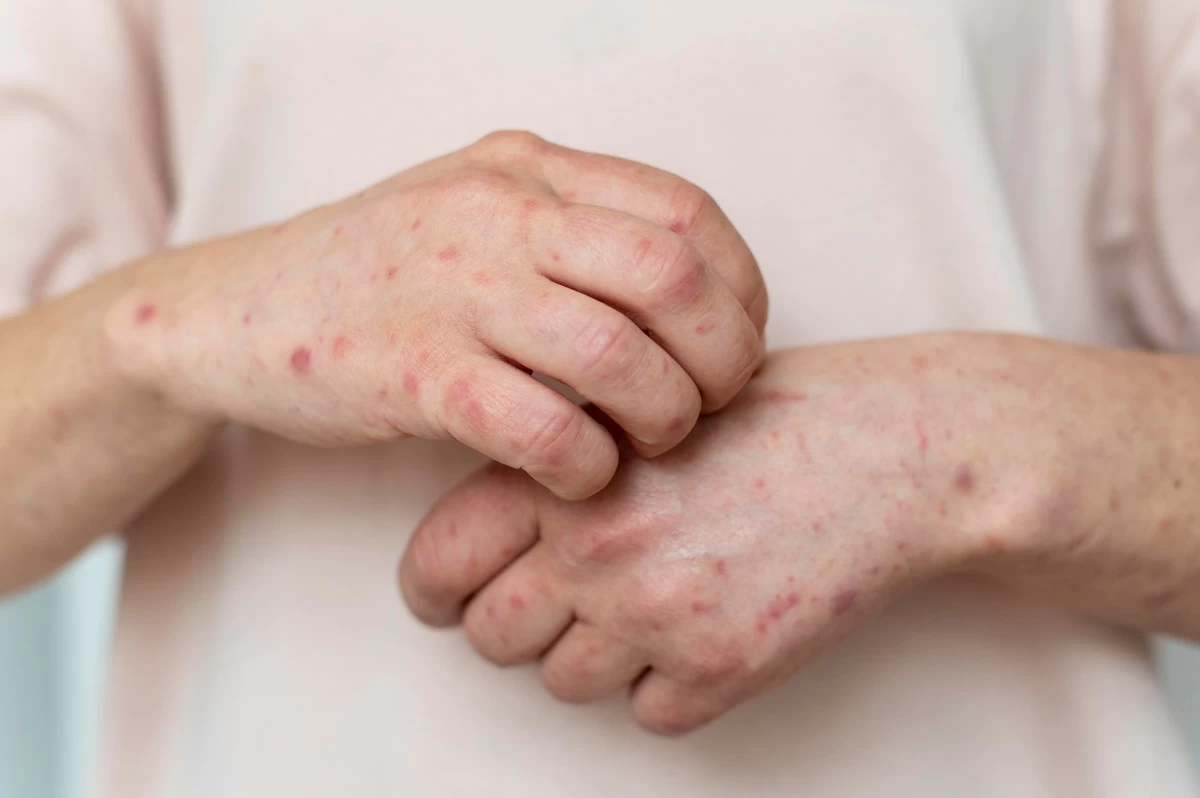
HOW TO SPOT MPOX Infected individuals commonly have rashes, fever, and swollen lymph nodes.
Mpox is the disease that used to be called monkeypox. There are many reasons for the name change, including decreasing misconceptions regarding the origins of the virus, fighting the stigma attached to the disease, and making it easier to spell in different languages. While monkeys can be infected and were the first animal hosts described by scientists, other animals can carry and transmit the infection. Some outbreaks have been linked to rodents, and the current outbreak is being driven by person-to-person transmission.
Confusingly, the virus itself is still called the monkeypox virus. There are two major clades of the virus: the deadlier clade I and the less deadly clade II. Clade I is endemic to Central Africa, particularly the Democratic Republic of Congo, while clade II is endemic to West Africa. In 2022, a Public Health Emergency of International Concern (PHEIC) was declared due to clade II. This specific clade II virus was eventually classified as a subclade (clade IIb) due to genetic differences from the original clade II (now called Clade IIa). Aside from the usual route of infection due to close contact and zoonotic transmission, clade IIb was also found to be sexually transmitted and caused a significant number of cases in the men who have sex with men population, especially in Europe and the US. Using a combination of targeted vaccination strategies and aggressive case finding, the PHEIC was declared over in 2023. Clade IIb, however, continued to circulate and became endemic in many countries, including the Philippines. Low-level community circulation has continued ever since, and cases are diagnosed sporadically, especially during times of heightened surveillance.
Shortly thereafter, a clade I outbreak began in Africa and spread to many parts of the world. This clade I virus was also genetically distinct from the original clade I (now called clade Ia) virus and was designated clade Ib. Clade Ib doesn’t seem to be as deadly as clade Ia. Clade Ib, just like clade IIb, can also be sexually transmitted. The increase in cases, as well as the increasing number of countries reporting clade Ib infections, led WHO to declare another PHEIC in 2024, this time for clade Ib. The increased surveillance in the Philippines due to this latest PHEIC started turning up more mpox infections in the community. Fortunately, all of them have turned out to be clade II, and there are no reports of any clade I infections that have made it to our shores at this time.
In the meantime, fake reports of impending lockdowns as well as mandatory mask wearing have been circulating on social media. These have caused undue panic even as more mpox cases are being detected. It is easy enough to debunk these pieces of misinformation by looking at the basic facts about mpox.
Mpox is predominantly transmitted by close contact, including sexual contact. Infection is usually the result of direct contact with infected lesions. A patient with mpox infection can release some infectious respiratory droplets, but these don’t get very far (not airborne), and these droplets aren’t considered the main route of infection. Surfaces that have been touched by an infected individual can retain viable virus for 15 days or more in the right conditions, but there may not be enough virus present to cause an infection over time. Wearing masks is not necessary to prevent most mpox infections, and there is no reason to mandate masking in the general population. Wearing a mask can be useful for an immunocompromised person, especially when there is a household case of mpox or there is an increased risk of exposure.
What can help prevent mpox are precautions that decrease skin-to-skin or prolonged contact with an infected person. Many cases in the current outbreak in the Philippines have been linked to sexual transmission, and so safe sex practices are an important aspect of control. Using a condom and refraining from sex if you or your partner has a rash is very important. Some cases have no sexual link, and so these might be due to the usual route of close contact. Keeping your skin covered when in crowded settings, especially if you have open wounds, can help reduce the risk. Washing your hands frequently and sanitizing high-touch surfaces such as doorknobs and light switches can also help.
There is no truth to the circulating rumors of a lockdown due to the new cases of mpox being reported in the media. Unlike SARS-CoV-2, the monkeypox virus is not airborne. Controlling the spread of mpox can be done with proper isolation and contact tracing of suspected and confirmed cases. While there is no specific vaccine developed for mpox, some smallpox vaccines protect against mpox since they belong to the same family of viruses. The smallpox vaccines are made from live attenuated cowpox (Vaccinia). Two smallpox vaccines (JYNNEOS and ACAM2000) have been approved by the US Food and Drug Administration for use in preventing mpox. Vaccination is not recommended for everyone since these live vaccines can, very rarely, cause clinical cowpox disease, but it can be used for high-risk individuals during an mpox outbreak. A strategy known as ring vaccination, where high-risk individuals in outbreak areas are quickly vaccinated, helped control the clade IIb mpox outbreaks in the US and other countries. People who got the smallpox vaccine for work or when it was being given to the general public in the 1970s and earlier retain some protection against mpox.
So, what should you do if you think you have been exposed to mpox? Talk to your doctor for advice. There is no need to quarantine if you haven’t developed a rash. If a rash develops, don’t go to work or school. See your doctor as soon as possible. The mpox rash is typically vesicular, very similar to chicken pox with fluid-filled lesions, but it may not look like that early on. Your doctor will determine if the lesions are suspicious for mpox and will refer you for testing. The majority of mpox cases have a mild course and do not need hospitalization. Most suspected and confirmed mpox patients can isolate at home, provided they have their own room. If you do not have your own room, talk to the local government authorities, who can assist in finding isolation facilities while waiting for the PCR result, which can take one to two weeks. There is no specific treatment for mpox at this time, and almost all patients will recover with supportive care. There have been no confirmed deaths from mpox in the Philippines at this time. There have been, however, occasional severe cases in immunocompromised persons. If you belong to the immunocompromised population, your doctor may decide to admit you to the hospital if there are signs that the disease is getting more severe. With proper care, most mpox patients recover and can be released from isolation once the lesions have crusted over. Talk to your doctor if you have more questions about how best to protect yourself against mpox and other infectious diseases, and always fact-check any posts or messages you receive on social media. There is no need to fear mpox if you are equipped with the right tools and the right knowledge.