






 Business
Banking & Finance
Philippines secures $1 billion from World Bank to fight national energy emergency
Business
Banking & Finance
Philippines secures $1 billion from World Bank to fight national energy emergency
Philippines secures $1 billion from World Bank to fight national energy emergency


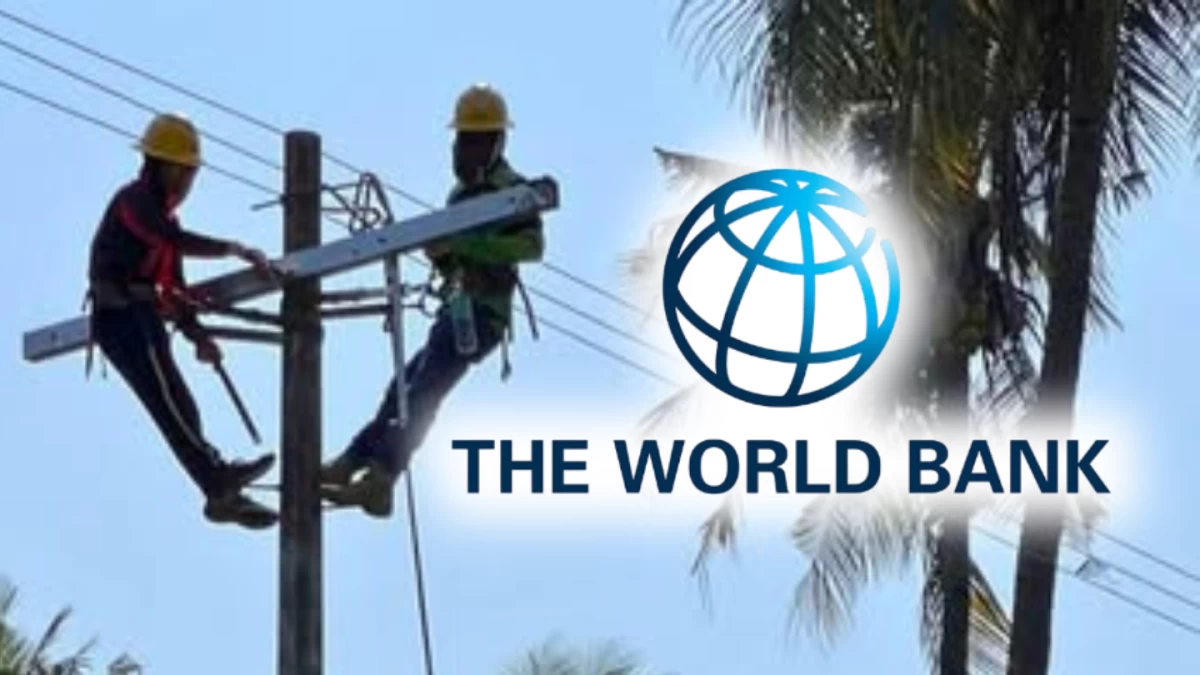
The Philippines, still under a state of national energy emergency, has secured a record $1.02-billion World Bank Group (WBG) financing package to help lower electricity costs, accelerate renewable energy (RE) adoption, and strengthen water services nationwide.
In a press release dated June 25 and published on Monday, June 29, the Washington-based multilateral lender said it approved the Second Energy Transition and Climate Resilience Development Policy Loan (DPL) for the Philippines.
The new financing package consists of a $1-billion loan from the International Bank for Reconstruction and Development (IBRD) and a $20-million performance-based grant from the Livable Planet Fund.
IBRD is the WBG’s lending arm for developing countries like the Philippines, while a DPL is a fast-disbursing loan that supports government policy and institutional reforms rather than funding specific infrastructure projects. Meanwhile, grants do not have to be repaid by recipient governments.
The World Bank said the DPL responds to one of the most pressing challenges facing Filipino households and businesses today: the high and volatile cost of electricity.
“By reducing reliance on imported fossil fuels and accelerating the deployment of homegrown energy solutions, the DPL will help shield the Philippines from global price shocks and put the country on a more secure and affordable energy path,” the World Bank said.
“The Philippines has everything it needs to power itself at lower cost—wind along its coasts, sunlight year-round, and geothermal energy beneath its soil. This operation helps turn those natural advantages into reliable, affordable electricity for Filipino families and businesses,” World Bank division director for the Philippines, Malaysia, and Brunei Zafer Mustafaoğlu said.
“At a time when global energy markets are deeply volatile, this DPL helps the Philippines take control of its own energy future, support growth, and create jobs,” Mustafaoğlu added.
The $1.02-billion package is now the largest single World Bank financing commitment for the Philippines, eclipsing the earlier $1-billion loan for the Department of Agriculture’s (DA) Philippines Sustainable Agriculture Transformation (PSAT) Program, which the lender greenlit last March and for which the Philippine government signed the agreement in May.
The World Bank said the fresh DPL supports “landmark economic actions” to scale up domestic energy capacity while mobilizing private investment.
These include the full operationalization of the RE market, the integration of electric vehicle (EV) charging into utility planning, and the launch of the Philippines’ first offshore wind (OSW) auction, which targets 3.3 gigawatts (GW) of contracted capacity by 2030.
According to the World Bank, the OSW auction would be enough to power millions of homes and is expected to mobilize about $7 billion in private investment.
By 2027, the share of installed RE capacity is targeted to rise to 42 percent from 30 percent, helping diversify the country’s energy mix and reduce exposure to imported fossil fuel price shocks, the lender noted.
The World Bank said the DPL is anchored in the Philippine Development Plan (PDP) 2023-2028 and AmBisyon Natin 2040, and is designed to mobilize private capital by creating the regulatory certainty as well as market architecture needed by investors. PDP 2023-2028 is the Marcos Jr. administration’s medium-term socioeconomic blueprint, while AmBisyon Natin 2040 is the long-term government vision aimed at making the Philippines a high-income country 14 years from now.
Beyond energy, the DPL also seeks to address long-standing challenges in the water sector, where more than 1,600 local government units (LGUs) are responsible for providing services but often lack the financing and institutional capacity to do so reliably, according to the World Bank.
The lender said the operation supports cost-recovery tariff frameworks, a unified financing structure that prioritizes poor and climate-vulnerable communities, as well as bulk water pricing regulations.
Through these reforms, the number of local water providers with sustainable business plans is targeted to increase to 100 by 2027 from 10 at present.
The World Bank said the DPL was shaped by consultations with relevant government agencies, the private sector, utilities, consumer groups, civil society organizations (CSOs), and LGUs to ensure that the reforms respond to the needs of Filipino communities.
The second DPL builds on the first $800-million loan approved last year, which established the legal framework for OSW, launched the reserve market, expanded retail energy competition, and laid the institutional foundations for sustainable local water services.
The Philippines is currently under a year-long national energy emergency due to global oil price and supply shocks caused by the prolonged war in the Middle East.
The newest World Bank financing also follows last week’s approval by the United States (US) aid agency Millennium Challenge Corp. (MCC) of a Philippine grant to support energy-sector reforms.
MCC did not disclose the grant amount, but documents earlier seen by Manila Bulletin estimated the Philippine threshold program at about $60 million.
The MCC grant is intended to help the Philippine government address the high cost and unreliability of electricity by modernizing energy-sector governance, strengthening institutions, encouraging investments, as well as expanding opportunities for American businesses.