ADVERTISEMENT

Peter Markus Jentes opens a new chapter with 'Quiet Collisions'

After years of working within the structured world of advertising, the abstract artist's latest solo exhibition reveals a practice shaped as much by emotion as precision

Published Jun 27, 2026 08:13 am
(Photo: Altro Mondo Gallery)
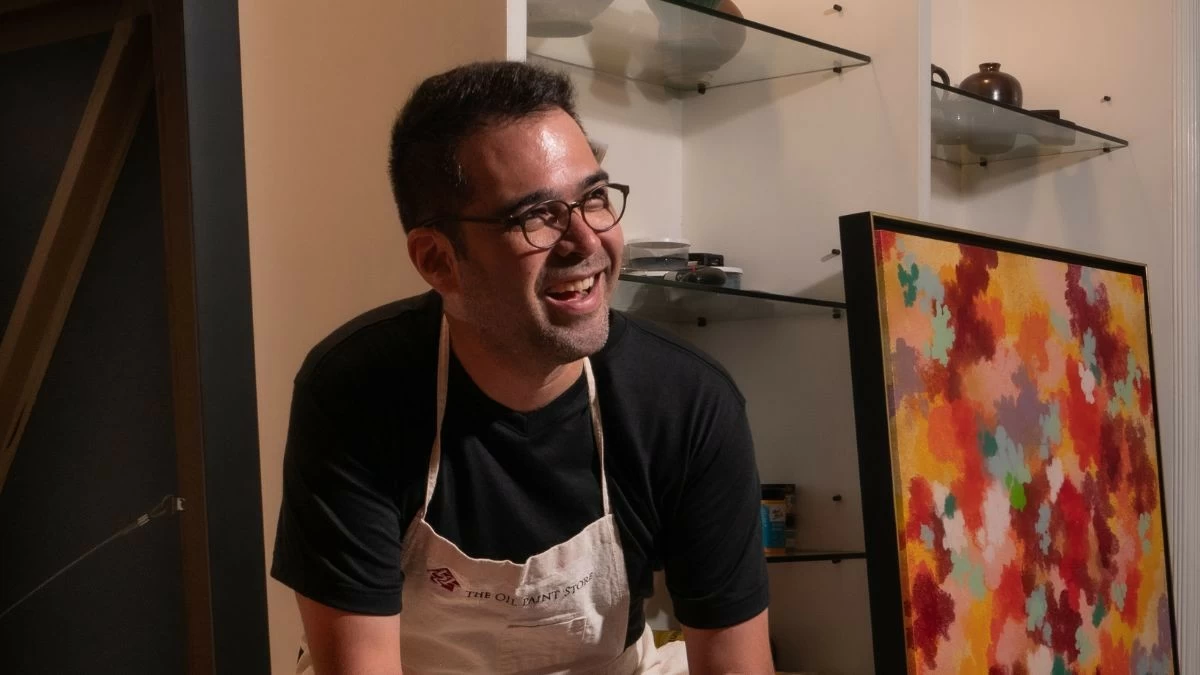
Peter Markus Jentes has always been drawn to order.
Long before he became known for his abstract paintings, Markus spent years in graphic design and advertising, where planning, precision, and structure were part of everyday work. Those same qualities defined his earliest paintings, built around hard-edged geometry and carefully measured compositions.
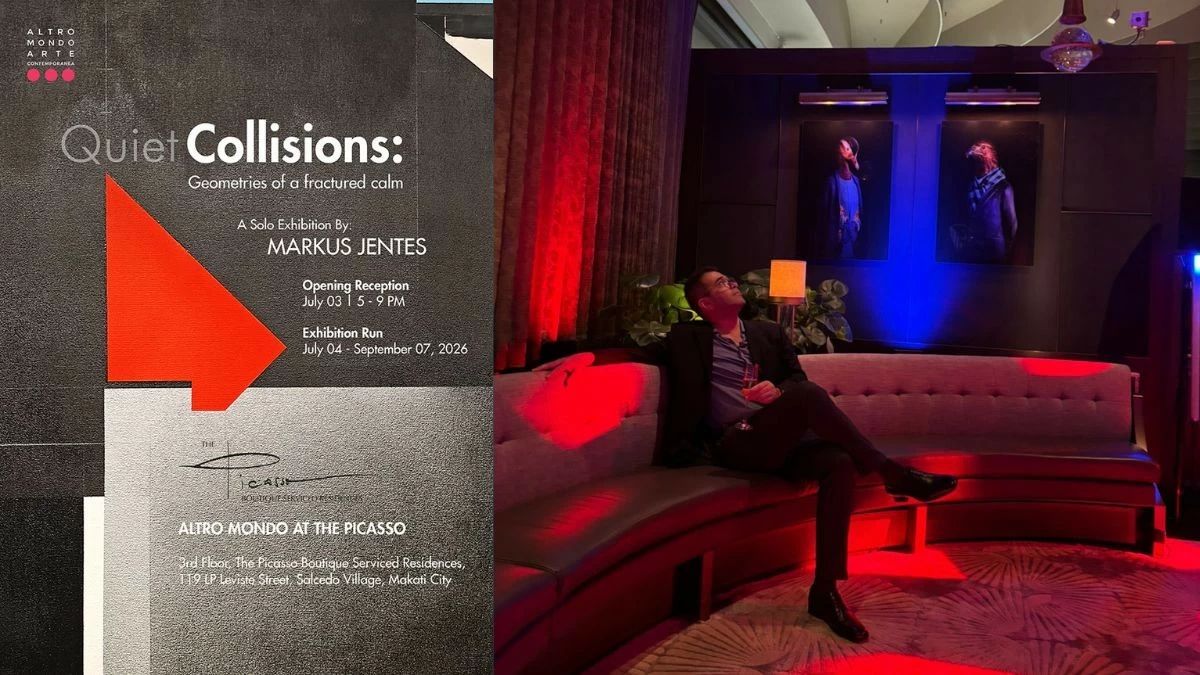
His upcoming solo exhibition, "Quiet Collisions: Geometries of a Fractured Calm," opening July 3 at Altro Mondo Gallery in Picasso Hotel, Makati, shows how that foundation has shifted. While geometry remains central to his practice, it now shares the canvas with a more personal and expressive approach.
"The evolution of my artistic style has been both a gradual journey and an enlightening process," Markus says. "While my early work focused on precise geometric compositions, recent years have seen a shift toward a more expressionist approach. This transition has allowed me to channel my experiences and emotions more freely into my art, creating a more natural and authentic feel."
A Fine Arts graduate of Pepperdine University, Markus spent nearly two decades building a career in the creative industry before returning to painting full time in 2019. His background included graphic and multimedia design, advertising, and creative direction, experiences that continue to influence how he approaches every canvas.
"My background in advertising has taught me to approach painting in a more methodical way," he says. "It involves planning, sketching, and executing at the right moments to maintain a linear progression."
(Photo: Altro Mondo Gallery)
That structure remains visible in his work, but it no longer dictates everything.
"I've come to realize that expressionism and geometry can harmoniously coexist within a piece, offering the potential to either soothe or provoke tension," Markus says. "It's a balance that I find deeply moving, and it's this interplay that defines my current work."
The shift became more pronounced over the past two years.
"Since 2024, a significant personal and family situation has heavily influenced my work, infusing it with tension and intensity," he says. "This period of experimentation led to unexpected outcomes—art that was raw, emotional, and darker than my previous work."
Those experiences shaped the works that make up "Quiet Collisions." Across the exhibition, crisp lines meet layered surfaces of acrylic, spray paint, paper, ink, coffee, and pencil, reflecting what the artist describes as the meeting point between structure and emotion. The exhibition follows that progression, from works charged with raw feeling to paintings that embrace a quieter sense of balance.
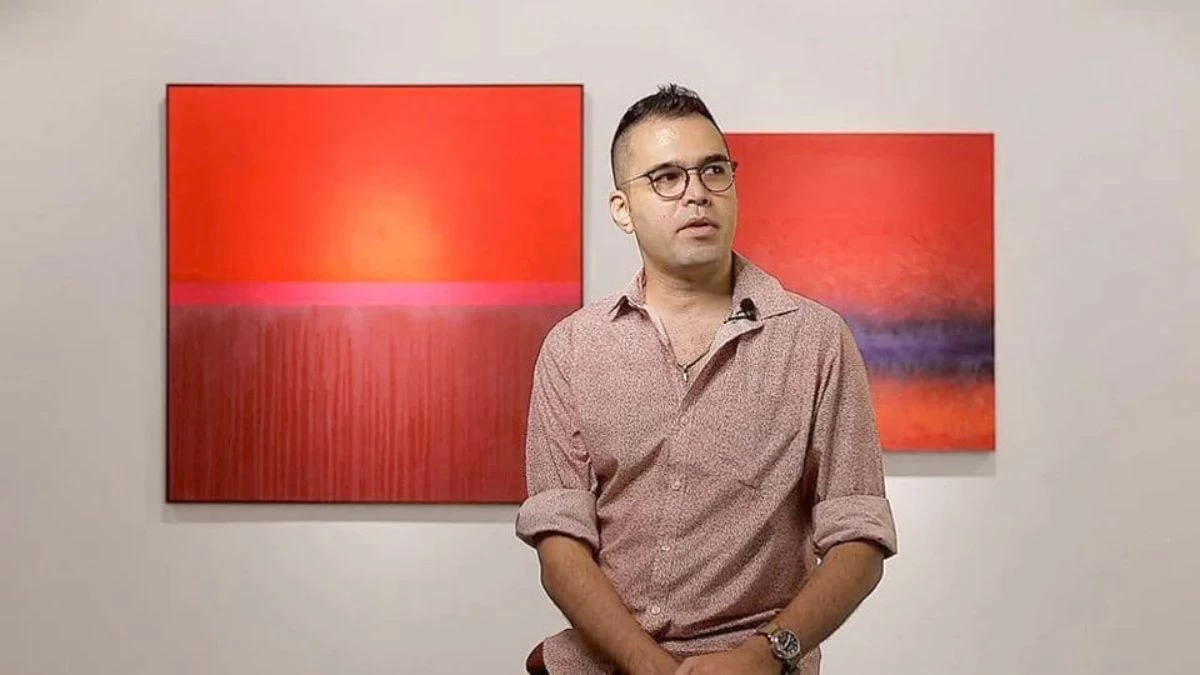
A recurring horizon line anchors much of the collection.
"The horizon is a powerful symbol of division and definition, creating boundaries that suggest either support or resistance," Markus says. "The horizon line intensifies these contrasts, often serving as a focal point in my pieces."
(Photo: Altro Mondo Gallery)
For Markus, the horizon becomes a place where opposing ideas meet—minimalism and rawness, order and chaos, geometry and spontaneity. Some paintings even feature multiple horizons, adding another layer to that visual dialogue.
His influences reflect that balance. Markus points to Mark Rothko and Fernando Zóbel for their layered use of color and emotional depth, while Frank Stella and Arturo Luz inspired his appreciation for hard-edge abstraction and mixed media.
As he continues to experiment with different materials and techniques, Markus sees "Quiet Collisions" as more than a presentation of recent works. It captures a period of personal change.
"Audiences can look forward to witnessing a more cohesive and complete evolution of my work, a journey that began in 2024," he says. "On a personal level, this body of work reflects my own transformation—a more focused and balanced self, having navigated significant challenges over the past two years."
The exhibition offers viewers a glimpse into an artist who has learned that precision and emotion do not have to compete. On Markus' canvases, they occupy the same space, each giving meaning to the other.

Related Tags

Altro Mondo Peter Markus Jentes Picasso Hotel Manila Bulletin Lifestyle
ADVERTISEMENT
.most-popular .layout-ratio{ padding-bottom: 79.13%; } @media (min-width: 768px) and (max-width: 1024px) { .widget-title { font-size: 15px !important; } }

{{ articles_filter_1561_widget.title }}

.most-popular .layout-ratio{ padding-bottom: 79.13%; } @media (min-width: 768px) and (max-width: 1024px) { .widget-title { font-size: 15px !important; } }

{{ static_articles_1562_widget.title }}

.most-popular .layout-ratio{ padding-bottom: 79.13%; } @media (min-width: 768px) and (max-width: 1024px) { .widget-title { font-size: 15px !important; } }

{{ articles_filter_1563_widget.title }}

{{ articles_filter_1564_widget.title }}

.mb-article-details { position: relative; } .mb-article-details .article-body-preview, .mb-article-details .article-body-summary{ font-size: 17px; line-height: 30px; font-family: "Libre Caslon Text", serif; color: #000; } .mb-article-details .article-body-preview iframe , .mb-article-details .article-body-summary iframe{ width: 100%; margin: auto; } .read-more-background { background: linear-gradient(180deg, color(display-p3 1.000 1.000 1.000 / 0) 13.75%, color(display-p3 1.000 1.000 1.000 / 0.8) 30.79%, color(display-p3 1.000 1.000 1.000) 72.5%); position: absolute; height: 200px; width: 100%; bottom: 0; display: flex; justify-content: center; align-items: center; padding: 0; } .read-more-background a{ color: #000; } .read-more-btn { padding: 17px 45px; font-family: Inter; font-weight: 700; font-size: 18px; line-height: 16px; text-align: center; vertical-align: middle; border: 1px solid black; background-color: white; } .hidden { display: none; }
function initializeAllSwipers() { // Get all hidden inputs with cms_article_id document.querySelectorAll('[id^="cms_article_id_"]').forEach(function (input) { const cmsArticleId = input.value; const articleSelector = '#article-' + cmsArticleId + ' .body_images'; const swiperElement = document.querySelector(articleSelector); if (swiperElement && !swiperElement.classList.contains('swiper-initialized')) { new Swiper(articleSelector, { loop: true, pagination: false, navigation: { nextEl: '#article-' + cmsArticleId + ' .swiper-button-next', prevEl: '#article-' + cmsArticleId + ' .swiper-button-prev', }, }); } }); } setTimeout(initializeAllSwipers, 3000); const intersectionObserver = new IntersectionObserver( (entries) => { entries.forEach((entry) => { if (entry.isIntersecting) { const newUrl = entry.target.getAttribute("data-url"); if (newUrl) { history.pushState(null, null, newUrl); let article = entry.target; // Extract metadata const author = article.querySelector('.author-section').textContent.replace('By', '').trim(); const section = article.querySelector('.section-info ').textContent.replace(' ', ' '); const title = article.querySelector('.article-title h1').textContent; // Parse URL for Chartbeat path format const parsedUrl = new URL(newUrl, window.location.origin); const cleanUrl = parsedUrl.host + parsedUrl.pathname; // Update Chartbeat configuration if (typeof window._sf_async_config !== 'undefined') { window._sf_async_config.path = cleanUrl; window._sf_async_config.sections = section; window._sf_async_config.authors = author; } // Track virtual page view with Chartbeat if (typeof pSUPERFLY !== 'undefined' && typeof pSUPERFLY.virtualPage === 'function') { try { pSUPERFLY.virtualPage({ path: cleanUrl, title: title, sections: section, authors: author }); } catch (error) { console.error('ping error', error); } } // Optional: Update document title if (title && title !== document.title) { document.title = title; } } } }); }, { threshold: 0.1 } ); function showArticleBody(button) { const article = button.closest("article"); const summary = article.querySelector(".article-body-summary"); const body = article.querySelector(".article-body-preview"); const readMoreSection = article.querySelector(".read-more-background"); // Hide summary and read-more section summary.style.display = "none"; readMoreSection.style.display = "none"; // Show the full article body body.classList.remove("hidden"); } document.addEventListener("DOMContentLoaded", () => { let loadCount = 0; // Track how many times articles are loaded const offset = [1, 2, 3, 4, 5, 6, 7, 8, 9, 10]; // Offset values const currentUrl = window.location.pathname.substring(1); let isLoading = false; // Prevent multiple calls if (!currentUrl) { console.log("Current URL is invalid."); return; } const sentinel = document.getElementById("load-more-sentinel"); if (!sentinel) { console.log("Sentinel element not found."); return; } function isSentinelVisible() { const rect = sentinel.getBoundingClientRect(); return ( rect.top < window.innerHeight && rect.bottom >= 0 ); } function onScroll() { if (isLoading) return; if (isSentinelVisible()) { if (loadCount >= offset.length) { console.log("Maximum load attempts reached."); window.removeEventListener("scroll", onScroll); return; } isLoading = true; const currentOffset = offset[loadCount]; window.loadMoreItems().then(() => { let article = document.querySelector('#widget_1690 > div:nth-last-of-type(2) article'); intersectionObserver.observe(article) loadCount++; }).catch(error => { console.error("Error loading more items:", error); }).finally(() => { isLoading = false; }); } } window.addEventListener("scroll", onScroll); });

Sign up by email to receive news.