






 Philippines
National
Marcos orders swift resolution of LRT-1 Cavite Extension right-of-way issues
Philippines
National
Marcos orders swift resolution of LRT-1 Cavite Extension right-of-way issues
Marcos orders swift resolution of LRT-1 Cavite Extension right-of-way issues


At A Glance
- President Marcos has directed the Department of Transportation to immediately resolve right-of-way issues delaying the LRT-1 Cavite Extension project.
- Malacañang said the public should not suffer because of prolonged disputes over land acquisition.
- The P64.9-billion project is funded through a public-private partnership involving the national government, JICA, and Light Rail Manila Corp.
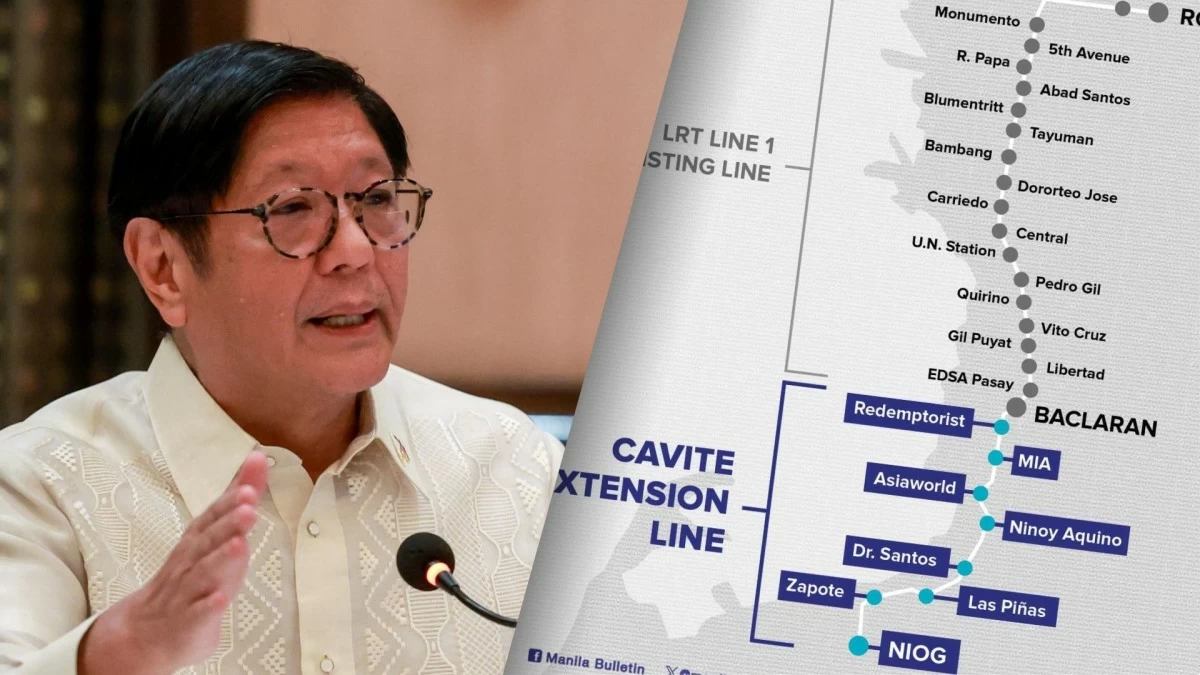
President Marcos has ordered the Department of Transportation (DOTr) to immediately resolve the long-standing right-of-way issues delaying the completion of the Light Rail Transit Line 1 (LRT-1) Cavite Extension project, saying the commuting public should no longer bear the consequences of the stalled infrastructure.
In a press briefing, Presidential Communications Office (PCO) Undersecretary Claire Castro said the President has instructed Transportation Secretary Giovanni Lopez to fast-track the resolution of right-of-way concerns, including issues involving the planned Las Piñas Station.
"Nais ni Pangulong Ferdinand R. Marcos Jr. na matapos ang LRT-1 Cavite Extension para sa ikagiginhawa nang mas maraming mananakay (President Marcos wants the LRT-1 Cavite Extension completed to ease the commute of more passengers),” she said on Thursday, June 25.
"Matagal na nakabinbin ang nasabing proyekto at hindi dapat ang taumbayan ang magdurusa sa pag-delay nito dahil lamang sa usapin ng right-of-way (The project has long been delayed, and the public should not suffer because of delays caused solely by right-of-way issues),” she added.
According to the Palace Press Officer, President Marcos wants the project completed as quickly as possible to provide relief to commuters.
"Mabilisang pagtatapos ng proyekto ang nais ng Pangulo para sa ikagiginhawa ng taumbayan (The President wants the project completed as soon as possible for the convenience of the public),” Castro said.
The LRT-1 Cavite Extension is expected to extend the existing rail line farther into southern Metro Manila and Cavite, improving connectivity and reducing travel time for hundreds of thousands of daily commuters.
According to the Palace, the LRT-1 Cavite Extension is a P64.9-billion project being implemented through a public-private partnership involving the national government, the Japan International Cooperation Agency (JICA), and private concessionaire Light Rail Manila Corporation (LRMC).
The project is being financed through official development assistance from Japan alongside investments from the private sector.
Appeal to stakeholders
Castro stressed that the government is not responsible for the current delays and urged all parties involved to cooperate in bringing the project to completion.
"Hindi po gobyerno ang dahilan ng delay sa pag-usad ng proyektong ito, kaya sabay-sabay nating kalampagin ang iba pang stakeholders na makipagkaisa at makipagtulungan na huwag maging balakid sa mabilisang pagtatapos ng proyekto (The government is not the reason for the delay in the project's implementation. Let us urge the other stakeholders to unite and cooperate instead of becoming obstacles to its immediate completion),” she said.
She added that the welfare of commuters should take precedence over the interests of private entities or politicians.
“Ang dapat na mangibabaw ay ang interest ng mananakay at hindi ang interes ng ilang kumpanya o politiko (The interest of commuters—not the interests of certain companies or politicians—should prevail),” Castro said.
At present, the LRT-1 operates 25 stations, stretching from Fernando Poe Jr. Station in Quezon City to Dr. Santos Station in Parañaque, following the opening of the first phase of the Cavite Extension in November 2024.
Once the entire Cavite Extension is completed, three more stations—Las Piñas, Zapote, and Niog—will be added, bringing the total number of LRT-1 stations to 28.