ADVERTISEMENT

World Bank urges EPR-first approach as Philippines weighs plastic tax

Published Jun 24, 2026 06:13 pm
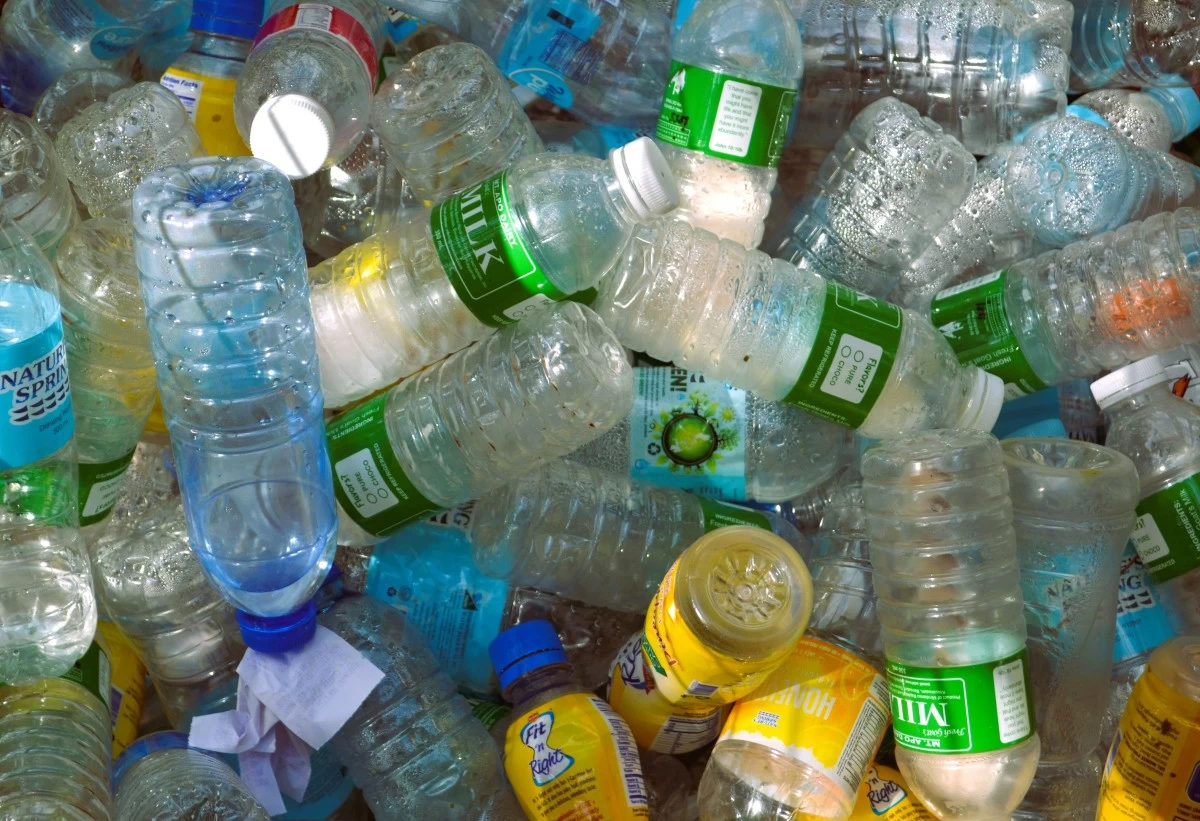
Plastic bottles are a major source of environmental pollution, contributing to ocean contamination, microplastics, greenhouse gas emissions, and long-lasting waste.

The World Bank has urged the Philippines to prioritize the implementation of the Extended Producer Responsibility (EPR) Act and expand waste-management infrastructure before imposing stricter restrictions on single-use plastics, saying a carefully sequenced approach offers the best chance of cutting pollution while protecting vulnerable groups.

In a report titled “Plastic Policy Development in the Philippines: Insights from Key Stakeholders Across the Plastic Value Chain,” published last Tuesday, June 23, the Washington-based multilateral lender said policymakers should first focus on making the EPR framework work, expand waste-management infrastructure, and ensure affordable alternatives are available before tightening regulations on single-use plastic products (SUPPs).

The EPR Act of 2022 requires large firms to finance the recovery and proper management of the plastic packaging waste generated by their products.

“The findings point to a clear set of priorities for sequencing and implementing plastic policy reforms to maximize impact and limit adverse effects,” the World Bank said.

“Effective implementation of the EPR Act emerges as the immediate priority, supported by investments in waste segregation, collection, and material recovery infrastructure that underpin all reforms,” it added.

The report also stressed the need to expand refill-and-reuse systems as well as affordable alternatives before imposing stricter SUPP restrictions, particularly in a country where dependence on plastic sachets remains widespread. Targeted support for informal workers, small vendors, and low-income consumers, alongside effective communication as well as credible enforcement, would be needed to maintain public support and ensure a “just transition.”

The recommendations come as the Philippines continues to grapple with mounting plastic pollution despite years of economic growth. According to the report, rising incomes and consumption have outpaced investments in waste-management infrastructure, leaving the country among the world’s major contributors to marine plastic pollution. The report noted that plastic waste contributes to greenhouse gas (GHG) emissions and can worsen flooding by obstructing drainage systems as well as waterways.

Drawing on simulations using the World Bank’s plastics policy simulator (PPS), as well as surveys of stakeholders and informal workers, the report found that the country generated about 2.07 million metric tons (MT) of plastic waste in 2020. Without additional reforms, that volume is projected to more than double to 4.6 million MT by 2040, with 2.3 million MT expected to be mismanaged. GHG emissions across the plastic value chain are likewise projected to rise from nine million MT of carbon dioxide equivalent (MtCO2e) to 20 MtCO2e over the same period.

The World Bank’s PPS analysis also estimated that 49 percent of plastic waste is mismanaged.

Among the three policy instruments assessed, the World Bank said the EPR Act has the greatest potential impact, with simulations showing it could reduce virgin plastic use by 19 percent, or about 0.86 million MT, mismanaged plastic waste by 16 percent, or around 0.66 million MT, and GHG emissions by 19 percent, or roughly 3.6 MtCO2e, by 2040 compared with a business-as-usual scenario.

By comparison, a proposed excise tax on plastic bags would reduce virgin plastic use by only four percent and mismanaged plastic waste by just three percent. A SUPP reduction policy could produce larger environmental gains, but only under high-compliance conditions, with reductions in virgin plastic use and GHG emissions reaching 22 percent.

The report noted, however, that stakeholders were skeptical about the effectiveness of a plastic-bag excise tax, arguing that it would likely be passed on to consumers rather than changing producer behavior. As a result, the World Bank recommended treating the tax as a supporting measure rather than the main driver of behavioral change.

The lender also highlighted challenges surrounding efforts to phase out SUPPs. Filipinos use nearly 60 billion sachets annually, and viable alternatives for sachets as well as certain food-packaging applications remain limited because of affordability and food-safety concerns.

At the same time, the report found broad support for plastics reform. It noted that 87 percent of informal workers surveyed backed measures to reduce plastic waste despite concerns about potential short-term income losses. Waste pickers were identified as the group most vulnerable to adverse impacts, with 10 percent of wage earners and 38 percent of self-employed waste pickers reporting lower earnings linked to plastic policy reforms.

Given these findings, the World Bank recommended a five-step reform sequence: fully operationalize the EPR system, expand waste-management infrastructure, gradually tighten SUPP restrictions as alternatives become available, use the excise tax as a supporting tool, and consider waste-to-energy (WtE) projects only where waste streams, collection systems, as well as regulatory capacity can safely support them.

Related Tags

World Bank Extended Producer Responsibility Act single-use plastics
ADVERTISEMENT
.most-popular .layout-ratio{ padding-bottom: 79.13%; } @media (min-width: 768px) and (max-width: 1024px) { .widget-title { font-size: 15px !important; } }

{{ articles_filter_1561_widget.title }}

.most-popular .layout-ratio{ padding-bottom: 79.13%; } @media (min-width: 768px) and (max-width: 1024px) { .widget-title { font-size: 15px !important; } }

{{ static_articles_1562_widget.title }}

.most-popular .layout-ratio{ padding-bottom: 79.13%; } @media (min-width: 768px) and (max-width: 1024px) { .widget-title { font-size: 15px !important; } }

{{ articles_filter_1563_widget.title }}

{{ articles_filter_1564_widget.title }}

.mb-article-details { position: relative; } .mb-article-details .article-body-preview, .mb-article-details .article-body-summary{ font-size: 17px; line-height: 30px; font-family: "Libre Caslon Text", serif; color: #000; } .mb-article-details .article-body-preview iframe , .mb-article-details .article-body-summary iframe{ width: 100%; margin: auto; } .read-more-background { background: linear-gradient(180deg, color(display-p3 1.000 1.000 1.000 / 0) 13.75%, color(display-p3 1.000 1.000 1.000 / 0.8) 30.79%, color(display-p3 1.000 1.000 1.000) 72.5%); position: absolute; height: 200px; width: 100%; bottom: 0; display: flex; justify-content: center; align-items: center; padding: 0; } .read-more-background a{ color: #000; } .read-more-btn { padding: 17px 45px; font-family: Inter; font-weight: 700; font-size: 18px; line-height: 16px; text-align: center; vertical-align: middle; border: 1px solid black; background-color: white; } .hidden { display: none; }
function initializeAllSwipers() { // Get all hidden inputs with cms_article_id document.querySelectorAll('[id^="cms_article_id_"]').forEach(function (input) { const cmsArticleId = input.value; const articleSelector = '#article-' + cmsArticleId + ' .body_images'; const swiperElement = document.querySelector(articleSelector); if (swiperElement && !swiperElement.classList.contains('swiper-initialized')) { new Swiper(articleSelector, { loop: true, pagination: false, navigation: { nextEl: '#article-' + cmsArticleId + ' .swiper-button-next', prevEl: '#article-' + cmsArticleId + ' .swiper-button-prev', }, }); } }); } setTimeout(initializeAllSwipers, 3000); const intersectionObserver = new IntersectionObserver( (entries) => { entries.forEach((entry) => { if (entry.isIntersecting) { const newUrl = entry.target.getAttribute("data-url"); if (newUrl) { history.pushState(null, null, newUrl); let article = entry.target; // Extract metadata const author = article.querySelector('.author-section').textContent.replace('By', '').trim(); const section = article.querySelector('.section-info ').textContent.replace(' ', ' '); const title = article.querySelector('.article-title h1').textContent; // Parse URL for Chartbeat path format const parsedUrl = new URL(newUrl, window.location.origin); const cleanUrl = parsedUrl.host + parsedUrl.pathname; // Update Chartbeat configuration if (typeof window._sf_async_config !== 'undefined') { window._sf_async_config.path = cleanUrl; window._sf_async_config.sections = section; window._sf_async_config.authors = author; } // Track virtual page view with Chartbeat if (typeof pSUPERFLY !== 'undefined' && typeof pSUPERFLY.virtualPage === 'function') { try { pSUPERFLY.virtualPage({ path: cleanUrl, title: title, sections: section, authors: author }); } catch (error) { console.error('ping error', error); } } // Optional: Update document title if (title && title !== document.title) { document.title = title; } } } }); }, { threshold: 0.1 } ); function showArticleBody(button) { const article = button.closest("article"); const summary = article.querySelector(".article-body-summary"); const body = article.querySelector(".article-body-preview"); const readMoreSection = article.querySelector(".read-more-background"); // Hide summary and read-more section summary.style.display = "none"; readMoreSection.style.display = "none"; // Show the full article body body.classList.remove("hidden"); } document.addEventListener("DOMContentLoaded", () => { let loadCount = 0; // Track how many times articles are loaded const offset = [1, 2, 3, 4, 5, 6, 7, 8, 9, 10]; // Offset values const currentUrl = window.location.pathname.substring(1); let isLoading = false; // Prevent multiple calls if (!currentUrl) { console.log("Current URL is invalid."); return; } const sentinel = document.getElementById("load-more-sentinel"); if (!sentinel) { console.log("Sentinel element not found."); return; } function isSentinelVisible() { const rect = sentinel.getBoundingClientRect(); return ( rect.top < window.innerHeight && rect.bottom >= 0 ); } function onScroll() { if (isLoading) return; if (isSentinelVisible()) { if (loadCount >= offset.length) { console.log("Maximum load attempts reached."); window.removeEventListener("scroll", onScroll); return; } isLoading = true; const currentOffset = offset[loadCount]; window.loadMoreItems().then(() => { let article = document.querySelector('#widget_1690 > div:nth-last-of-type(2) article'); intersectionObserver.observe(article) loadCount++; }).catch(error => { console.error("Error loading more items:", error); }).finally(() => { isLoading = false; }); } } window.addEventListener("scroll", onScroll); });

Sign up by email to receive news.