






Manila Bulletin
 Business
The Economy
Philippines slipped to lower economic target amid fiscal paralysis
Business
The Economy
Philippines slipped to lower economic target amid fiscal paralysis
Business
The Economy
Philippines slipped to lower economic target amid fiscal paralysis
Philippines slipped to lower economic target amid fiscal paralysis
Published Jun 23, 2026 12:01 am
|
Updated Jun 23, 2026 06:21 am


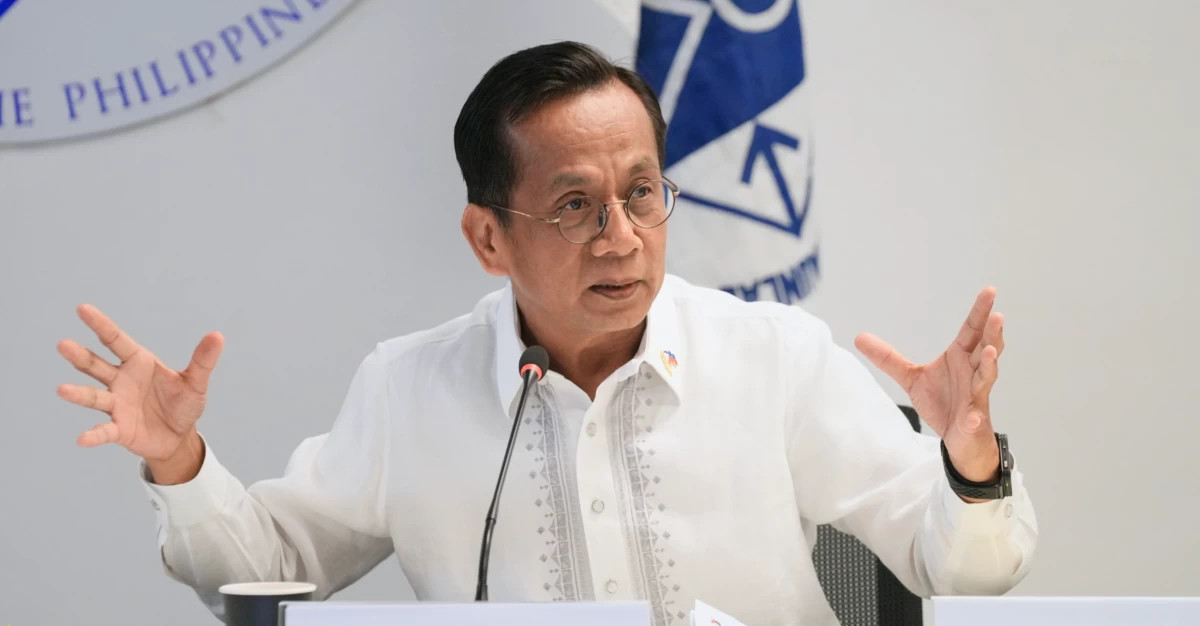
DEPDev Secretary Arsenio M. Balisacan
President Marcos’ economic managers are poised to lower the country's economic growth targets as the lingering effects of state underspending, an infrastructure corruption scandal, and external inflationary pressures weigh down the near-term outlook.
In an interview on TV5’s Money Talks, Economic Planning Secretary Arsenio Balisacan stated that the inter-agency Development Budget Coordination Committee (DBCC) has concluded its review of macroeconomic assumptions.
The official announcement regarding the adjusted gross domestic product (GDP) expansion targets is expected within the week.
Economic managers are now anchoring their expectations to a modest 3.5 percent to 4.5 percent GDP expansion for 2026. This recalibration follows a disappointing 2.8 percent growth rate in the first quarter, which missed consensus forecasts and exposed deep structural vulnerabilities in state spending.
According to Balisacan, a primary driver of the slowdown is institutional inertia within the Department of Public Works and Highways (DPWH). Stringent review measures implemented in the wake of the “Floodgate” flood-control corruption scandal significantly delayed capital outlays, and this fiscal paralysis directly impaired national output.
Balisacan estimated that state underspending alone shaved approximately one percentage point off first-quarter growth, which otherwise would have reached 3.8 percent.
While the executive branch anticipates a fiscal rebound in the second half of the year driven by an accelerated deployment of public funds, the current quarter remains compromised. The economy continues to digest the lagging effects of last year’s supply bottlenecks and structural delays.
Subduing inflation expectations remains central to the government’s strategy. While external shocks—chiefly the geopolitical conflict in the Middle East and subsequent energy volatility—drove headline inflation upward, domestic policy is focused on breaking the link between temporary price spikes and structural inflation.
The government has resisted broad, non-targeted subsidies to avoid the fiscal strain observed in peer economies like Indonesia. Instead, the administration has opted for targeted relief for the transport sector and vulnerable demographics to preserve its narrow fiscal runway.
Addressing potential structural changes to the tax regime, Balisacan maintained that any proposed personal income tax cuts or legislated wage hikes must achieve strict revenue neutrality.
The Department of Economy, Planning, and Development (DEPDev) has challenged Congress to identify alternative revenue streams to offset potential losses before enacting tax relief, emphasizing that tax erosion cannot come at the expense of fiscal stability or poverty reduction programs.
Despite near-term growth downgrades, Balisacan pointed to improving structural fundamentals. He cited the recent World Competitiveness Report alongside a World Bank study showing that the Philippine Gini coefficient—a key metric of income inequality—has dropped below the high-threshold 40 percent level. The administration aims to leverage these metrics to sustain foreign investor confidence amid an increasingly competitive global market for capital.