







Fed-up consumers take over the energy market
Power to the people:
Published Jun 20, 2026 07:38 am


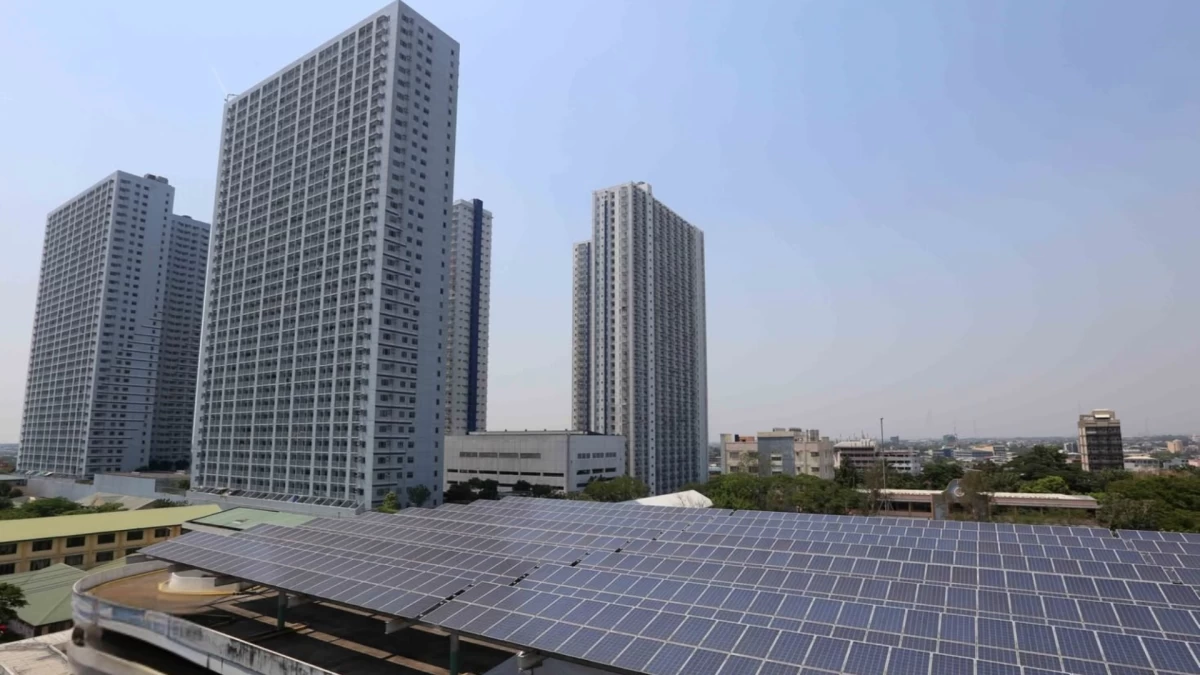
High-density areas like Pasay City and Quezon City are leading the charge in decentralized energy. Experts estimate that untapped solar potential on Metro Manila’s available rooftops sits at a massive 19 gigawatts.
For decades, the relationship between Filipino consumers and their electricity providers was entirely one-sided. If you lived in Metro Manila, you paid whatever the Manila Electric Co. (Meralco) billed you. If the summer heat strained the power plants feeding the high-voltage lines of the National Grid Corporation of the Philippines (NGCP), you sat in the dark and waited. There were no alternatives, no negotiations, and no escape from seasonal bill shocks.
But now, fueled by frustration over persistent power outages and some of the highest electricity rates in Asia, ordinary consumers are staging an aggressive takeover of the domestic energy market.
As multi-billion-peso conventional power plants suffer unexpected shutdowns and the national transmission system struggles to cope with peak summer demand, homeowners are deploying their own cash to keep the lights on. By doing so, everyday citizens are accidentally saving the national grid from total breakdown.
Consider Anthony, a homeowner and the breadwinner for his family in Nueva Ecija. Fed up with unpredictable monthly bills and the threat of rolling blackouts during the brutal summer months, he decided to bypass the traditional system.
Anthony spent approximately ₱360,000 to install a seven-kilowatt hybrid solar system on his roof. The setup includes a six-kilowatt inverter and 16 kilowatt-hours of battery storage. Because the project was residential, the entire process took less than a month, from the initial site assessment and local permits to the final setup.
Today, Anthony’s family enjoys near-total power independence and a massive drop in monthly utility expenses.
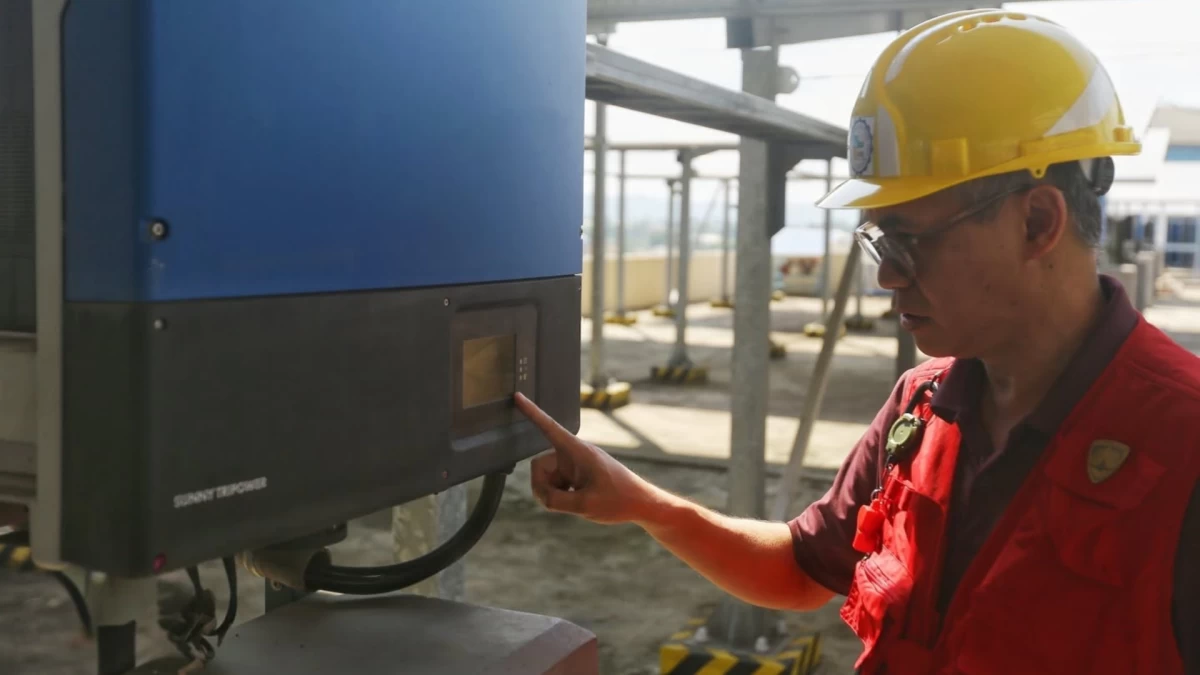
A technician inspects a battery storage system. Homeowners are increasingly fronting steep upfront costs for hybrid solar setups, trading short-term capital for long-term protection against seasonal utility bill shocks.
The trade-off here is clear, he had to front a steep upfront cost and faces the inevitable future expense of replacing the batteries. But for a growing number of Filipinos, that capital layout looks increasingly like a sound investment.
This is not an isolated trend. Data from SPECTRUM, a solar mapping platform developed by the Institute for Climate and Sustainable Cities (ICSC), revealed that rooftop solar adoption has taken urban Luzon by storm. Across 17 cities and municipalities in the national capital region (NCR), there is now more than 140 megawatts of solar capacity.
In a surprising twist, the residential sector has overtaken the commercial sector, accounting for 44.25 percent of that urban solar footprint. Everyday homeowners, not massive factories or sprawling shopping malls, are driving the transition.
The ICSC data highlighted how this deployment breaks down across specific cities in Metro Manila. Quezon City currently leads the NCR in total residential adoption with an estimated capacity of 20.22 megawatts. Parañaque follows in second place with 5.72 megawatts of residential capacity, while high-density Manila ranks third at 5.30 megawatts. Meanwhile, Pasay City boasts the highest percentage of total rooftop utilization, with 2.15 percent of its entire building area covered by solar panels, effectively feeding clean energy into the entertainment and retail hub.
Monopolies play catch-up
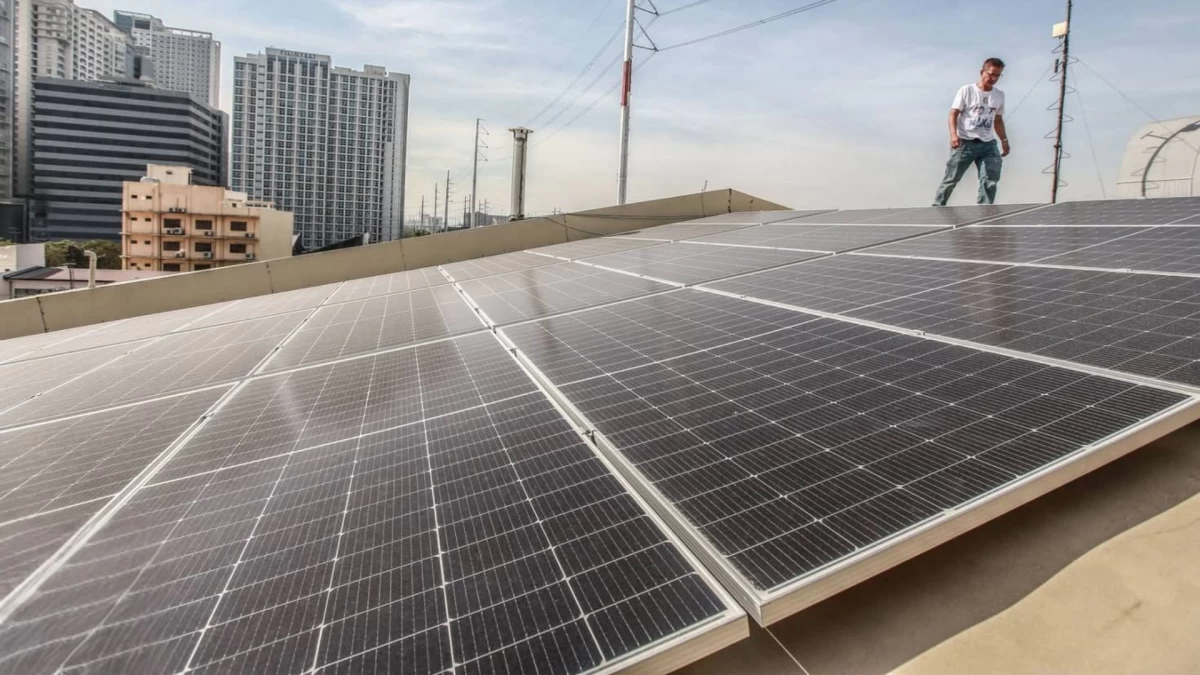
Traditional utilities like Meralco are upgrading infrastructure to handle bidirectional power flows as residential solar connections see exponential 30 percent monthly growth.
This decentralized solar boom is directly impacting the financial performance of traditional utilities. Meralco, which commands the country’s largest power distribution franchise, recently reported a 1.5 percent drop in traditional power sales. At the same time, the utility is seeing an exponential 30 percent monthly growth in new solar connections.
The company’s leadership recognizes that the traditional utility business model must change. Ronnie Aperocho, Meralco chief operating officer, insisted the company is not trying to fight the shift.
“At the end of the day, we support of course the customer access to renewable energy or cost-efficient source of energy, like rooftop solars,” Aperocho said.
To protect its market position, Meralco is moving into consumer solar services. The utility now offers a zero-cashout, financed solarization program to eliminate upfront costs for homeowners. It is also rolling out an advanced Distributed Energy Resource Management System alongside smart metering infrastructure to better track how electricity moves through neighborhoods.
However, this rapid growth has triggered regulatory friction. Aperocho warned that “guerrilla” solar systems, which are unaccredited installations that bypass local electrical codes, engineering inspections, and utility notifications, are spreading quickly through Meralco’s franchise area’s neighborhoods. While these systems save money upfront, they pose serious fire hazards and can destabilize local distribution transformers when power flows backward into the system unexpectedly.
Samuel Zantua, an area manager at the engineering and construction firm Unitec Resources, explained that these unauthorized setups are a predictable response to red tape.
Homeowners want quick, cheap relief from high bills and choose to skip the bureaucratic delays of local government building permits. When homeowners take the legal route, Zantua said demand is robust, with his firm regularly handling residential inquiries ranging from three-kilowatt to 20-kilowatt systems, alongside rising interest from industrial clients looking to hedge against volatile electricity rates.
Easing the strain on fragile grid
The impact of thousands of mini-power plants goes far beyond local neighborhoods. It changes how electricity moves across the entire country.
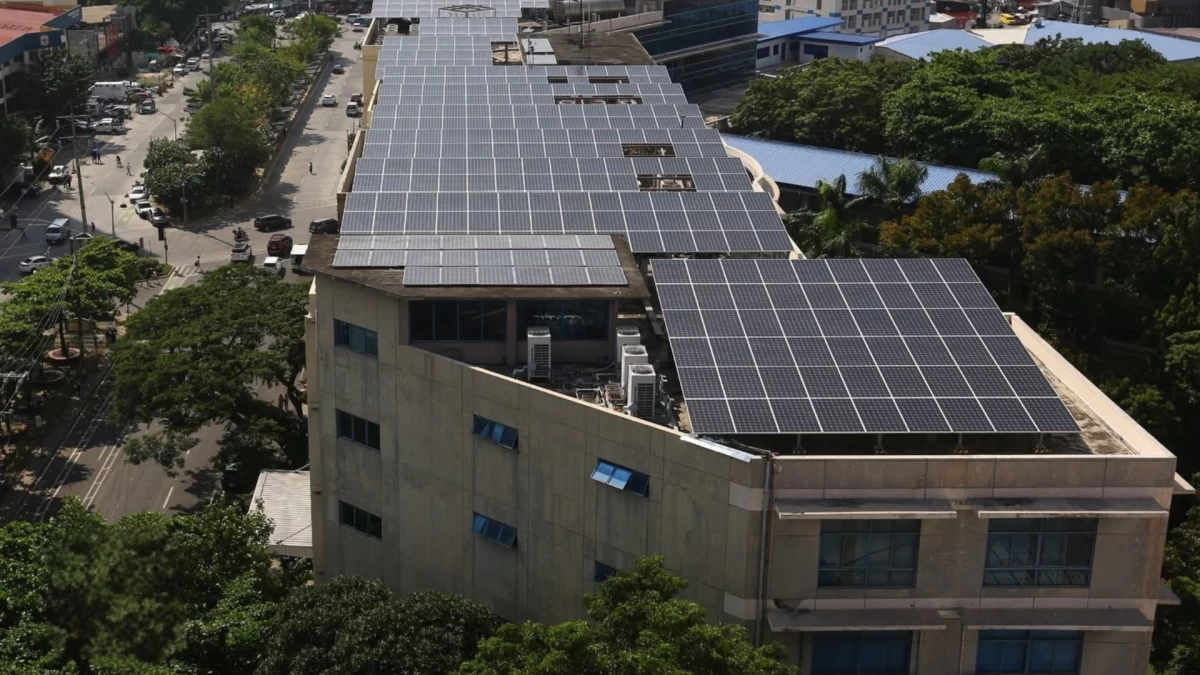
Solar panels blanket a residential building roof in Quezon City. According to data from the Institute for Climate and Sustainable Cities (ICSC), the residential sector now drives urban Luzon’s solar boom, accounting for over 44 percent of the region's 140-megawatt urban solar footprint.
Historically, power flowed in one direction, moving from massive coal or gas plants, through high-voltage transmission lines managed by NGCP, down to local distributors, and finally to homes. Rooftop solar creates a bidirectional flow, where households consume power from the grid at night but pump excess energy back into it during the day.
This dynamic reduces the overall demand for bulk energy transport from distant power plants into major cities, easing the physical strain on the transmission network. This relief is critical. Throughout May and early June of 2026, NGCP was forced to issue repeated yellow and red alerts in the Visayas and Luzon grids. These alerts signal that power reserves have dropped to dangerously low levels, often because aging coal plants failed or primary transmission lines became overloaded during peak heatwaves.
To cope with this changing energy landscape, NGCP is working through a decade-long modernization plan to upgrade its substations and expand its fiber-optic bandwidth. The goal is to create a smarter grid by 2050 that can automatically balance the erratic, point-to-point power shifts caused by residential solar exports and net-metering programs.
The long-term outlook for traditional and centralized baseload power is shifting. ICSC estimated that the untapped solar potential on available rooftops in Metro Manila alone sits at a massive 19 gigawatts. If even a fraction of that potential is realized, the country’s heavy reliance on fossil fuels will diminish significantly.
This consumer-led shift aligns with government efforts to diversify the energy mix. The Department of Energy (DOE) is managing several rounds of green energy auctions throughout 2026, aiming to bring at least 3.2 gigawatts of new solar capacity online by 2028.
The latest data from the Independent Electricity Market Operator of the Philippines (IEMOP) showed that renewable energy has already captured a 20.2 percent share of the national generation mix. While conventional fossil-fuel plants still supply nearly 80 percent of the country's power, regional markets showed how fast things are changing. In the Visayas grid, renewables now account for 45.9 percent of total generation, nearly matching non-renewable sources.
As the country faces the realities of an aging energy infrastructure and unpredictable fuel prices, the definition of a power producer has changed. The energy transition in the country is not just happening in boardrooms or utility-scale solar farms. It is being financed, one rooftop at a time, by citizens who decided they had waited in the dark long enough.