

ADVERTISEMENT

Palace denies weaponizing ICC against Duterte allies

Published Jun 18, 2026 09:09 am

At A Glance

  • Malacañang denied claims that the Marcos administration is using the International Criminal Court (ICC) as a political weapon against Duterte allies.
  • Palace Press Officer Claire Castro said the ICC cases stemmed from complaints filed by Filipinos as early as 2017 over alleged extrajudicial killings (EJKs).
  • Castro maintained that if the ICC issues a valid warrant of arrest, it remains valid and should not automatically be blamed on the government.
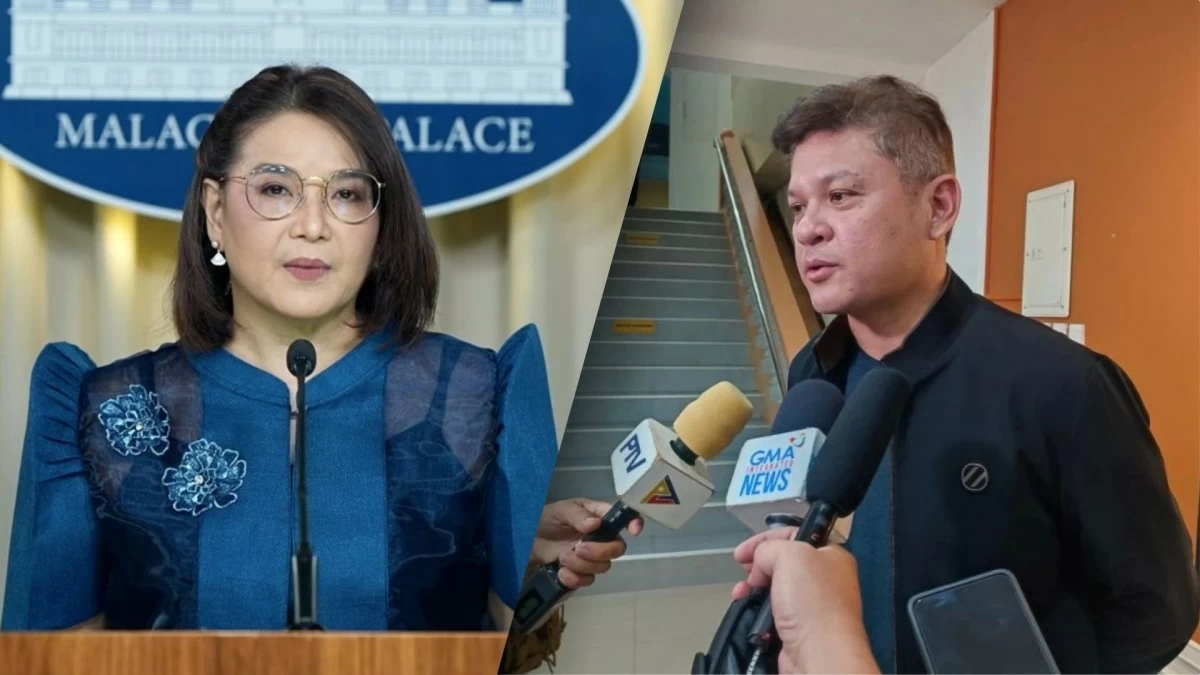
Palace Press Officer Claire Castro and Davao City 1st District Rep. Paolo Duterte (File photos)

Malacañang has denied accusations that the Marcos administration is weaponizing the International Criminal Court (ICC) against its political opponents, saying the cases before the international tribunal originated from complaints filed by Filipinos themselves as early as 2017.

Presidential Communications Office (PCO) Undersecretary Claire Castro said this after Davao City 1st District Rep. Paolo Duterte accused the administration of using the ICC to go after political rivals, particularly amid reports that arrest warrants may have been issued against Sen. Christopher "Bong" Go and two former police officers.

Speaking to Palace reporters on the sidelines of the ASEAN-Russia Commemorative Summit in Kazan, Russia, on Thursday, June 18, Castro dismissed Duterte’s claims, asking why critics always blame the administration. 

"Alam naman natin yung ICC, korte ito at meron namang kaso. May kaso na kapwa nating Pilipino ang nagsampa laban sa mga diumanong pang-aabuso patungkol sa EJK (extrajudicial killings). So huwag nating kalimutan iyan. Pilipino rin po ang nagsampa ng kaso (We know that the ICC is a court and that there is a case before it. It is a case filed by our fellow Filipinos regarding alleged abuses involving the EJKs. So let us not forget that. Filipinos themselves filed the case),” she said.

"So bakit ba lagi nating sinisisi ang korte? Sinisisi natin ang administrasyon? Huwag nating kalimutan na yung kaso, nasampa ito 2017 pa. So hindi ito wine-weaponize (So why do we always blame the court? Why do we blame the administration? Let us not forget that the case was filed as early as 2017. So this is not being weaponized),” she added.

Castro said the complainants merely wanted accountability and justice.

"Kung may kailangan managot, dapat na managot. Kung kailangan may malinis na pangalan, malinis ang pangalan (If someone needs to be held accountable, then that person should be held accountable. If someone deserves to have his or her name cleared, then that name should be cleared),” she said.

Representative Duterte earlier claimed on Facebook that a "highly reliable source" had informed him that ICC arrest warrants had already been issued against Go and two former police officers, and accused the administration of using the ICC as a "political weapon" against its opponents.

Castro stressed that if the ICC issues a valid warrant of arrest, it remains legally valid.

She, however, did not confirm whether any warrant had indeed been issued.

The ICC has been investigating alleged crimes against humanity linked to former president Rodrigo Duterte's anti-illegal drugs campaign, particularly incidents that occurred when the Philippines was still a member of the Rome Statute.

Sovereignty issue being used to anger Filipinos

Castro also accused some sectors of repeatedly raising the issue of Philippine sovereignty to stir public anger.

"Ang nangyayari po kasi dito, lagi na lang ginagamit itong issue na ito para pagalitin ang kapwa natin Pilipino at pag-usapan ang tungkol sa soberanya (What is happening here is that this issue is repeatedly being used to anger our fellow Filipinos and shift the discussion toward sovereignty),” she said,

She maintained that the legal issues surrounding the ICC should not be reduced to political rhetoric.

Castro also reminded the public that Philippine law itself contains provisions on cooperation with international tribunals.

"Tandaan din po natin, meron tayong batas na mismo nagsasabi na tayo, ang bansang Pilipinas, ang state natin, ay maaaring mag-surrender ng mga respondents (Let us also remember that we have a law that itself states that we, as a state, may surrender respondents), she said, referring to Republic Act No. 9851

Republic Act No. 9851, or the Philippine Act on Crimes Against International Humanitarian Law, Genocide, and Other Crimes Against Humanity, provides that Philippine authorities may surrender or extradite suspected perpetrators to an appropriate international court, subject to applicable laws and procedures.

Asked whether President Marcos had given instructions regarding the alleged looming arrest of Senator Go, Castro declined to discuss operational details and deferred the matter to the Department of Justice (DOJ).

"Nakita po natin kung paano po ba natin pinapatupad ngayon yung warrant of arrest laban kay Sen. Bato dela Rosa (We have seen how we are implementing the warrant of arrest against Sen. Bato dela Rosa),” she said, referring to Dela Rosa, who is in hiding.

“Pero yung mga operasyon, ibibigay ko na lamang iyan para sagutin ng DOJ (But as for operational matters, I will leave that for the DOJ to answer),” she added.

The Palace has repeatedly maintained that any actions concerning ICC proceedings would be addressed in accordance with Philippine laws and existing legal processes.

Related Tags

Claire Castro Paolo Duterte arrest warrant ICC International Criminal Court
ADVERTISEMENT
.most-popular .layout-ratio{ padding-bottom: 79.13%; } @media (min-width: 768px) and (max-width: 1024px) { .widget-title { font-size: 15px !important; } }

{{ articles_filter_1561_widget.title }}

.most-popular .layout-ratio{ padding-bottom: 79.13%; } @media (min-width: 768px) and (max-width: 1024px) { .widget-title { font-size: 15px !important; } }

{{ static_articles_1562_widget.title }}

.most-popular .layout-ratio{ padding-bottom: 79.13%; } @media (min-width: 768px) and (max-width: 1024px) { .widget-title { font-size: 15px !important; } }

{{ articles_filter_1563_widget.title }}

{{ articles_filter_1564_widget.title }}

.mb-article-details { position: relative; } .mb-article-details .article-body-preview, .mb-article-details .article-body-summary{ font-size: 17px; line-height: 30px; font-family: "Libre Caslon Text", serif; color: #000; } .mb-article-details .article-body-preview iframe , .mb-article-details .article-body-summary iframe{ width: 100%; margin: auto; } .read-more-background { background: linear-gradient(180deg, color(display-p3 1.000 1.000 1.000 / 0) 13.75%, color(display-p3 1.000 1.000 1.000 / 0.8) 30.79%, color(display-p3 1.000 1.000 1.000) 72.5%); position: absolute; height: 200px; width: 100%; bottom: 0; display: flex; justify-content: center; align-items: center; padding: 0; } .read-more-background a{ color: #000; } .read-more-btn { padding: 17px 45px; font-family: Inter; font-weight: 700; font-size: 18px; line-height: 16px; text-align: center; vertical-align: middle; border: 1px solid black; background-color: white; } .hidden { display: none; }
function initializeAllSwipers() { // Get all hidden inputs with cms_article_id document.querySelectorAll('[id^="cms_article_id_"]').forEach(function (input) { const cmsArticleId = input.value; const articleSelector = '#article-' + cmsArticleId + ' .body_images'; const swiperElement = document.querySelector(articleSelector); if (swiperElement && !swiperElement.classList.contains('swiper-initialized')) { new Swiper(articleSelector, { loop: true, pagination: false, navigation: { nextEl: '#article-' + cmsArticleId + ' .swiper-button-next', prevEl: '#article-' + cmsArticleId + ' .swiper-button-prev', }, }); } }); } setTimeout(initializeAllSwipers, 3000); const intersectionObserver = new IntersectionObserver( (entries) => { entries.forEach((entry) => { if (entry.isIntersecting) { const newUrl = entry.target.getAttribute("data-url"); if (newUrl) { history.pushState(null, null, newUrl); let article = entry.target; // Extract metadata const author = article.querySelector('.author-section').textContent.replace('By', '').trim(); const section = article.querySelector('.section-info ').textContent.replace(' ', ' '); const title = article.querySelector('.article-title h1').textContent; // Parse URL for Chartbeat path format const parsedUrl = new URL(newUrl, window.location.origin); const cleanUrl = parsedUrl.host + parsedUrl.pathname; // Update Chartbeat configuration if (typeof window._sf_async_config !== 'undefined') { window._sf_async_config.path = cleanUrl; window._sf_async_config.sections = section; window._sf_async_config.authors = author; } // Track virtual page view with Chartbeat if (typeof pSUPERFLY !== 'undefined' && typeof pSUPERFLY.virtualPage === 'function') { try { pSUPERFLY.virtualPage({ path: cleanUrl, title: title, sections: section, authors: author }); } catch (error) { console.error('ping error', error); } } // Optional: Update document title if (title && title !== document.title) { document.title = title; } } } }); }, { threshold: 0.1 } ); function showArticleBody(button) { const article = button.closest("article"); const summary = article.querySelector(".article-body-summary"); const body = article.querySelector(".article-body-preview"); const readMoreSection = article.querySelector(".read-more-background"); // Hide summary and read-more section summary.style.display = "none"; readMoreSection.style.display = "none"; // Show the full article body body.classList.remove("hidden"); } document.addEventListener("DOMContentLoaded", () => { let loadCount = 0; // Track how many times articles are loaded const offset = [1, 2, 3, 4, 5, 6, 7, 8, 9, 10]; // Offset values const currentUrl = window.location.pathname.substring(1); let isLoading = false; // Prevent multiple calls if (!currentUrl) { console.log("Current URL is invalid."); return; } const sentinel = document.getElementById("load-more-sentinel"); if (!sentinel) { console.log("Sentinel element not found."); return; } function isSentinelVisible() { const rect = sentinel.getBoundingClientRect(); return ( rect.top < window.innerHeight && rect.bottom >= 0 ); } function onScroll() { if (isLoading) return; if (isSentinelVisible()) { if (loadCount >= offset.length) { console.log("Maximum load attempts reached."); window.removeEventListener("scroll", onScroll); return; } isLoading = true; const currentOffset = offset[loadCount]; window.loadMoreItems().then(() => { let article = document.querySelector('#widget_1690 > div:nth-last-of-type(2) article'); intersectionObserver.observe(article) loadCount++; }).catch(error => { console.error("Error loading more items:", error); }).finally(() => { isLoading = false; }); } } window.addEventListener("scroll", onScroll); });

Sign up by email to receive news.