






Manila Bulletin
 Business
Trade & Industry
Philippines seeks global protection for Bohol's famous 'Kinampay' purple ube
Business
Trade & Industry
Philippines seeks global protection for Bohol's famous 'Kinampay' purple ube
Business
Trade & Industry
Philippines seeks global protection for Bohol's famous 'Kinampay' purple ube
Philippines seeks global protection for Bohol's famous 'Kinampay' purple ube
Published Jun 17, 2026 04:54 pm


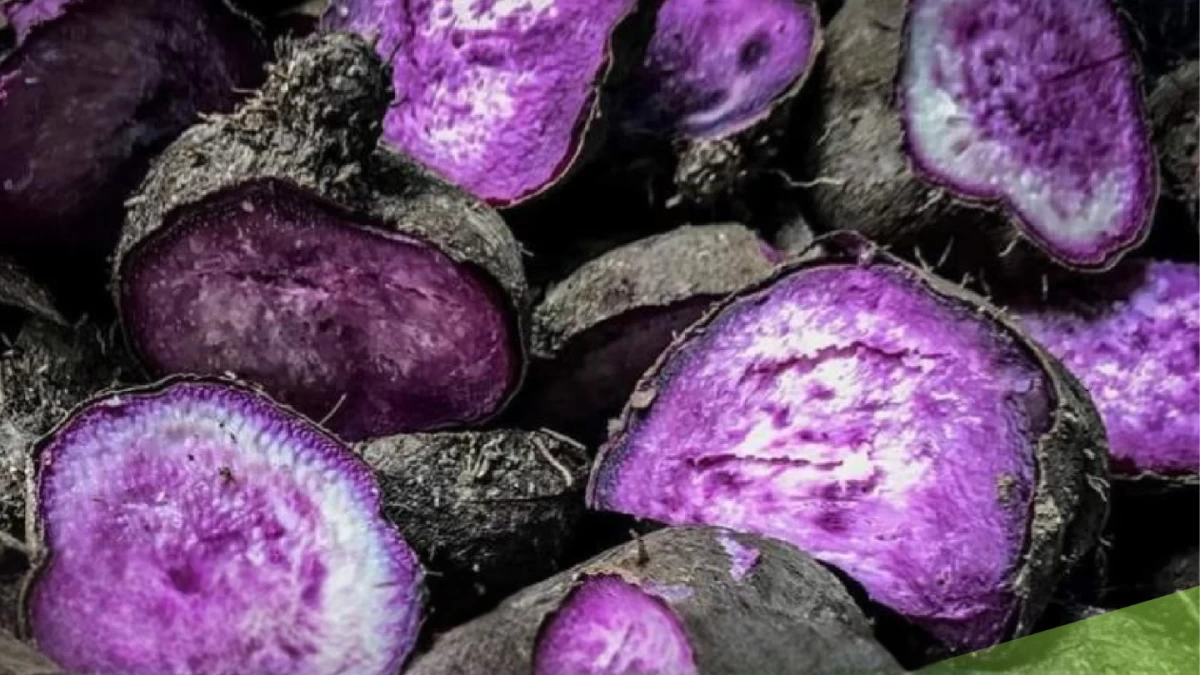
‘Ubi Kinampay,’ also known as the “Queen of Philippine Yams.” (Photo courtesy of PCAARRD)
The Intellectual Property Office of the Philippines (IPOPHL) is now evaluating Bohol’s application to register the ube variety known as Kinampay as the country’s latest geographical indication (GI), which is seen to strengthen its market value amid growing global demand for ube.
In a statement, IPOPHL said it has received a GI application for Bohol Ubi Kinampay from the provincial government of Bohol, through its Bohol Economic Development and Investment Promotion Office (BEDIPO).
The GI bid seeks to formally recognize the qualities, reputation, and cultural heritage of the ube variety, which are linked to the province’s geography, soil, climate, and traditional farming practices.
Widely known as the “queen of Philippine yams,” Bohol Ubi Kinampay is famed for its naturally vibrant violet flesh, earthy aroma, and rich flavor, making it a sought-after ingredient both locally and abroad.
“The world is now in the middle of a ‘purple gold rush,’ and GI protection can help the Philippines stake its claim in the growing global demand by strengthening its market identity and position,” said IPOPHL Director General Teodoro Pascua.
“As ube becomes more global, we must make sure the roots of varieties from the country are not lost. GI protection helps ensure that the true heart of the Bohol Ubi Kinampay—its soil, story and people—remain Boholano and Filipino,” he added.
IPOPHL said GI protection could help shield the ube variety from unauthorized use of its name and false origin claims, which would help improve its market value.
This is also expected to preserve traditional and organic farming practices that give the Bohol-grown variety its distinct aroma, texture, and color.
The IPOPHL has so far approved four commodities for GI registration, which include Guimaras Mangoes, Aklan Piña, Alburquerque Asin Tibuok, and Tau Sebu T’nalak.
If approved, Bohol Ubi Kinampay could become the second locally protected GI from Bohol following the artisanal sea salt from Alburquerque town.
As part of the registration process, IPOPHL said it will now review the application’s submitted manual of specifications, which covers the product description, geographic production area, production methods, quality control measures, standards, and labeling rules.
It also provides evidence linking the distinct qualities of Bohol Ubi Kinampay to Bohol’s natural conditions and traditional know-how.
Earlier, Trade Secretary Cristina Roque said ube would be among the growth drivers of the country’s agricultural exports this year, especially as it continues to be a trending product in overseas markets. (Dexter Barro II)