






 Business
The Economy
DOTr bets on ADB, World Bank backing to draw investors into rail PPPs
Business
The Economy
DOTr bets on ADB, World Bank backing to draw investors into rail PPPs
DOTr bets on ADB, World Bank backing to draw investors into rail PPPs


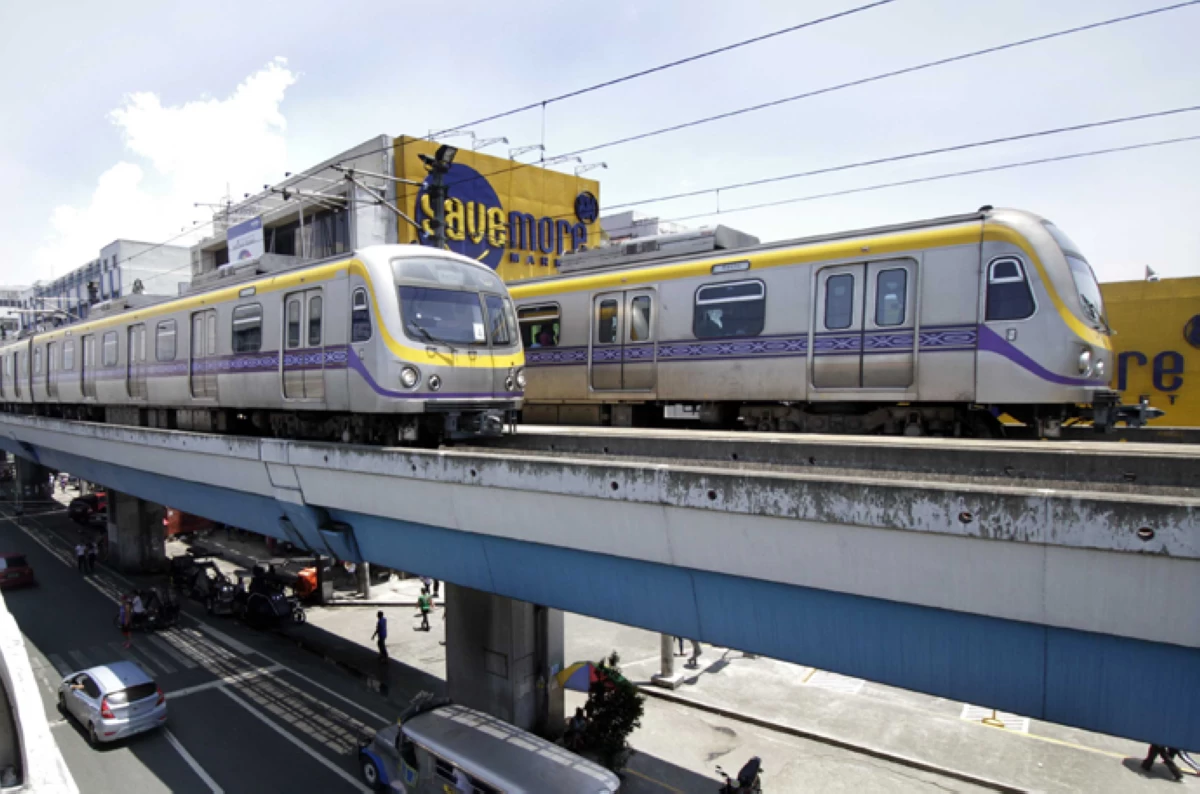
SINGAPORE — The Department of Transportation (DOTr) is confident that more private-sector bidders will participate in the Philippines’ upcoming railway public-private partnership (PPP) projects as the government increasingly taps multilateral development banks (MDBs) to provide financing support and risk-mitigation mechanisms aimed at improving project bankability.
Speaking at the Asia Infrastructure Forum (AIF) 2026 last Tuesday, June 16, DOTr Undersecretary for railways Timothy John R. Batan said MDB-backed guarantees as well as concessional financing facilities from the Manila-based Asian Development Bank (ADB) and the Washington-based World Bank are expected to make big-ticket Philippine railway projects more attractive to investors.
The government is currently marketing three railway PPP projects to investors: Metro Rail Transit Line 3 (MRT-3) capacity expansion and operations and maintenance (O&M), Light Rail Transit Line 2 (LRT-2) rehabilitation and O&M, as well as Metro Manila Subway Project (MMSP) O&M concession.
“It’s a response to the market,” Batan told reporters on the sidelines of AIF 2026.
“When we do our market sounding, we explain to them our project structure. Then, based on our project structure, they give us inputs on what will make the project bankable, what are the things that they need,” he explained.
According to Batan, the government has been working with multilateral as well as bilateral development partners to align capital-intensive railway projects with international standards for project preparation, risk sharing, and financing, recognizing that proper structuring is critical for multibillion-peso infrastructure investments.
Batan confirmed, in response to Manila Bulletin’s query, that MDB-backed guarantees and financing facilities are being introduced into Philippine railway PPP projects for the first time.
“There are financial instruments available from the development partners—from the ADB, the World Bank, JICA [Japan International Cooperation Agency]—which, if we use them, enable us to better attract private-sector capital,” he said.
The DOTr official cited strong interest in the North-South Commuter Railway (NSCR) O&M PPP, which has attracted participation from major international railway operators and infrastructure firms, including Japan’s JR East and JR West, Paris Metro operator RATP Dev, French transport operators Keolis and Transdev, as well as local firms San Miguel Corp. (SMC), Ayala Corp., and First Balfour.
“If you see that level of participation, then we probably are on the right track,” Batan said.
To recall, Manila Bulletin reported last March that the Philippines is seeking up to $800 million in ADB-backed partial credit guarantees (PCGs) for the NSCR O&M concession.
The proposed facility would serve as a liquidity backstop for availability payments owed by the government to the future operator under the project’s PPP structure.
According to the ADB, the guarantee is intended to address market concerns over delayed or missed government payments and help attract greater participation from leading railway operators worldwide.
One of the newest tools being considered is a Step-Up Loan (SUL) facility from the International Bank for Reconstruction and Development (IBRD), the World Bank Group’s (WBG) lending arm for developing countries like the Philippines.
Under the proposed LRT-2 rehabilitation and O&M PPP, a potential concessionaire may access up to $300 million in optional concessional financing through IBRD’s SUL, according to the presentation of International Finance Corp. (IFC), the project’s transaction adviser. IFC is the WBG’s private-sector lending arm.
According to the World Bank, its SUL facility provides lower financing costs during a project’s higher-risk implementation phase before transitioning to regular pricing later in the loan term. This instrument is designed to support refinancing through private capital markets while lowering upfront borrowing costs for eligible infrastructure projects.
Batan clarified that SUL use would remain at the discretion of bidders.
“Each bidder will put together their own financing mix. If they think they can give a better bid, a lower price by using the SUL, then they will include that in their proposals,” the DOTr official explained.
He added that the World Bank has already expressed willingness to extend the SUL facility for the LRT-2 PPP, subject to the necessary approvals and the outcome of ongoing market-sounding activities.
Meanwhile, Batan said the Metro Rail Transit Line 4 (MRT-4) is undergoing recalibration, although he declined to disclose details amid ongoing interagency discussions.
The ADB and the China-backed Asian Infrastructure Investment Bank (AIIB) have been eyeing to co-finance MRT-4, which would connect eastern Metro Manila with the rapidly growing communities of Rizal province.
Manila Bulletin reported earlier that the DOTr is pursuing a transit-oriented development (TOD) framework for MRT-4 as part of efforts to enhance the project’s investment appeal.
Under the proposed TOD framework, five of MRT-4’s planned 10 stations—EDSA, Tiendesitas, St. Joseph, Tikling Junction, and Taytay—would be integrated with mixed-use developments, commuter-oriented facilities, as well as links to other public transport systems.
According to the DOTr, the scheme would open opportunities for commercial and residential developments around the stations, including potential PPPs, allowing affected landowners as well as businesses to participate in and benefit from the economic activity generated by the railway.
The TOD model represents another example of how the government is incorporating investment and financing mechanisms into major rail projects to attract private-sector participation as well as improve long-term project viability.
Batan said the government’s push to attract more private capital into railway projects is part of a broader effort to address the country’s transport infrastructure gap and improve daily commuting conditions for millions of Filipinos.
The DOTr official noted that the Philippines currently has just 61 km of operational urban rail lines, but ongoing projects are expected to expand the network to 286 km by 2030. Daily ridership is projected to increase from about 930,000 passengers at present to almost 2.8 million by 2035.
He also cited estimates showing that Metro Manila traffic congestion costs the Philippine economy about $22 billion annually, underscoring the need to accelerate the rollout of mass transit infrastructure.