







The best new tasting menu in town is in Project 8, Quezon City
Inside an unassuming commercial building, Bakuran Tasting Club delivers one of Metro Manila's most compelling tasting menus—and a strong case for Quezon City as a dining destination
Published Jun 16, 2026 02:44 pm


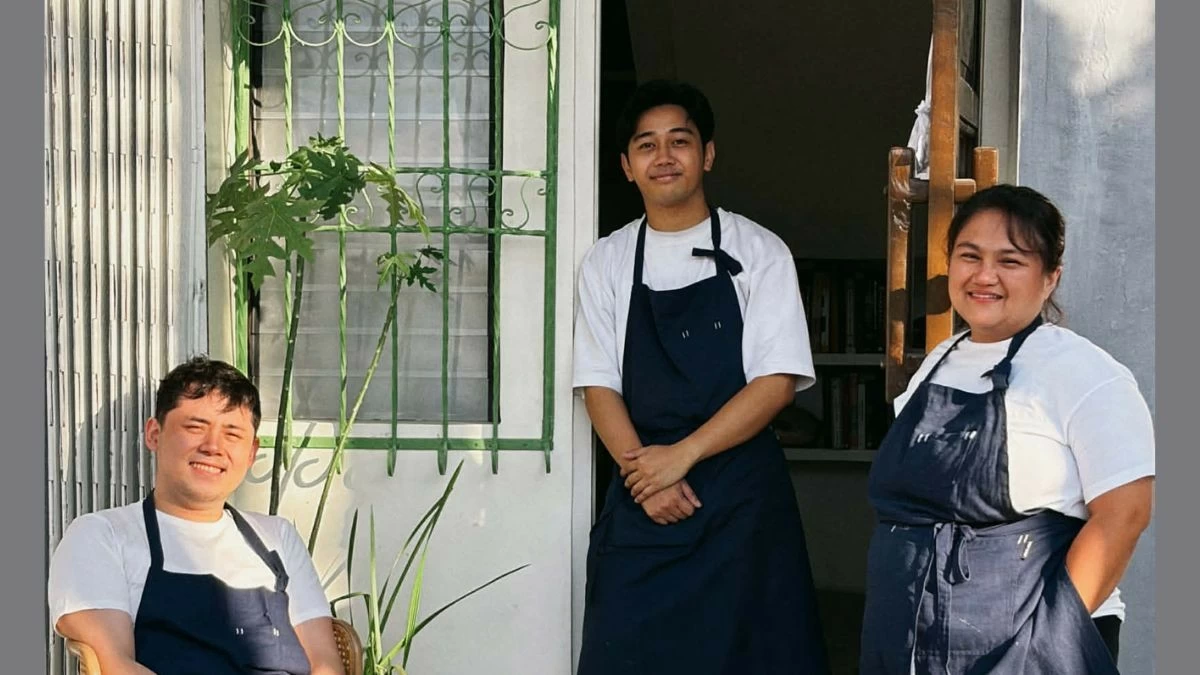
HOSTS FIRST Chefs Tim Yuseco, Lee Jan Anicas and Julee Gano (new chef Rodina Roque not pictured) welcome guests at the entrance of Bakuran Tasting Club in Project 8, Quezon City (Photo: Bakuran Tasting Club)
As if the universe was listening to my pleas—although I will never claim that I am important enough for celestial powers to listen to—I am feeling a shift, slowly but now picking up pace, in the dining world in Quezon City (QC), my home turf.
For me, it started early this year, with chef Bettina Arguelles staking her claim in QC with her elevated turo-turo concept, Curio, in Maginhawa Street, just a stone’s throw away from Jorge Mendez’s own established Mugen Ramenya—now a popular destination among foodies and well-heeled students in the area. And then there’s AKA Day/Night Drinks in Timog a few months back, doing a multi-course collaboration with chef Migs Flores of Sushi Shokunin, pairing their drinks with the resto’s excellent Japanese fare.
Then, earlier this year, the last leg of the successful Philippine Cocktail Week was held in Quezon City, where we drank and ate the night away in fun bar takeovers and kitchen collaborations. Is the dining and beverage scene evolving, expanding and elevating in QC, returning to its rightful place among the best in Makati and BGC? I am confident to say yes. It is happening, and very soon, it might overtake Makati in unique dining concepts.

BEYOND THE DOOR An unassuming facade in Project 8, Quezon City, opens to a warm, homey foyer inspired by chef Lee Jan Anicas’ homes in Mindoro and Vigan (Photo: Bakuran Tasting Club)
The proof? Just last week, I received a message on Facebook, a cold call as it were, from one Lee Jan Anicas, inviting me to try out their new concept, Bakuran Tasting Club. First, I will admit, I was about to dismiss the invite, but upon closer inspection, I saw two things that piqued my interest.
One, it is centered on the concept of “asim,” sourness, my favorite flavor (sinigang lover here). Second, the location, 20 Carmel Ave., Project 8, Quezon City—Project 8, where our family (my first cousins, to be exact) used to have a home. I haven’t been in the area since the 1990s—my cousins have since sold their home. And I was curious to see what it looks like now.
The location was your typical low-rise, two-story commercial building that you can find in any town or city in the Philippines. Unassuming. The facade was humble, with no signage, just a charming dark wood door with a glass window. Near the entrance, chef Lee opened the door and welcomed us to his brainchild.
The foyer was, again, charming; you feel like you’re entering the apartment of your favorite auntie. The entire space is built to evoke Lee’s homes in Mindoro and Vigan. His concept, and what he tells his fellow chefs at Bakuran Tasting Club, is to be hosts first and chefs after. This is their ethos. And you feel it right away, the personal touch in the welcome, and in how Lee and chef Tim Yuseco treated us.
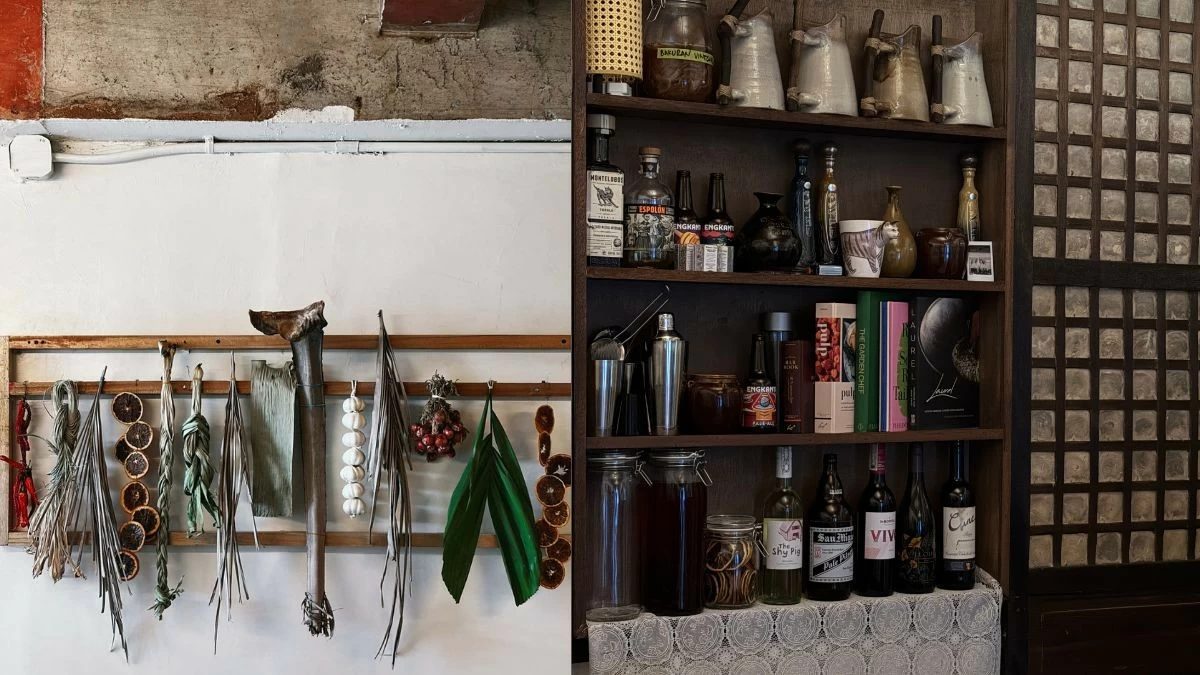
THE HEART OF THE HOUSE Capiz shell windows from chef Lee Jan Anicas’ old home in Mindoro, wooden shelves stocked with ferments and an open kitchen create a dining room that feels deeply Filipino (Photo: Bakuran Tasting Club)
“The foyer used to be a nail spa, and the adjoining kitchen and dining room used to be a vault of a pawnshop. We got the two spaces and combined them. Funny thing, on our first few days open, people would come up and ask for a mani-pedi, and it suddenly registered in our brains that we do look like nail technicians, with our aprons on,” Lee recalled with a laugh.
The dining space felt very homey, very personal and deeply nostalgic, especially for this author. I felt like I was back home in our old houses in Sta. Rosa, Laguna, and Malabon. It has a distinctly old-school Filipino feel that will certainly resonate with many. Capiz shell windows from Lee’s old house in Mindoro, wooden shelves filled with ferments and other bits and bobs, and raw-finish ceilings all add to the provincial home aesthetic. Combined with modern kitchenware, the space belongs among the snazzy, high-concept tasting rooms in Makati, but now—so close to my home—we have this new gem in Kyusi.
The food, I will now say, matches the high concept of the interiors. Well put together, no frills, no theatrics. Honest-to-goodness good food. I was impressed. Lee explained why they chose “Asim: A Study on Balance” as their first menu.
“I want to cut through the noise of the dining world,” he said. For Lee, the concept is rooted in a distinctly Filipino understanding of balance. “Asim has always been one of the defining languages of our cuisine,” he said, noting how acidity—from native citrus to regional vinegars—“shapes the way we cook, eat, and gather.” More than a flavor, he sees sourness as “one flavor that you look for when you feel ‘umay.’” In a world of “constant movement, noise, and intensity,” Lee said “Asim: A Study on Balance” explores sourness “not simply as a taste, but as a response to the heaviness of city life,” reflecting “a distinctly Filipino way of finding balance.”
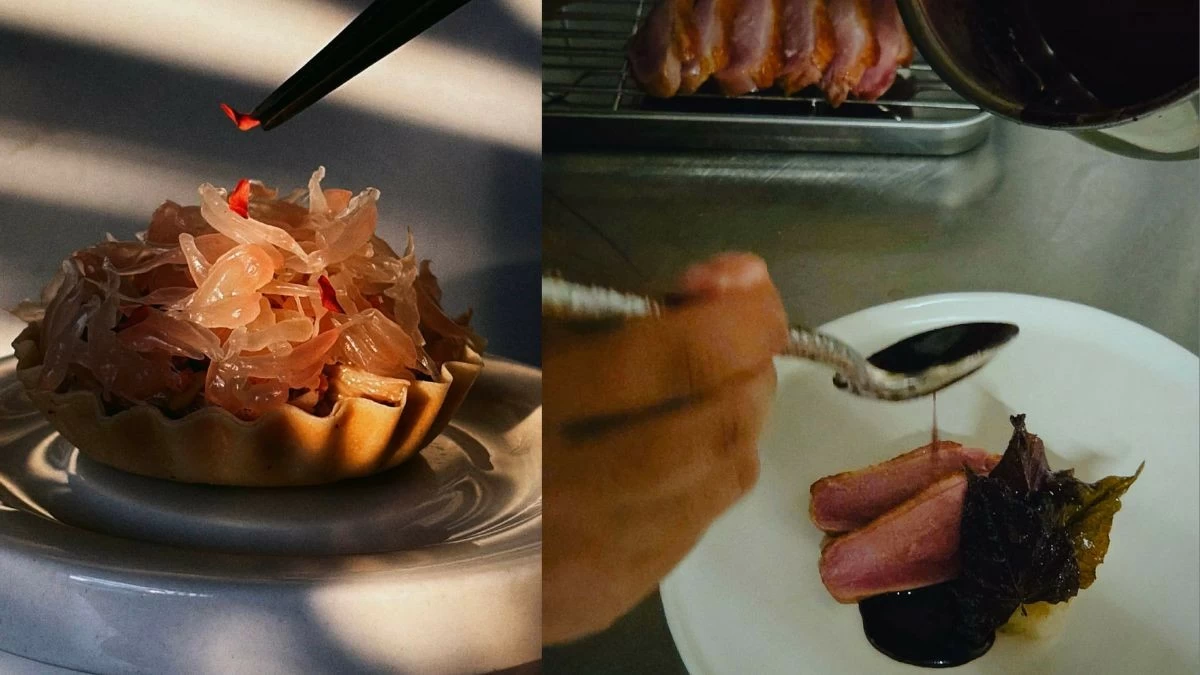
SOUR POWER (Left) Sipit Pomelo pairs Mindoro crab with fermented pomelo, toasted whey and Malabon patis for a bright and nuanced opening course. (Right) Pato Gumamela brings together dry-aged duck breast, gumamela jus, crispy malagkit and kamote tops, showcasing Bakuran Tasting Club’s deft touch with richness and acidity. (Photo: Bakuran Tasting Club)
The menu is inspired by the Filipino fascination with sourness, using acidity not as aggression but as balance and brightness. Different souring agents appear throughout the meal, from calamansi and biasong to tamarind and fermentation, each employed with skill.
Dinner begins with the Panaderya, a deceptively simple trio of sourdough focaccia, Sagada honey butter and aged cheddar. It is excellent. In fact, I dare say the bread course can go toe-to-toe with chef Josh Boutwood’s much-loved bread service in his restaurants.
Among the standouts was Sipit Pomelo, perhaps my favorite dish of the evening. Mindoro crab meets fermented pomelo, palm sugar, Malabon patis, toasted whey and galangal, finished with a ginger and bay leaf foam made from crab broth. It is bright and refreshing, setting the tone for the courses ahead.
Another memorable plate was Kinilaw Biasong, featuring kombu-cured tanigue with biasong, carrots in fish jus, Bakuran XO, suka ng tuba, coconut, prawn oil and squash flower chips. It is a familiar Filipino flavor profile viewed through a more contemporary lens.
Chicharon Sampalok follows with sun-dried pork jowl and sampalok caramel, before Kordero Kamatis arrives. One of my personal favorites, the dish pairs pressed lamb with fermented tomatoes, roasted peppers, prawn oil, tomato skins and cherry tomatoes. Rich but restrained, it showcases how acidity can steady a dish rather than dominate it.
Green Mango Kendi serves as a palate cleanser of sorts, with green mango gummy, mango syrup and sugar.
Another highlight for me was Pato Gumamela. Dry-aged duck breast is paired with gumamela jus, crispy malagkit and kamote tops. The combination is thoughtful and balanced, proving that familiar ingredients can still surprise when handled with care.
The savory courses conclude with Pansit, Ihaw, Prito, featuring miki noodles, calamansi, pork jus foam, pork neck, burnt muscovado sugar, cured egg yolk, heirloom lumpia, and Bakuran vinegar. It is perhaps the most nostalgic plate in the lineup, drawing from flavors many Filipinos grew up with.
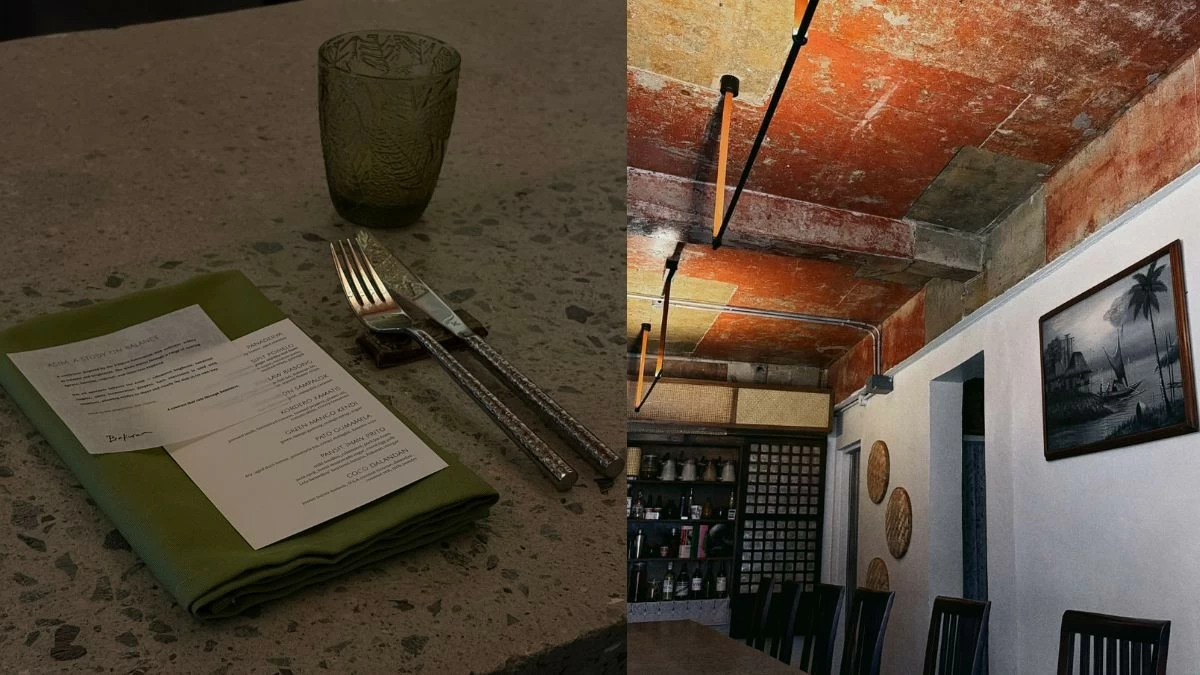
HOME IS WHERE THE TABLE IS The stone tasting table, rustic benches and unfinished ceilings evoke the warmth of a provincial Filipino home (Photo: Bakuran Tasting Club)
Dessert comes in the form of Coco Dalandan, with brown butter mamon, SULA coconut mousse, dalandan, coconut veil and milk powder.
At P5,000 per guest, inclusive of VAT and service charge, Bakuran Tasting Club is not exactly casual dining. But neither is it trying to be. More than anything, it feels like a dinner at someone’s home—if that someone happened to be two talented chefs obsessed with hospitality and the many ways Filipinos understand asim.
And perhaps that is what struck me the most. Not the techniques or the concepts, but the fact that one of the most interesting new dining experiences I’ve had in months happened not in Makati or BGC, but in Project 8, just a few minutes from home. In “Kyusi,” things are changing—and for diners, that is very good news.