

ADVERTISEMENT

Peso leads Asian currency rally on Trump-Iran peace deal

Published Jun 16, 2026 05:48 pm

At A Glance

  • Asian currencies rebounded against the United States (US) dollar following US President Donald Trump's announcement of a peace deal with Iran, with the Philippine peso having the largest gain in the region.
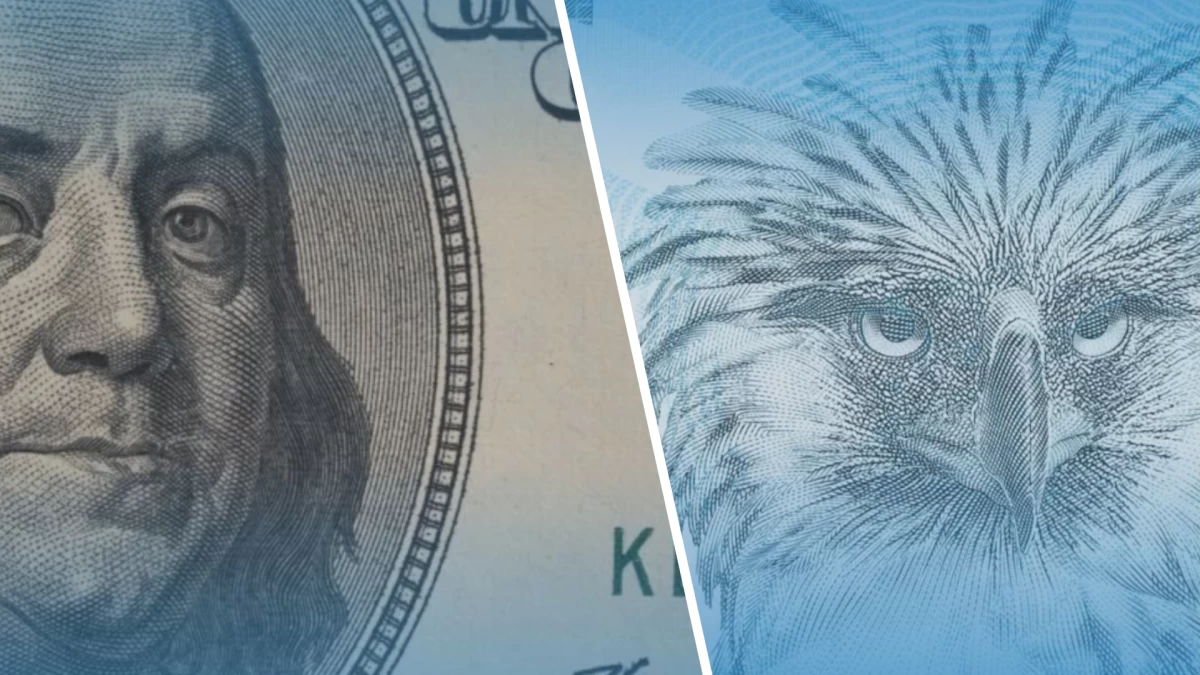
Asian currencies rebounded against the United States (US) dollar following US President Donald Trump’s announcement of a peace deal with Iran, with the Philippine peso leading regional gains.
“As far as Asian currencies were concerned, the Philippine peso returned from holiday and led Asian foreign exchange (forex) gains, rising more than +one percent against the dollar, with US dollar-peso closing at 60.49 [on Monday],” Quek Ser Leang and Lee Sue Ann, senior technical strategist and economist at UOB wrote in a June 16 commentary.
This rally followed a memorandum of understanding (MOU) reached on Sunday, which aimed to reopen the Strait of Hormuz and subsequently drove a sharp slide in global oil prices.
Japanese financial giant MUFG Bank Ltd. noted a broader regional recovery as investors attempt to return market prices to their historical averages now that the peace deal has removed the geopolitical risk premium typically added to oil prices during conflicts. As energy costs drop, currencies previously weakened by expensive oil—such as the Philippine peso—are finally recovering and stabilizing.
Michael Wan, senior currency analyst at MUFG, explained that the impact was most visible in markets heavily reliant on energy imports.
“While the US dollar saw some recovery through the London trading session, the bigger moves were in currencies, including those in Asia, which have been beaten down—such as the Indian rupee, peso, and Indonesian rupiah—as markets try to look forward to lower oil prices over time," Wan said.
Data monitored by the Japanese lender showed the peso recorded a significant daily appreciation of 1.42 percent against the greenback.
However, the rapid appreciation of the peso brings new challenges for local policymakers.
Oversea-Chinese Banking Corp. (OCBC) Group Research stressed that focus is shifting toward the Bangko Sentral ng Pilipinas (BSP) meeting scheduled for this Thursday.
OCBC forex strategist Christopher Wong noted that the “US dollar-peso gapped sharply lower yesterday in response to softer yields and oil prices,” but cautioned that the monetary authority could face a tougher balancing act.
This difficulty emerges because Philippine headline inflation remains elevated at 6.8 percent—well above the 4 percent target ceiling—while the broader economy shows signs of slowing. Domestic economic growth stood at 2.8 percent in the first quarter of 2026, its weakest in five years since the peak of the Covid-19 pandemic.
On the policy outlook, OCBC suggested that the BSP might need to act aggressively to maintain market confidence. “Consensus is leaning toward a 25-basis-point hike, but a larger 50-bp move should not be ruled out given the risk that the BSP risks falling behind the curve,” the report stated.
While the peso currently enjoys technical support at the 60 level, analysts warn of a potential “risk of snapback” should the domestic policy response disappoint or if the external environment turns hostile again.

Related Tags

Oversea-Chinese Banking Corp. Ltd. (OCBC) MUFG Bank Ltd. UOB PESO Ceasefire US-Iran ceasefire
ADVERTISEMENT
.most-popular .layout-ratio{ padding-bottom: 79.13%; } @media (min-width: 768px) and (max-width: 1024px) { .widget-title { font-size: 15px !important; } }

{{ articles_filter_1561_widget.title }}

.most-popular .layout-ratio{ padding-bottom: 79.13%; } @media (min-width: 768px) and (max-width: 1024px) { .widget-title { font-size: 15px !important; } }

{{ static_articles_1562_widget.title }}

.most-popular .layout-ratio{ padding-bottom: 79.13%; } @media (min-width: 768px) and (max-width: 1024px) { .widget-title { font-size: 15px !important; } }

{{ articles_filter_1563_widget.title }}

{{ articles_filter_1564_widget.title }}

.mb-article-details { position: relative; } .mb-article-details .article-body-preview, .mb-article-details .article-body-summary{ font-size: 17px; line-height: 30px; font-family: "Libre Caslon Text", serif; color: #000; } .mb-article-details .article-body-preview iframe , .mb-article-details .article-body-summary iframe{ width: 100%; margin: auto; } .read-more-background { background: linear-gradient(180deg, color(display-p3 1.000 1.000 1.000 / 0) 13.75%, color(display-p3 1.000 1.000 1.000 / 0.8) 30.79%, color(display-p3 1.000 1.000 1.000) 72.5%); position: absolute; height: 200px; width: 100%; bottom: 0; display: flex; justify-content: center; align-items: center; padding: 0; } .read-more-background a{ color: #000; } .read-more-btn { padding: 17px 45px; font-family: Inter; font-weight: 700; font-size: 18px; line-height: 16px; text-align: center; vertical-align: middle; border: 1px solid black; background-color: white; } .hidden { display: none; }
function initializeAllSwipers() { // Get all hidden inputs with cms_article_id document.querySelectorAll('[id^="cms_article_id_"]').forEach(function (input) { const cmsArticleId = input.value; const articleSelector = '#article-' + cmsArticleId + ' .body_images'; const swiperElement = document.querySelector(articleSelector); if (swiperElement && !swiperElement.classList.contains('swiper-initialized')) { new Swiper(articleSelector, { loop: true, pagination: false, navigation: { nextEl: '#article-' + cmsArticleId + ' .swiper-button-next', prevEl: '#article-' + cmsArticleId + ' .swiper-button-prev', }, }); } }); } setTimeout(initializeAllSwipers, 3000); const intersectionObserver = new IntersectionObserver( (entries) => { entries.forEach((entry) => { if (entry.isIntersecting) { const newUrl = entry.target.getAttribute("data-url"); if (newUrl) { history.pushState(null, null, newUrl); let article = entry.target; // Extract metadata const author = article.querySelector('.author-section').textContent.replace('By', '').trim(); const section = article.querySelector('.section-info ').textContent.replace(' ', ' '); const title = article.querySelector('.article-title h1').textContent; // Parse URL for Chartbeat path format const parsedUrl = new URL(newUrl, window.location.origin); const cleanUrl = parsedUrl.host + parsedUrl.pathname; // Update Chartbeat configuration if (typeof window._sf_async_config !== 'undefined') { window._sf_async_config.path = cleanUrl; window._sf_async_config.sections = section; window._sf_async_config.authors = author; } // Track virtual page view with Chartbeat if (typeof pSUPERFLY !== 'undefined' && typeof pSUPERFLY.virtualPage === 'function') { try { pSUPERFLY.virtualPage({ path: cleanUrl, title: title, sections: section, authors: author }); } catch (error) { console.error('ping error', error); } } // Optional: Update document title if (title && title !== document.title) { document.title = title; } } } }); }, { threshold: 0.1 } ); function showArticleBody(button) { const article = button.closest("article"); const summary = article.querySelector(".article-body-summary"); const body = article.querySelector(".article-body-preview"); const readMoreSection = article.querySelector(".read-more-background"); // Hide summary and read-more section summary.style.display = "none"; readMoreSection.style.display = "none"; // Show the full article body body.classList.remove("hidden"); } document.addEventListener("DOMContentLoaded", () => { let loadCount = 0; // Track how many times articles are loaded const offset = [1, 2, 3, 4, 5, 6, 7, 8, 9, 10]; // Offset values const currentUrl = window.location.pathname.substring(1); let isLoading = false; // Prevent multiple calls if (!currentUrl) { console.log("Current URL is invalid."); return; } const sentinel = document.getElementById("load-more-sentinel"); if (!sentinel) { console.log("Sentinel element not found."); return; } function isSentinelVisible() { const rect = sentinel.getBoundingClientRect(); return ( rect.top < window.innerHeight && rect.bottom >= 0 ); } function onScroll() { if (isLoading) return; if (isSentinelVisible()) { if (loadCount >= offset.length) { console.log("Maximum load attempts reached."); window.removeEventListener("scroll", onScroll); return; } isLoading = true; const currentOffset = offset[loadCount]; window.loadMoreItems().then(() => { let article = document.querySelector('#widget_1690 > div:nth-last-of-type(2) article'); intersectionObserver.observe(article) loadCount++; }).catch(error => { console.error("Error loading more items:", error); }).finally(() => { isLoading = false; }); } } window.addEventListener("scroll", onScroll); });

Sign up by email to receive news.