

ADVERTISEMENT

PAGASA urges early preparation amid looming El Niño impacts

Published Jun 15, 2026 02:09 pm

At A Glance

  • Although the impact of El Niño may not be felt immediately, PAGASA Administrator Dr. Nathaniel Servando said the "time to prepare is now."
  • PAGASA issued its first El Niño Advisory on June 9 to support the government's strategic action plan and guide preparedness measures by key sectors under the Task Force El Niño.
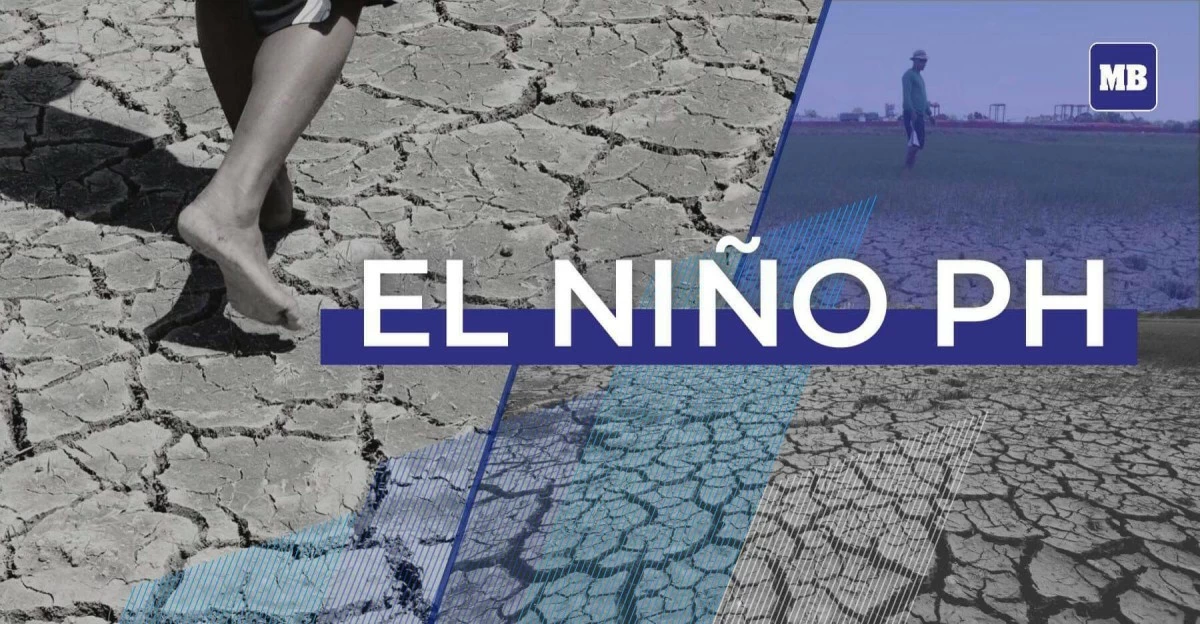
(Manila Bulletin Visual Content Group)
The Philippine Atmospheric, Geophysical and Astronomical Services Administration (PAGASA) is calling on the public and government agencies to prepare early due to the expected impacts of El Niño in the coming months.
PAGASA Administrator Nathaniel Servando noted that El Niño conditions are already present in the tropical Pacific and are expected to fully develop within the June to August period based on current monitoring and model forecasts.
He said projections show that the phenomenon may develop into a “strong to very strong” event later in the year and persist into early 2027.
“Alam naman po natin na strong El Niño can bring below-normal rainfall, prolonged dry conditions, water shortages, and adverse impacts on key sectors particularly agriculture, energy, and health (We already know that a strong El Niño can bring below-normal rainfall, prolonged dry conditions, water shortages, and adverse impacts on key sectors particularly agriculture, energy, and health),” he said during a press conference in observance of the Flood Awareness Week on Monday, June 15.
“While these impacts may still be months away, the time to prepare is now,” he said.
Servando said the advisory is meant to support early action by concerned sectors, and “not to cause alarm.”
He pointed out that early preparation can help reduce potential losses and support protection of communities and livelihoods.
“Experience has shown that communities, local governments, and sectors that prepare early are better able to reduce losses and protect lives and livelihoods,” he said.
‘Very strong’ El Niño
Ana Liza Solis of the PAGASA Climate Monitoring and Prediction Section said El Niño conditions in the tropical Pacific are now considered highly certain, with monitoring focused on its possible strength, duration, and areas of impact.
“Nakikita natin na halos 98, 100 percent sure na sure po tayo na nandiyan po yung El Niño. Ang minomonitor [na] po natin is yung ano ‘yung posibleng maging strength nito. Kailan to magtatagal at ano-ano po ‘yung mga areas na posibleng maapektuhan nito (We are now almost 98 to 100 percent sure that El Niño is present. What we are monitoring is its possible strength, how long it will last, and which areas may be affected),” Solis said.
PAGASA issued its first El Niño Advisory on June 9 to support the government's strategic action plan and guide preparedness measures by key sectors under the Task Force El Niño.
Solis said current outlooks show an increasing chance of a strong El Niño developing around September to November, with sea surface temperatures continuing to rise from weak to moderate and potentially strong conditions.
She added that some models are now indicating a higher likelihood of a very strong El Niño by October to December to January, ranging from about 30 to 37 percent—higher than historical averages.
Explaining the expected warming, she said ocean temperatures could rise beyond 1.9 degrees Celsius.
“Mas umiinit po ‘yung temperatura ng dagat. That could start as a weak, moderate, and then becoming strong. Ibig sabihin po up to 1.9 degree centigrade ‘yung pag-init niya (The ocean temperature continues to warm. It can start weak, then moderate, and become strong, with warming of up to 1.9 degrees Celsius),” she said.
Solis further described a possible very strong El Niño as an extreme warming scenario, likening its intensity to a severe physiological reaction.
“So kumbaga po sa ating lagnat ay possible na ito ‘yung kumbulsyon, na nagkukumbulsyon ang ating dagat at sobrang init na po na more than 2 degrees yung prine-predict po natin sa pag-init (It can be compared to a fever reaching convulsions, where the ocean is extremely warm, potentially beyond 2 degrees of warming),” she said.
READ MORE:
mb.com.ph/2026/06/01/prolonged-impacts-possible-if-very-strong-el-nino-develops-pagasa-warns

Related Tags

PAGASA EL NIÑO NATHANIEL SERVANDO ANA LIZA SOLIS
ADVERTISEMENT
.most-popular .layout-ratio{ padding-bottom: 79.13%; } @media (min-width: 768px) and (max-width: 1024px) { .widget-title { font-size: 15px !important; } }

{{ articles_filter_1561_widget.title }}

.most-popular .layout-ratio{ padding-bottom: 79.13%; } @media (min-width: 768px) and (max-width: 1024px) { .widget-title { font-size: 15px !important; } }

{{ static_articles_1562_widget.title }}

.most-popular .layout-ratio{ padding-bottom: 79.13%; } @media (min-width: 768px) and (max-width: 1024px) { .widget-title { font-size: 15px !important; } }

{{ articles_filter_1563_widget.title }}

{{ articles_filter_1564_widget.title }}

.mb-article-details { position: relative; } .mb-article-details .article-body-preview, .mb-article-details .article-body-summary{ font-size: 17px; line-height: 30px; font-family: "Libre Caslon Text", serif; color: #000; } .mb-article-details .article-body-preview iframe , .mb-article-details .article-body-summary iframe{ width: 100%; margin: auto; } .read-more-background { background: linear-gradient(180deg, color(display-p3 1.000 1.000 1.000 / 0) 13.75%, color(display-p3 1.000 1.000 1.000 / 0.8) 30.79%, color(display-p3 1.000 1.000 1.000) 72.5%); position: absolute; height: 200px; width: 100%; bottom: 0; display: flex; justify-content: center; align-items: center; padding: 0; } .read-more-background a{ color: #000; } .read-more-btn { padding: 17px 45px; font-family: Inter; font-weight: 700; font-size: 18px; line-height: 16px; text-align: center; vertical-align: middle; border: 1px solid black; background-color: white; } .hidden { display: none; }
function initializeAllSwipers() { // Get all hidden inputs with cms_article_id document.querySelectorAll('[id^="cms_article_id_"]').forEach(function (input) { const cmsArticleId = input.value; const articleSelector = '#article-' + cmsArticleId + ' .body_images'; const swiperElement = document.querySelector(articleSelector); if (swiperElement && !swiperElement.classList.contains('swiper-initialized')) { new Swiper(articleSelector, { loop: true, pagination: false, navigation: { nextEl: '#article-' + cmsArticleId + ' .swiper-button-next', prevEl: '#article-' + cmsArticleId + ' .swiper-button-prev', }, }); } }); } setTimeout(initializeAllSwipers, 3000); const intersectionObserver = new IntersectionObserver( (entries) => { entries.forEach((entry) => { if (entry.isIntersecting) { const newUrl = entry.target.getAttribute("data-url"); if (newUrl) { history.pushState(null, null, newUrl); let article = entry.target; // Extract metadata const author = article.querySelector('.author-section').textContent.replace('By', '').trim(); const section = article.querySelector('.section-info ').textContent.replace(' ', ' '); const title = article.querySelector('.article-title h1').textContent; // Parse URL for Chartbeat path format const parsedUrl = new URL(newUrl, window.location.origin); const cleanUrl = parsedUrl.host + parsedUrl.pathname; // Update Chartbeat configuration if (typeof window._sf_async_config !== 'undefined') { window._sf_async_config.path = cleanUrl; window._sf_async_config.sections = section; window._sf_async_config.authors = author; } // Track virtual page view with Chartbeat if (typeof pSUPERFLY !== 'undefined' && typeof pSUPERFLY.virtualPage === 'function') { try { pSUPERFLY.virtualPage({ path: cleanUrl, title: title, sections: section, authors: author }); } catch (error) { console.error('ping error', error); } } // Optional: Update document title if (title && title !== document.title) { document.title = title; } } } }); }, { threshold: 0.1 } ); function showArticleBody(button) { const article = button.closest("article"); const summary = article.querySelector(".article-body-summary"); const body = article.querySelector(".article-body-preview"); const readMoreSection = article.querySelector(".read-more-background"); // Hide summary and read-more section summary.style.display = "none"; readMoreSection.style.display = "none"; // Show the full article body body.classList.remove("hidden"); } document.addEventListener("DOMContentLoaded", () => { let loadCount = 0; // Track how many times articles are loaded const offset = [1, 2, 3, 4, 5, 6, 7, 8, 9, 10]; // Offset values const currentUrl = window.location.pathname.substring(1); let isLoading = false; // Prevent multiple calls if (!currentUrl) { console.log("Current URL is invalid."); return; } const sentinel = document.getElementById("load-more-sentinel"); if (!sentinel) { console.log("Sentinel element not found."); return; } function isSentinelVisible() { const rect = sentinel.getBoundingClientRect(); return ( rect.top < window.innerHeight && rect.bottom >= 0 ); } function onScroll() { if (isLoading) return; if (isSentinelVisible()) { if (loadCount >= offset.length) { console.log("Maximum load attempts reached."); window.removeEventListener("scroll", onScroll); return; } isLoading = true; const currentOffset = offset[loadCount]; window.loadMoreItems().then(() => { let article = document.querySelector('#widget_1690 > div:nth-last-of-type(2) article'); intersectionObserver.observe(article) loadCount++; }).catch(error => { console.error("Error loading more items:", error); }).finally(() => { isLoading = false; }); } } window.addEventListener("scroll", onScroll); });

Sign up by email to receive news.