






Manila Bulletin
 Business
Trade & Industry
Mindanao grid scrambles to recover 800MW after earthquake trips plants
Business
Trade & Industry
Mindanao grid scrambles to recover 800MW after earthquake trips plants
Business
Trade & Industry
Mindanao grid scrambles to recover 800MW after earthquake trips plants
Mindanao grid scrambles to recover 800MW after earthquake trips plants
Published Jun 10, 2026 05:11 pm


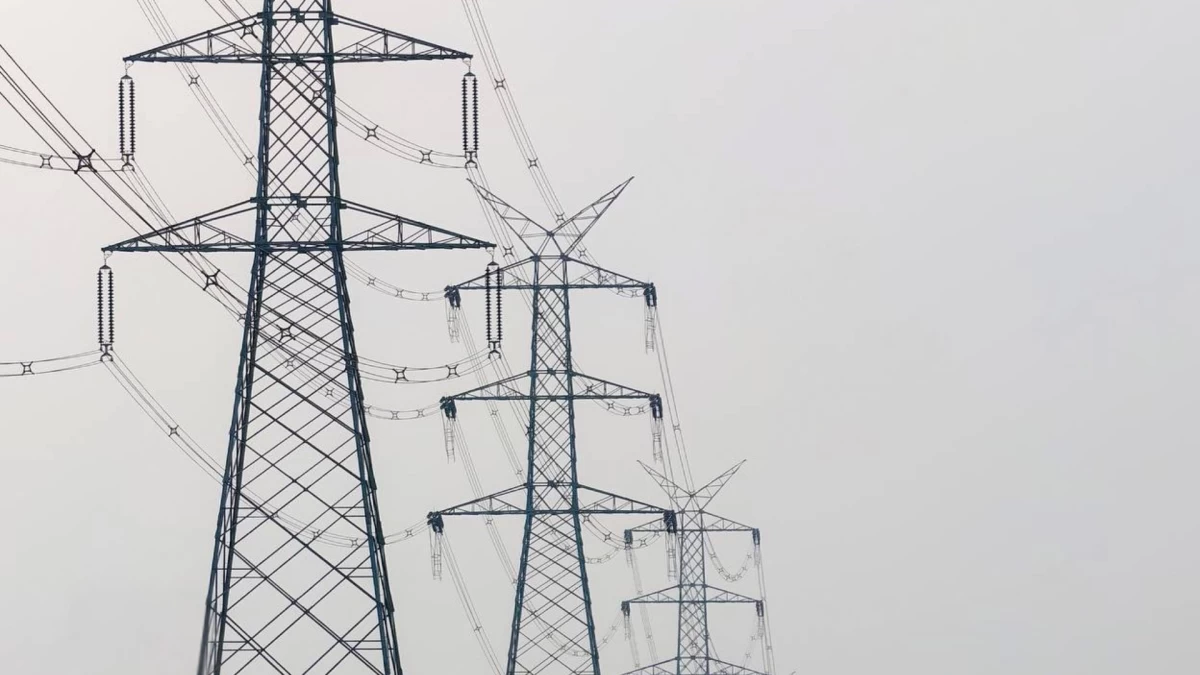
High-voltage transmission towers cut across the landscape in Pampanga on Wednesday, May 13. The National Grid Corporation of the Philippines placed the Visayas grid under yellow alert following the forced outage of three power plants, highlighting the region's heavy reliance on power imports from the Luzon and Mindanao grids to meet surging electricity demand. (Photo by Santi San Juan | Manila Bulletin)
The Mindanao grid is expected to return to normal conditions soon after being placed under yellow alert on Wednesday, June 10, following power supply disruptions partly caused by the recent 7.8-magnitude earthquake.
Energy Secretary Sharon Garin said roughly 800 megawatts (MW) of capacity initially became unavailable in Mindanao after six power plants tripped offline.
Garin said recent restoration efforts have since brought about 300 MW back online, with normal supply conditions expected to follow shortly.
“Hopefully, within the week, we’ll get everything fixed and the yellow alert in Mindanao will be lifted,” Garin said on the sidelines of a general membership meeting of the Management Association of the Philippines.
In an advisory, the National Grid Corporation of the Philippines (NGCP) placed the Mindanao grid under yellow alert from 12 p.m. to 3 p.m. on Wednesday, raising the risk of rotational blackouts.
Aside from the earthquake, Garin noted that the alert was triggered by high demand, which peaked at 2,611 MW against an available capacity of 2,731 MW.
A yellow alert is issued when the power supply is insufficient to meet the transmission grid’s contingency requirement. Meanwhile, a red alert indicates that supply can no longer meet consumer demand and regulating reserves are being regulated, wherein rotational brownouts are expected.
In the Visayas, the NGCP placed the grid under red alert anew from 1 p.m. to 7 p.m. on Wednesday, followed by a yellow alert from 7 p.m. to 9 p.m., after nearly 900 MW of capacity was lost.
The grid operator reported that the region’s peak demand reached 2,421 MW, while available capacity sat at just 2,429 MW.
The region's strained capacity stemmed from the forced outages of eight power plants, coupled with reduced power imports from Mindanao.
“Visayas is dependent on imports coming from Mindanao and Luzon. So now, if demand increases, they [Mindanao] will no longer be able to supply Visayas, and there will really be a shortage there,” Garin explained.
She warned that the Visayas grid will likely continue to face alerts in the coming months due to the onset of El Niño, which drives power demand to its peak as consumers try to beat the blistering heat.
In the near term, Garin said the government is now working to secure additional supply for the region, including the potential revival of shuttered power plants.
She estimated that yellow alerts in Visayas could be resolved within a month or two, while long-term solutions involve constructing new power plants and transmission infrastructure.
“We're scouting around Visayas and we're looking for [areas for] power plants. We're looking for about 150 to 200 MW additional,” she added.