







PAGASA confirms El Niño conditions in tropical Pacific
Published Jun 9, 2026 07:06 pm
|
Updated Jun 10, 2026 02:00 pm


At A Glance
- PAGASA said that sea surface temperature anomalies in the tropical Pacific reached the +0.5°C threshold in May 2026, a level associated with the onset of El Niño conditions.
- Most climate models are now showing an 80 percent probability that these conditions will develop into a full El Niño event, which may persist until early 2027.
PAGASA
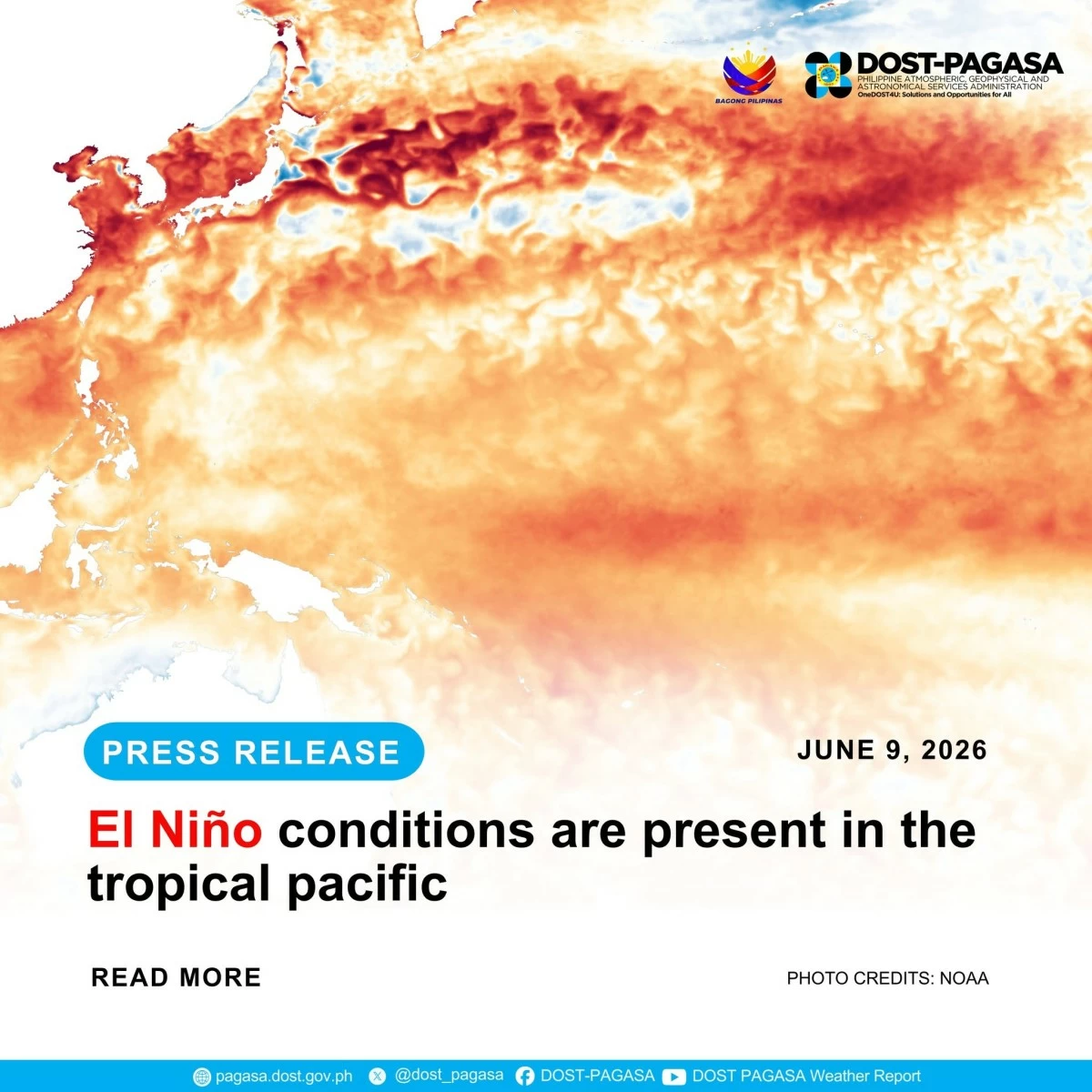
The Philippine Atmospheric, Geophysical and Astronomical Services Administration (PAGASA) said El Niño conditions have emerged in the tropical Pacific, and a full El Niño event is likely to develop in the coming months.
In an advisory on Tuesday, June 9, PAGASA said that sea surface temperature anomalies in the tropical Pacific reached the +0.5°C threshold in May 2026, a level associated with the onset of El Niño conditions.
The state weather bureau said most climate models show more than an 80 percent probability that these conditions will develop into a full El Niño event, which may persist until early 2027.
El Niño is the warm phase of the El Niño-Southern Oscillation (ENSO) and is characterized by warmer-than-average sea surface temperatures in the central and eastern equatorial Pacific, along with cooler-than-average sea surface temperatures in the Philippine Sea.
PAGASA said the developing conditions may increase the likelihood of below-normal rainfall across most of the country, raising the risk of dry spells and drought in vulnerable areas.
However, it noted that above-normal rainfall remains possible, particularly over the western sections of the Philippines during the southwest monsoon, or “habagt,” season, especially when enhanced by tropical cyclone activity.
PAGASA urged government agencies and the public to prepare for potential weather-related risks, particularly in areas prone to flooding during the habagat season and in regions vulnerable to dry conditions.
READ MORE: