ADVERTISEMENT

World Bank urges DPWH, MMDA to finish delayed Metro Manila flood-control project

Published Jun 8, 2026 06:01 pm
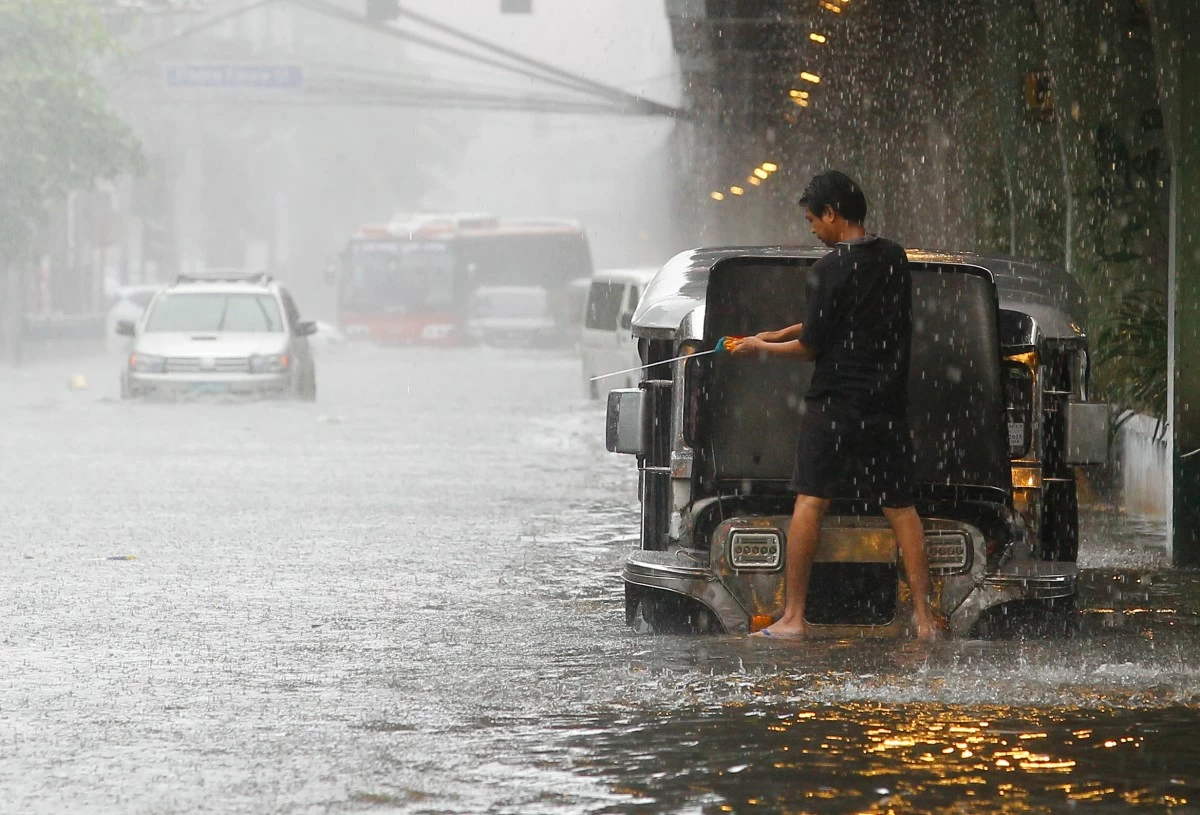
Caritas Philippines calls for accountability amid recent flood control scandal, urging government transparency to protect vulnerable communities from further injustice. (MARK BALMORES / MANILA BULLETIN / file)

The World Bank has urged Philippine implementing agencies to focus on completing the long-delayed Metro Manila Flood Management Project amid signs of progress and with less than six months remaining before its financing expires.

In a June 7 implementation status and results report, the Washington-based multilateral lender retained a “moderately satisfactory” rating for both progress toward achieving the project development objective (PDO) and overall implementation progress of the flood-control initiative jointly implemented by the Department of Public Works and Highways (DPWH), the Department of Environment and Natural Resources (DENR), as well as the Metropolitan Manila Development Authority (MMDA).

“Steady progress has been made across most pumping stations since the last review in February 2026. However, a few sites continue to face delays due to administrative, resettlement, and technical challenges,” the World Bank said.

To ensure the successful completion of all critical activities and fully achieve the project’s flood management objectives, the DPWH and the MMDA should continue to monitor the project daily, and adhere to the action plan agreed with the [World Bank],” it added.

The investment project financing (IPF) from the World Bank and the Beijing-based Asian Infrastructure Investment Bank (AIIB), approved back in 2017, is scheduled to close in end-November this year.

To date, disbursement of the reduced $184.94-million World Bank loan had reached 63.13 percent, with $116.75 million already spent and $68.19 million remaining undisbursed.

For the AIIB’s counterpart financing, also reduced to $184.94 million, the disbursement rate stood at a slightly lower 62.71 percent, equivalent to $115.97 million, leaving $68.97 million still unspent.

The latest World Bank assessment showed that project indicators continued to improve, with the number of people benefiting from enhanced flood protection rising to 766,228 as of May from 675,455 in January. Flood-prone areas that can be cleared of water within 24 hours after major rainfall events also increased to 1,709 hectares (ha) from 1,540 ha previously. Existing pumping stations rehabilitated under the project likewise increased to 19 from 18.

To recall, Manila Bulletin reported last February that the Philippine government cancelled part of its loans from the World Bank and the AIIB for the long-delayed Metro Manila flood-control project and overhauled its implementation plan as slow disbursement and construction setbacks raised doubts about completing critical infrastructure on time.

The restructuring reduced the World Bank and AIIB loan amounts from the original $207.6 million, resulting in the cancellation of about $22.7 million from each lender’s financing package. The changes also reflected adjustments in project scope, including modifications to the solid-waste management component.

The flood-mitigation project has faced years of implementation delays stemming from procurement bottlenecks, contractor issues, permitting requirements, resettlement concerns, project design revisions, as well as disruptions caused by stringent Covid-19 restrictions. Previous World Bank reports also cited frequent leadership changes at the MMDA as a factor that slowed procurement and disbursement activities.

The Philippine government and the World Bank signed amendments to the 2017 loan agreement in November 2024, extending by two years the implementation period of the project, which was originally scheduled for completion in 2024.

The Metro Manila Flood Management Project was designed to improve flood protection in selected areas of National Capital Region (NCR), including the rehabilitation and modernization of pumping stations, drainage improvements, solid-waste management interventions, as well as resettlement programs for affected communities. When approved nearly a decade ago, the project was intended to help protect about 1.7 million Filipinos living near 56 critical drainage areas covering more than 11,000 ha of flood-prone land across Metro Manila.

Related Tags

World Bank Metro Manila flood control Asian Infrastructure Investment Bank (AIIB) Department of Public Works and Highways (DPWH) Metropolitan Manila Development Authority (MMDA) Department of Environment and Natural Resources (DENR) Covid-19 pandemic
ADVERTISEMENT
.most-popular .layout-ratio{ padding-bottom: 79.13%; } @media (min-width: 768px) and (max-width: 1024px) { .widget-title { font-size: 15px !important; } }

{{ articles_filter_1561_widget.title }}

.most-popular .layout-ratio{ padding-bottom: 79.13%; } @media (min-width: 768px) and (max-width: 1024px) { .widget-title { font-size: 15px !important; } }

{{ articles_filter_1562_widget.title }}

.most-popular .layout-ratio{ padding-bottom: 79.13%; } @media (min-width: 768px) and (max-width: 1024px) { .widget-title { font-size: 15px !important; } }

{{ articles_filter_1563_widget.title }}

{{ articles_filter_1564_widget.title }}

.mb-article-details { position: relative; } .mb-article-details .article-body-preview, .mb-article-details .article-body-summary{ font-size: 17px; line-height: 30px; font-family: "Libre Caslon Text", serif; color: #000; } .mb-article-details .article-body-preview iframe , .mb-article-details .article-body-summary iframe{ width: 100%; margin: auto; } .read-more-background { background: linear-gradient(180deg, color(display-p3 1.000 1.000 1.000 / 0) 13.75%, color(display-p3 1.000 1.000 1.000 / 0.8) 30.79%, color(display-p3 1.000 1.000 1.000) 72.5%); position: absolute; height: 200px; width: 100%; bottom: 0; display: flex; justify-content: center; align-items: center; padding: 0; } .read-more-background a{ color: #000; } .read-more-btn { padding: 17px 45px; font-family: Inter; font-weight: 700; font-size: 18px; line-height: 16px; text-align: center; vertical-align: middle; border: 1px solid black; background-color: white; } .hidden { display: none; }
function initializeAllSwipers() { // Get all hidden inputs with cms_article_id document.querySelectorAll('[id^="cms_article_id_"]').forEach(function (input) { const cmsArticleId = input.value; const articleSelector = '#article-' + cmsArticleId + ' .body_images'; const swiperElement = document.querySelector(articleSelector); if (swiperElement && !swiperElement.classList.contains('swiper-initialized')) { new Swiper(articleSelector, { loop: true, pagination: false, navigation: { nextEl: '#article-' + cmsArticleId + ' .swiper-button-next', prevEl: '#article-' + cmsArticleId + ' .swiper-button-prev', }, }); } }); } setTimeout(initializeAllSwipers, 3000); const intersectionObserver = new IntersectionObserver( (entries) => { entries.forEach((entry) => { if (entry.isIntersecting) { const newUrl = entry.target.getAttribute("data-url"); if (newUrl) { history.pushState(null, null, newUrl); let article = entry.target; // Extract metadata const author = article.querySelector('.author-section').textContent.replace('By', '').trim(); const section = article.querySelector('.section-info ').textContent.replace(' ', ' '); const title = article.querySelector('.article-title h1').textContent; // Parse URL for Chartbeat path format const parsedUrl = new URL(newUrl, window.location.origin); const cleanUrl = parsedUrl.host + parsedUrl.pathname; // Update Chartbeat configuration if (typeof window._sf_async_config !== 'undefined') { window._sf_async_config.path = cleanUrl; window._sf_async_config.sections = section; window._sf_async_config.authors = author; } // Track virtual page view with Chartbeat if (typeof pSUPERFLY !== 'undefined' && typeof pSUPERFLY.virtualPage === 'function') { try { pSUPERFLY.virtualPage({ path: cleanUrl, title: title, sections: section, authors: author }); } catch (error) { console.error('ping error', error); } } // Optional: Update document title if (title && title !== document.title) { document.title = title; } } } }); }, { threshold: 0.1 } ); function showArticleBody(button) { const article = button.closest("article"); const summary = article.querySelector(".article-body-summary"); const body = article.querySelector(".article-body-preview"); const readMoreSection = article.querySelector(".read-more-background"); // Hide summary and read-more section summary.style.display = "none"; readMoreSection.style.display = "none"; // Show the full article body body.classList.remove("hidden"); } document.addEventListener("DOMContentLoaded", () => { let loadCount = 0; // Track how many times articles are loaded const offset = [1, 2, 3, 4, 5, 6, 7, 8, 9, 10]; // Offset values const currentUrl = window.location.pathname.substring(1); let isLoading = false; // Prevent multiple calls if (!currentUrl) { console.log("Current URL is invalid."); return; } const sentinel = document.getElementById("load-more-sentinel"); if (!sentinel) { console.log("Sentinel element not found."); return; } function isSentinelVisible() { const rect = sentinel.getBoundingClientRect(); return ( rect.top < window.innerHeight && rect.bottom >= 0 ); } function onScroll() { if (isLoading) return; if (isSentinelVisible()) { if (loadCount >= offset.length) { console.log("Maximum load attempts reached."); window.removeEventListener("scroll", onScroll); return; } isLoading = true; const currentOffset = offset[loadCount]; window.loadMoreItems().then(() => { let article = document.querySelector('#widget_1690 > div:nth-last-of-type(2) article'); intersectionObserver.observe(article) loadCount++; }).catch(error => { console.error("Error loading more items:", error); }).finally(() => { isLoading = false; }); } } window.addEventListener("scroll", onScroll); });

Sign up by email to receive news.