

ADVERTISEMENT

Palace: Political tensions may have hurt Philippines' bid for UN Security Council seat

Published Jun 4, 2026 02:02 pm

At A Glance

  • Malacañang said political tensions and "noise" may have contributed to the Philippines' failed bid for a UN Security Council seat.
  • The Palace said the country's image abroad is affected by domestic political developments.
  • The Philippines lost to Kyrgyzstan, 142-49, in the fourth round of voting for the Asia-Pacific seat.
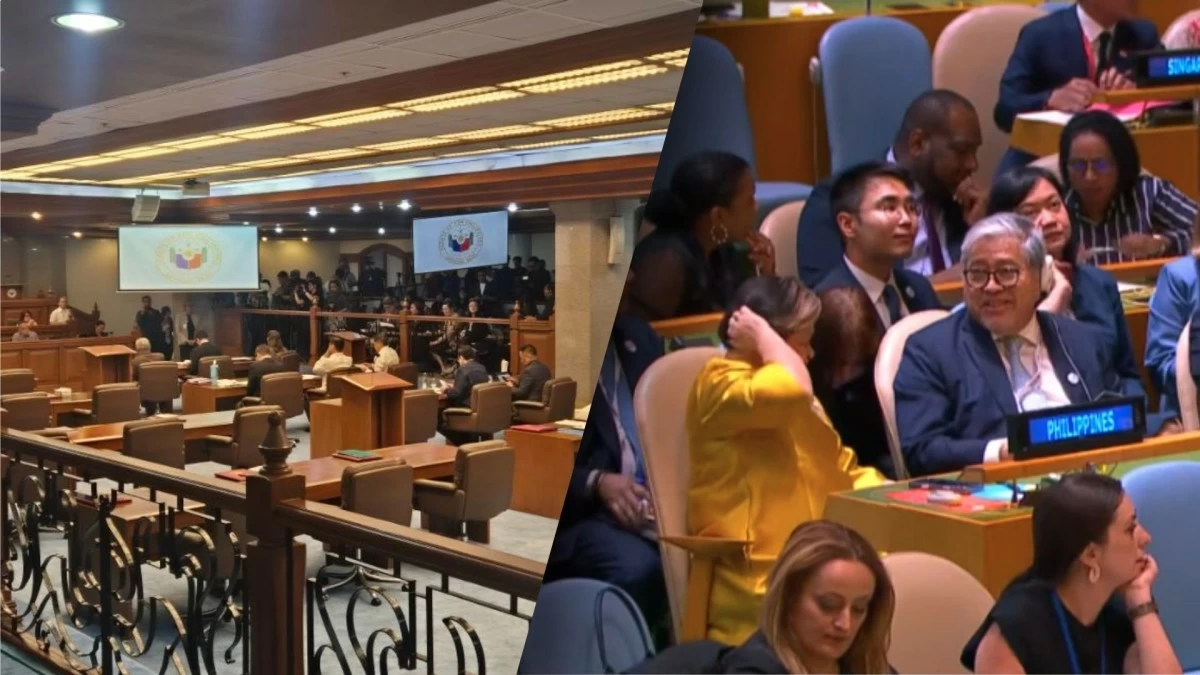
Photos by Dhel Nazario/Manila Bulletin and UN/YouTube

Malacañang said domestic political tensions and continuing political "noise" may have contributed to the Philippines' failed bid for a non-permanent seat on the United Nations Security Council (UNSC).

Presidential Communications Office (PCO) Undersecretary Claire Castro said this after the Philippines lost to Kyrgyzstan in the fourth round of voting, 142-49 in favor of Kyrgyzstan.

In a press briefing on Thursday, June 4, Castro said the country's reputation abroad is affected by developments in domestic politics, including the current Senate impasse.

“Yes, lahat ng political noise, lahat ng political tensions, nakakaapekto ito at ito ang nakikita ng buong bayan at buong mundo sa impresyon dito sa Pilipinas (Yes, all political noise and all political tensions affect this, and these are what the entire country and the whole world see in forming their impression of the Philippines),” she said.

“So, nagiging negatibo dahil sa mga ingay na ito na karamihan naman ay mga obstructionist katulad ng pag-describe ng Pangulo sa huling Kapihan with the media (So, it becomes negative because of these noises, many of which are obstructionist, as described by the President during his recent Kapihan with the media),” she added, referring to President Marcos’ remarks during an interview in Tokyo, Japan.

Castro made the remarks when asked whether the country's political situation may have affected its unsuccessful campaign for a Security Council seat.

The Philippines lost to Kyrgyzstan in the election for a non-permanent UNSC seat for the 2027-2028 term.

After four rounds of voting at the United Nations General Assembly, Kyrgyzstan secured the Asia-Pacific seat with 142 votes against the Philippines' 49.

A total of 128 votes, equivalent to a two-thirds majority of the 191 voting member states, was required to win the seat.

Following the vote, Foreign Affairs Secretary Ma. Theresa Lazaro said the Philippines respects the decision of UN member states and congratulated Kyrgyzstan on its victory.

She also thanked the countries that supported the Philippine candidacy.

The Philippines was seeking what would have been its fifth term as a non-permanent member of the Security Council.

The country previously served on the council in 1957, 1963, 1980-1981, and 2004-2005.

The Security Council is the United Nations' principal body responsible for maintaining international peace and security and is composed of five permanent members and 10 non-permanent members elected for two-year terms.

Philippine officials had campaigned on issues such as international law, maritime security, peacebuilding, climate resilience, and support for developing nations.

Related Tags

Claire Castro Senate impasse UNSC United Nations UN Security Council
ADVERTISEMENT
.most-popular .layout-ratio{ padding-bottom: 79.13%; } @media (min-width: 768px) and (max-width: 1024px) { .widget-title { font-size: 15px !important; } }

{{ articles_filter_1561_widget.title }}

.most-popular .layout-ratio{ padding-bottom: 79.13%; } @media (min-width: 768px) and (max-width: 1024px) { .widget-title { font-size: 15px !important; } }

{{ articles_filter_1562_widget.title }}

.most-popular .layout-ratio{ padding-bottom: 79.13%; } @media (min-width: 768px) and (max-width: 1024px) { .widget-title { font-size: 15px !important; } }

{{ articles_filter_1563_widget.title }}

{{ articles_filter_1564_widget.title }}

.mb-article-details { position: relative; } .mb-article-details .article-body-preview, .mb-article-details .article-body-summary{ font-size: 17px; line-height: 30px; font-family: "Libre Caslon Text", serif; color: #000; } .mb-article-details .article-body-preview iframe , .mb-article-details .article-body-summary iframe{ width: 100%; margin: auto; } .read-more-background { background: linear-gradient(180deg, color(display-p3 1.000 1.000 1.000 / 0) 13.75%, color(display-p3 1.000 1.000 1.000 / 0.8) 30.79%, color(display-p3 1.000 1.000 1.000) 72.5%); position: absolute; height: 200px; width: 100%; bottom: 0; display: flex; justify-content: center; align-items: center; padding: 0; } .read-more-background a{ color: #000; } .read-more-btn { padding: 17px 45px; font-family: Inter; font-weight: 700; font-size: 18px; line-height: 16px; text-align: center; vertical-align: middle; border: 1px solid black; background-color: white; } .hidden { display: none; }
function initializeAllSwipers() { // Get all hidden inputs with cms_article_id document.querySelectorAll('[id^="cms_article_id_"]').forEach(function (input) { const cmsArticleId = input.value; const articleSelector = '#article-' + cmsArticleId + ' .body_images'; const swiperElement = document.querySelector(articleSelector); if (swiperElement && !swiperElement.classList.contains('swiper-initialized')) { new Swiper(articleSelector, { loop: true, pagination: false, navigation: { nextEl: '#article-' + cmsArticleId + ' .swiper-button-next', prevEl: '#article-' + cmsArticleId + ' .swiper-button-prev', }, }); } }); } setTimeout(initializeAllSwipers, 3000); const intersectionObserver = new IntersectionObserver( (entries) => { entries.forEach((entry) => { if (entry.isIntersecting) { const newUrl = entry.target.getAttribute("data-url"); if (newUrl) { history.pushState(null, null, newUrl); let article = entry.target; // Extract metadata const author = article.querySelector('.author-section').textContent.replace('By', '').trim(); const section = article.querySelector('.section-info ').textContent.replace(' ', ' '); const title = article.querySelector('.article-title h1').textContent; // Parse URL for Chartbeat path format const parsedUrl = new URL(newUrl, window.location.origin); const cleanUrl = parsedUrl.host + parsedUrl.pathname; // Update Chartbeat configuration if (typeof window._sf_async_config !== 'undefined') { window._sf_async_config.path = cleanUrl; window._sf_async_config.sections = section; window._sf_async_config.authors = author; } // Track virtual page view with Chartbeat if (typeof pSUPERFLY !== 'undefined' && typeof pSUPERFLY.virtualPage === 'function') { try { pSUPERFLY.virtualPage({ path: cleanUrl, title: title, sections: section, authors: author }); } catch (error) { console.error('ping error', error); } } // Optional: Update document title if (title && title !== document.title) { document.title = title; } } } }); }, { threshold: 0.1 } ); function showArticleBody(button) { const article = button.closest("article"); const summary = article.querySelector(".article-body-summary"); const body = article.querySelector(".article-body-preview"); const readMoreSection = article.querySelector(".read-more-background"); // Hide summary and read-more section summary.style.display = "none"; readMoreSection.style.display = "none"; // Show the full article body body.classList.remove("hidden"); } document.addEventListener("DOMContentLoaded", () => { let loadCount = 0; // Track how many times articles are loaded const offset = [1, 2, 3, 4, 5, 6, 7, 8, 9, 10]; // Offset values const currentUrl = window.location.pathname.substring(1); let isLoading = false; // Prevent multiple calls if (!currentUrl) { console.log("Current URL is invalid."); return; } const sentinel = document.getElementById("load-more-sentinel"); if (!sentinel) { console.log("Sentinel element not found."); return; } function isSentinelVisible() { const rect = sentinel.getBoundingClientRect(); return ( rect.top < window.innerHeight && rect.bottom >= 0 ); } function onScroll() { if (isLoading) return; if (isSentinelVisible()) { if (loadCount >= offset.length) { console.log("Maximum load attempts reached."); window.removeEventListener("scroll", onScroll); return; } isLoading = true; const currentOffset = offset[loadCount]; window.loadMoreItems().then(() => { let article = document.querySelector('#widget_1690 > div:nth-last-of-type(2) article'); intersectionObserver.observe(article) loadCount++; }).catch(error => { console.error("Error loading more items:", error); }).finally(() => { isLoading = false; }); } } window.addEventListener("scroll", onScroll); });

Sign up by email to receive news.