






 Philippines
National
Marcos inspects rehabilitated Sunog Apog pumping station after 6 years of non-operation
Philippines
National
Marcos inspects rehabilitated Sunog Apog pumping station after 6 years of non-operation
Marcos inspects rehabilitated Sunog Apog pumping station after 6 years of non-operation


At A Glance
- President Marcos inspected the rehabilitated Sunog Apog Pumping Station in Tondo, Manila
- The facility had reportedly remained non-operational for six years despite being completed in 2020
- Three of the station's four pumps are now operational ahead of the rainy seasonthe
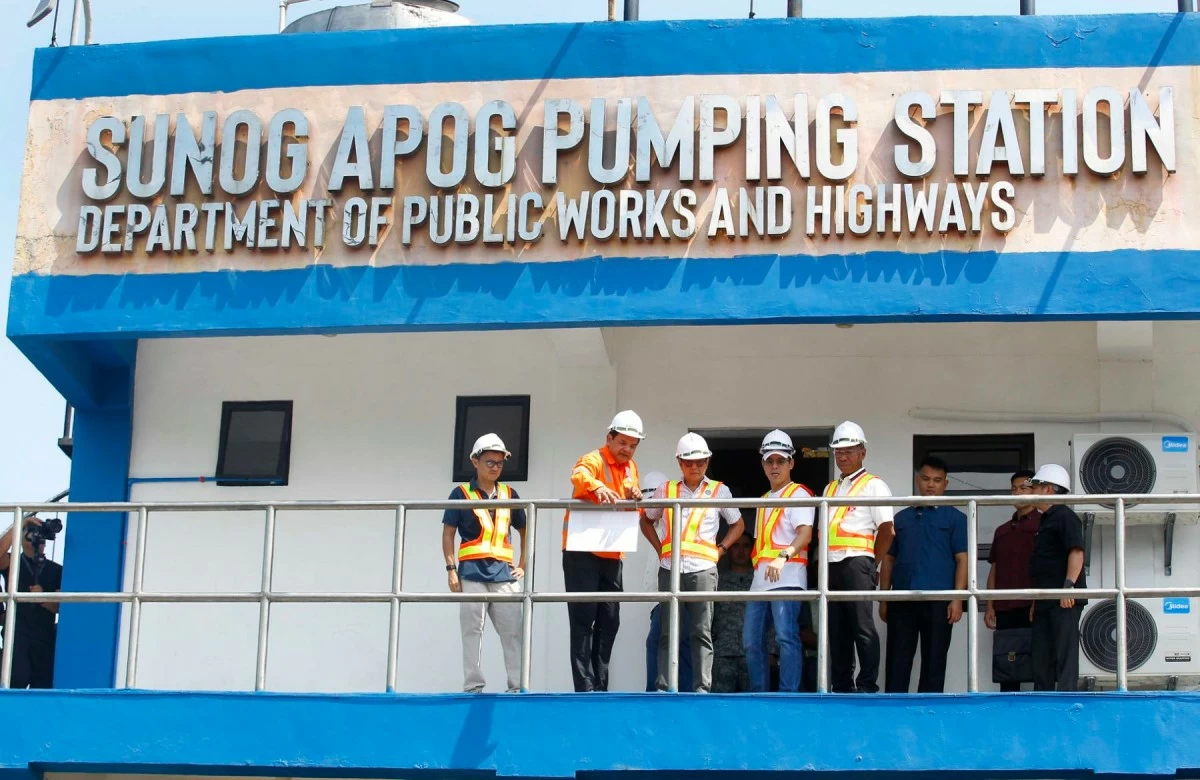
President Marcos inspected the rehabilitated Sunog Apog Pumping Station in Tondo, Manila, which had remained non-operational for six years despite being completed and fully paid for in 2020.
The inspection on Monday, May 25, formed part of the administration’s broader flood mitigation efforts across Metro Manila ahead of the rainy season.
“Nandito tayo sa Sunog Apog Pumping Station. Kaya tayo nandito para makita kung talagang naayos na (We are here at the Sunog Apog Pumping Station because we want to see if it has truly been repaired),” he said.
“Dahil mula noong in-inaugurate ito at binuksan ito noong 2020 ay ni minsan hindi gumana ito. It has never worked at all for six years (Because since it was inaugurated and opened in 2020, it never functioned even once),” he added.
In a press briefing, Presidential Communications Office (PCO) Undersecretary Claire Castro said the pumping station was funded under the 2017 General Appropriations Act, with construction beginning in 2018.
She added that the project’s second phase was funded under the 2019 national budget and was completed and fully paid for by the previous administration in 2020 for P774 million.
“Hindi ito gumagana sa loob ng anim na taon (It did not function for six years),” Castro said.
“Ngunit dahil sa utos ni Pangulong Marcos Jr. at sa pangunguna ni DPWH (Department of Public Works and Highways) Secretary Vince Dizon, ito ay naayos at napagana sa ngayon (But because of the directive of President Marcos Jr. and under the leadership of DPWH Secretary Vince Dizon, it has now been repaired and made operational),” she added.
Flood mitigation efforts
During the inspection, Marcos said rehabilitation works began in November and included replacing electrical equipment, declogging pipelines, cleaning operations, and desilting nearby waterways and the facility itself.
The President noted that the original system design caused the pumps to stop functioning after only a few minutes of operation, an issue that has since been corrected.
According to Marcos, even one pump operating at half capacity already significantly reduced floodwaters in surrounding areas.
“Siguro mga one foot, mga 12 inches ang binaba na kaagad ng tubig (The water level immediately dropped by around one foot or 12 inches),” he said.
Three pumps operational
In an interview, Dizon said the rehabilitation was conducted under the President’s order to restore all non-functioning pumping stations in Metro Manila.
He added that the rehabilitation was completed within six months through the joint efforts of the DPWH, Metropolitan Manila Development Authority (MMDA), and the Manila city government.
“Hindi man nito tuluyang masosolusyunan ang pagbaha, pero malaking tulong ang gumaganang pumping station para maibsan kahit papaano ang epekto nito sa mga komunidad (This may not completely solve flooding, but a functioning pumping station greatly helps lessen the effects on communities),” Dizon said.
Meanwhile, Castro said upgrades at the facility remain ongoing, with three of the station’s four pumps currently operational.
The fourth pump is still functioning as a gravity-flow system and is expected to become fully operational by June.
Joining President Marcos during the inspection were Dizon, MMDA Chairman Romando Artes, MMDA General Manager Nicolas Torre III, and Manila Mayor Isko Moreno Domagoso.
Torre, meanwhile, appealed to residents near the pumping station and nearby waterways not to throw garbage into drainage systems to prevent future blockages.