ADVERTISEMENT

Philippine Blockchain Week 2026: Why trust is the new foundation of the digital Filipino economy

Published May 14, 2026 10:16 am
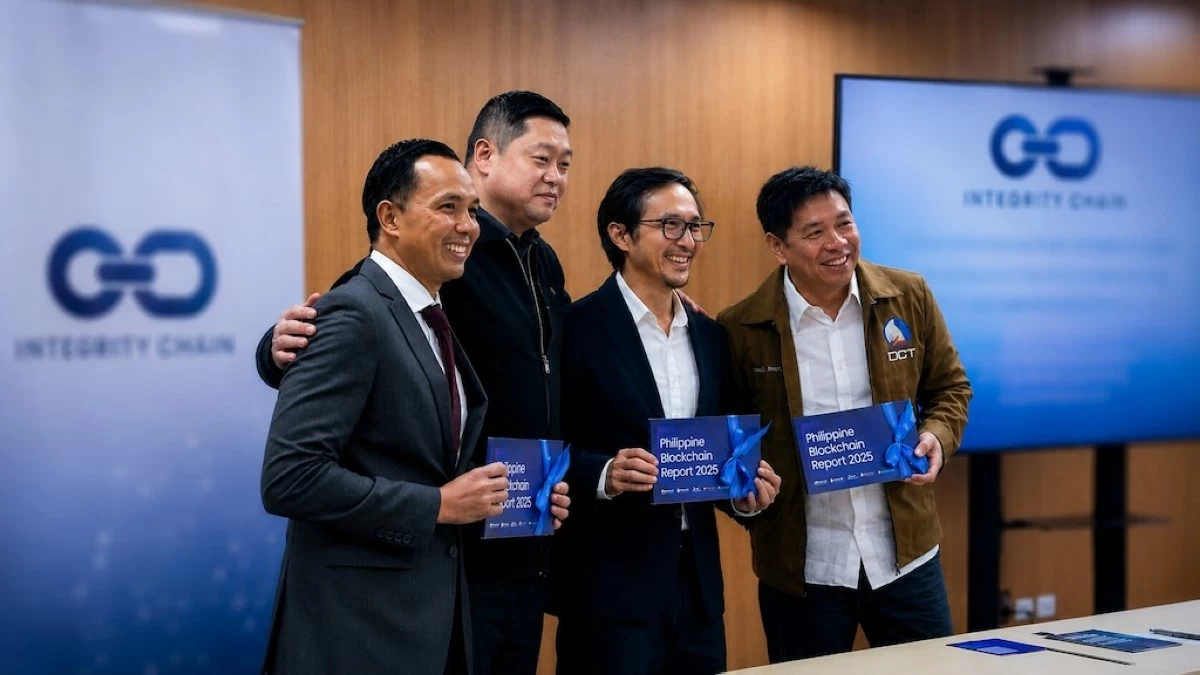
During the press launch and signing of the Statement of Support for the Integrity Chain, DICT Secretary Henry Aguda, DPWH Secretary Vince Dizon, and Donald Lim, highlighted their shared commitment to promoting transparency, trust, and innovation.
The digital landscape is shifting from a playground of convenience to a serious frontier where our data, finances, and identities reside. As we move further into this era, the traditional ways we secure these assets are no longer enough. We have entered a period where trust itself has become the primary infrastructure. This critical shift is the cornerstone of the Future of Trust: A Leaders Forum on Technology and Governance, the official opening event for Philippine Blockchain Week 2026. This invitation-only gathering aims to bring together the most influential minds from the global tech sector, the private business community, and various government agencies to tackle the pressing hurdles of our modern age by creating reliable systems for finance and public service.
Establishing this trust is not just a moral goal but an economic necessity. Every thriving economy throughout history has relied on a foundation of confidence between parties, and modern technology now provides the tools to make that confidence verifiable and scalable. Blockchain technology essentially offers a framework that is nearly impossible to compromise, ensuring that every transaction or digital interaction is legitimate.
To better understand how this works in practice, the forum explores three specific pillars that keep our digital world upright. First, the technological pillar provides the physical and digital bones through blockchain, AI governance, and digital identity systems. Second, the governance pillar creates the necessary laws and policies that give these digital systems their legitimacy and hold participants accountable. Finally, the trust economy pillar focuses on the actual markets and capital that depend entirely on whether or not trust can be sustained and proven over time.
These developments are far from being mere theories or abstract ideas reserved for foreign tech hubs. In the Philippines, the transformation is already visible within our own bureaucracy. Major institutions like the Bangko Sentral ng Pilipinas and the Department of Information and Communications Technology are actively integrating digital governance into their daily workflows. Other agencies, including the Securities and Exchange Commission, the Department of the Interior and Local Government, the Department of Budget and Management, and the Department of Public Works and Highways, are also leading the charge in embedding transparency into the government’s DNA. A prime example of this progress is the Integrity Chain, a blockchain-driven initiative focused on transparency. Having completed its initial phase with the DPWH, it is now entering its second stage, proving that blockchain is a functional tool for anti-corruption rather than just a buzzword.
The impact of this technology is even reaching the local level, with two local government units already operating on blockchain platforms. This proves that the technology has successfully transitioned from high-level corporate boardrooms to the actual communities it was designed to help. Scheduled for 19 June 2026 at the SMX Convention Center, the Future of Trust forum sets a serious and productive tone for the rest of Philippine Blockchain Week. It highlights the massive opportunity and the equally massive responsibility leaders have to create frameworks that protect the public while fostering innovation. Now in its fourth year, Philippine Blockchain Week continues to bridge the gap between complex tech and the average citizen by mixing business discussions with pop culture. Supported by partners such as CAT Investigators, KMC Solutions, NSpire, and various media outlets, the event remains the premier venue for discussing the future of the Filipino digital experience.

Related Tags

DPWH DICT Philippine Blockchain Week 2026 digital governance GovTech Philippines
ADVERTISEMENT
.most-popular .layout-ratio{ padding-bottom: 79.13%; } @media (min-width: 768px) and (max-width: 1024px) { .widget-title { font-size: 15px !important; } }

{{ articles_filter_1561_widget.title }}

.most-popular .layout-ratio{ padding-bottom: 79.13%; } @media (min-width: 768px) and (max-width: 1024px) { .widget-title { font-size: 15px !important; } }

{{ articles_filter_1562_widget.title }}

.most-popular .layout-ratio{ padding-bottom: 79.13%; } @media (min-width: 768px) and (max-width: 1024px) { .widget-title { font-size: 15px !important; } }

{{ articles_filter_1563_widget.title }}

{{ articles_filter_1564_widget.title }}

.mb-article-details { position: relative; } .mb-article-details .article-body-preview, .mb-article-details .article-body-summary{ font-size: 17px; line-height: 30px; font-family: "Libre Caslon Text", serif; color: #000; } .mb-article-details .article-body-preview iframe , .mb-article-details .article-body-summary iframe{ width: 100%; margin: auto; } .read-more-background { background: linear-gradient(180deg, color(display-p3 1.000 1.000 1.000 / 0) 13.75%, color(display-p3 1.000 1.000 1.000 / 0.8) 30.79%, color(display-p3 1.000 1.000 1.000) 72.5%); position: absolute; height: 200px; width: 100%; bottom: 0; display: flex; justify-content: center; align-items: center; padding: 0; } .read-more-background a{ color: #000; } .read-more-btn { padding: 17px 45px; font-family: Inter; font-weight: 700; font-size: 18px; line-height: 16px; text-align: center; vertical-align: middle; border: 1px solid black; background-color: white; } .hidden { display: none; }
function initializeAllSwipers() { // Get all hidden inputs with cms_article_id document.querySelectorAll('[id^="cms_article_id_"]').forEach(function (input) { const cmsArticleId = input.value; const articleSelector = '#article-' + cmsArticleId + ' .body_images'; const swiperElement = document.querySelector(articleSelector); if (swiperElement && !swiperElement.classList.contains('swiper-initialized')) { new Swiper(articleSelector, { loop: true, pagination: false, navigation: { nextEl: '#article-' + cmsArticleId + ' .swiper-button-next', prevEl: '#article-' + cmsArticleId + ' .swiper-button-prev', }, }); } }); } setTimeout(initializeAllSwipers, 3000); const intersectionObserver = new IntersectionObserver( (entries) => { entries.forEach((entry) => { if (entry.isIntersecting) { const newUrl = entry.target.getAttribute("data-url"); if (newUrl) { history.pushState(null, null, newUrl); let article = entry.target; // Extract metadata const author = article.querySelector('.author-section').textContent.replace('By', '').trim(); const section = article.querySelector('.section-info ').textContent.replace(' ', ' '); const title = article.querySelector('.article-title h1').textContent; // Parse URL for Chartbeat path format const parsedUrl = new URL(newUrl, window.location.origin); const cleanUrl = parsedUrl.host + parsedUrl.pathname; // Update Chartbeat configuration if (typeof window._sf_async_config !== 'undefined') { window._sf_async_config.path = cleanUrl; window._sf_async_config.sections = section; window._sf_async_config.authors = author; } // Track virtual page view with Chartbeat if (typeof pSUPERFLY !== 'undefined' && typeof pSUPERFLY.virtualPage === 'function') { try { pSUPERFLY.virtualPage({ path: cleanUrl, title: title, sections: section, authors: author }); } catch (error) { console.error('ping error', error); } } // Optional: Update document title if (title && title !== document.title) { document.title = title; } } } }); }, { threshold: 0.1 } ); function showArticleBody(button) { const article = button.closest("article"); const summary = article.querySelector(".article-body-summary"); const body = article.querySelector(".article-body-preview"); const readMoreSection = article.querySelector(".read-more-background"); // Hide summary and read-more section summary.style.display = "none"; readMoreSection.style.display = "none"; // Show the full article body body.classList.remove("hidden"); } document.addEventListener("DOMContentLoaded", () => { let loadCount = 0; // Track how many times articles are loaded const offset = [1, 2, 3, 4, 5, 6, 7, 8, 9, 10]; // Offset values const currentUrl = window.location.pathname.substring(1); let isLoading = false; // Prevent multiple calls if (!currentUrl) { console.log("Current URL is invalid."); return; } const sentinel = document.getElementById("load-more-sentinel"); if (!sentinel) { console.log("Sentinel element not found."); return; } function isSentinelVisible() { const rect = sentinel.getBoundingClientRect(); return ( rect.top < window.innerHeight && rect.bottom >= 0 ); } function onScroll() { if (isLoading) return; if (isSentinelVisible()) { if (loadCount >= offset.length) { console.log("Maximum load attempts reached."); window.removeEventListener("scroll", onScroll); return; } isLoading = true; const currentOffset = offset[loadCount]; window.loadMoreItems().then(() => { let article = document.querySelector('#widget_1690 > div:nth-last-of-type(2) article'); intersectionObserver.observe(article) loadCount++; }).catch(error => { console.error("Error loading more items:", error); }).finally(() => { isLoading = false; }); } } window.addEventListener("scroll", onScroll); });

Sign up by email to receive news.