ADVERTISEMENT

World Bank trims Cebu BRT financing amid delays

Published May 11, 2026 12:00 am  |  Updated May 10, 2026 09:29 pm
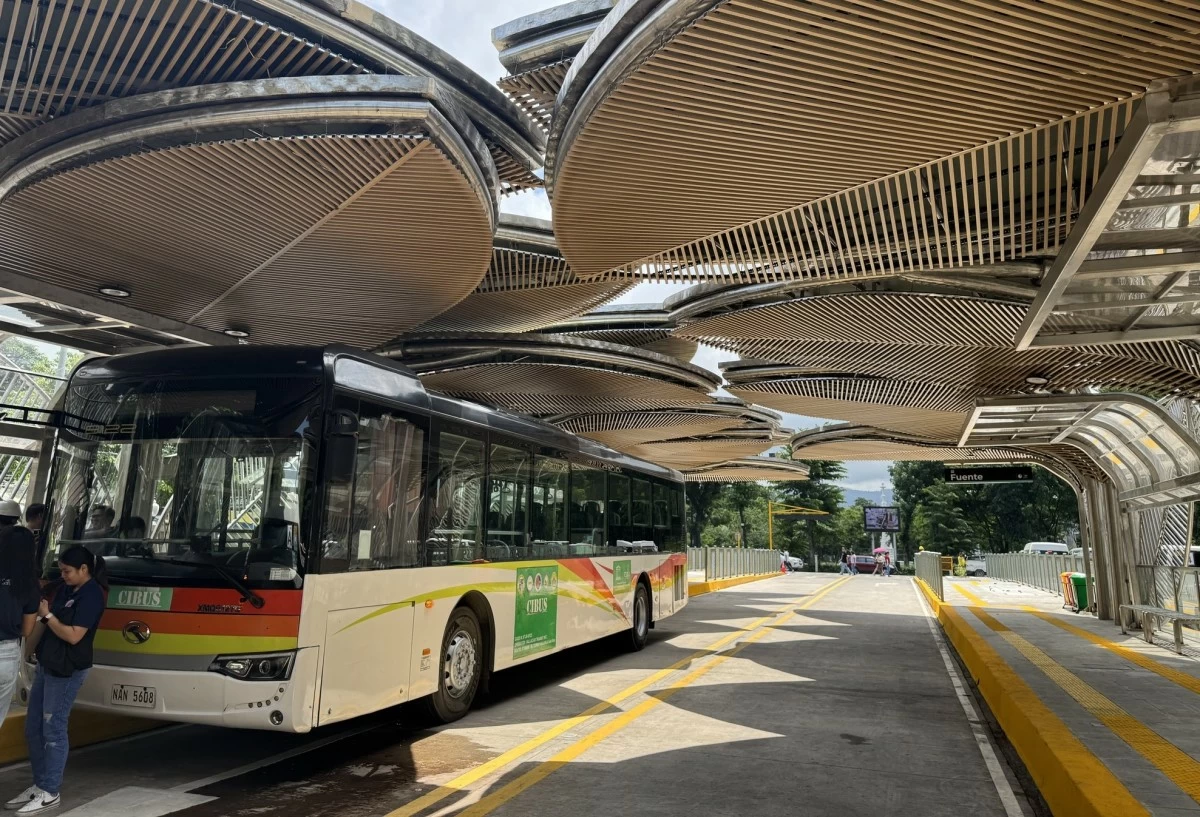
A look at one of the stations of the Cebu Bus Rapid Transit (DOTr photo)

The World Bank has canceled part of the loans for the Cebu Bus Rapid Transit (BRT) while as project scope was pared down with only five months left before its financing closes.

A May 8 restructuring paper seen by Manila Bulletin showed that the Washington-based multilateral lender, effective Jan. 22 of this year, canceled $59.9 million from the project’s $116-million International Bank for Reconstruction and Development (IBRD) loan. IBRD is the World Bank Group’s (WBG) lending arm for developing countries like the Philippines.

This adjustment reduced the value of the IBRD loan to $56.1 million.

The World Bank also canceled the entire $25-million Clean Technology Fund (CTF) loan, upon the earlier request of the Philippine government through the Department of Finance (DOF) last January.

The document showed that the Philippines shelled out merely $12 million as counterpart funding for the project.

“As the cancelled funds are clearly linked to specific project activities, a restructuring of the project to reflect the new scope is also necessary,” the document said, listing down the six project components where activities unlikely to be finished by Sept. 30, 2026—the loan’s latest closing date—were scrapped.

The document likewise reallocated the remaining loan proceeds to activities that could still be completed before end-September.

To recall, Cebu BRT, once envisioned as a transformative solution to the Queen City of the South’s traffic woes, has faced a string of setbacks that have pushed its completion date four times after the loan financing was approved by the World Bank way back in 2014.

“Despite the extension of the project implementation period, the project failed to make progress on the remaining project activities,” the World Bank lamented.

The lender warned that “in the future, should the government continue to construct the segments that were dropped from the original project, it is expected that the improvement in the road system in Cebu will potentially cause increase in traffic and commercial activities that will indirectly lead to additional pollution.”

Meanwhile, “in terms of social impacts, completion of the entire BRT alignment as it was initially conceived will generate indirect long-term benefits to commuters including women, the elderly, and the physically challenged, especially if the government continues to engage with these vulnerable stakeholders,” it added.

Manila Bulletin earlier reported that the World Bank last March blamed persistent delays in procurement and civil works.

For instance, the World Bank had cited that the Department of Transportation (DOTr), the project’s implementing agency, has struggled with right-of-way (ROW) acquisitions and the redesign of specific segments, which were flagged for heritage and technical concerns.

The lender had noted that the Philippine government’s request for partial cancellation is a strategic move to reduce commitment fees on undisbursed funds that are no longer expected to be utilized within the current project timeline.

The government had similarly moved to cancel portions of World Bank and Asian Infrastructure Investment Bank (AIIB) loans for the Metro Manila Flood Management Project due to slow execution.

Related Tags

Cebu bus rapid transit (BRT) project World Bank International Bank for Reconstruction and Development (IBRD) World Bank Group (WBG) Department of Transportation (DOTr) Department of Finance (DOF)
ADVERTISEMENT
.most-popular .layout-ratio{ padding-bottom: 79.13%; } @media (min-width: 768px) and (max-width: 1024px) { .widget-title { font-size: 15px !important; } }

{{ articles_filter_1561_widget.title }}

.most-popular .layout-ratio{ padding-bottom: 79.13%; } @media (min-width: 768px) and (max-width: 1024px) { .widget-title { font-size: 15px !important; } }

{{ articles_filter_1562_widget.title }}

.most-popular .layout-ratio{ padding-bottom: 79.13%; } @media (min-width: 768px) and (max-width: 1024px) { .widget-title { font-size: 15px !important; } }

{{ articles_filter_1563_widget.title }}

{{ articles_filter_1564_widget.title }}

.mb-article-details { position: relative; } .mb-article-details .article-body-preview, .mb-article-details .article-body-summary{ font-size: 17px; line-height: 30px; font-family: "Libre Caslon Text", serif; color: #000; } .mb-article-details .article-body-preview iframe , .mb-article-details .article-body-summary iframe{ width: 100%; margin: auto; } .read-more-background { background: linear-gradient(180deg, color(display-p3 1.000 1.000 1.000 / 0) 13.75%, color(display-p3 1.000 1.000 1.000 / 0.8) 30.79%, color(display-p3 1.000 1.000 1.000) 72.5%); position: absolute; height: 200px; width: 100%; bottom: 0; display: flex; justify-content: center; align-items: center; padding: 0; } .read-more-background a{ color: #000; } .read-more-btn { padding: 17px 45px; font-family: Inter; font-weight: 700; font-size: 18px; line-height: 16px; text-align: center; vertical-align: middle; border: 1px solid black; background-color: white; } .hidden { display: none; }
function initializeAllSwipers() { // Get all hidden inputs with cms_article_id document.querySelectorAll('[id^="cms_article_id_"]').forEach(function (input) { const cmsArticleId = input.value; const articleSelector = '#article-' + cmsArticleId + ' .body_images'; const swiperElement = document.querySelector(articleSelector); if (swiperElement && !swiperElement.classList.contains('swiper-initialized')) { new Swiper(articleSelector, { loop: true, pagination: false, navigation: { nextEl: '#article-' + cmsArticleId + ' .swiper-button-next', prevEl: '#article-' + cmsArticleId + ' .swiper-button-prev', }, }); } }); } setTimeout(initializeAllSwipers, 3000); const intersectionObserver = new IntersectionObserver( (entries) => { entries.forEach((entry) => { if (entry.isIntersecting) { const newUrl = entry.target.getAttribute("data-url"); if (newUrl) { history.pushState(null, null, newUrl); let article = entry.target; // Extract metadata const author = article.querySelector('.author-section').textContent.replace('By', '').trim(); const section = article.querySelector('.section-info ').textContent.replace(' ', ' '); const title = article.querySelector('.article-title h1').textContent; // Parse URL for Chartbeat path format const parsedUrl = new URL(newUrl, window.location.origin); const cleanUrl = parsedUrl.host + parsedUrl.pathname; // Update Chartbeat configuration if (typeof window._sf_async_config !== 'undefined') { window._sf_async_config.path = cleanUrl; window._sf_async_config.sections = section; window._sf_async_config.authors = author; } // Track virtual page view with Chartbeat if (typeof pSUPERFLY !== 'undefined' && typeof pSUPERFLY.virtualPage === 'function') { try { pSUPERFLY.virtualPage({ path: cleanUrl, title: title, sections: section, authors: author }); } catch (error) { console.error('ping error', error); } } // Optional: Update document title if (title && title !== document.title) { document.title = title; } } } }); }, { threshold: 0.1 } ); function showArticleBody(button) { const article = button.closest("article"); const summary = article.querySelector(".article-body-summary"); const body = article.querySelector(".article-body-preview"); const readMoreSection = article.querySelector(".read-more-background"); // Hide summary and read-more section summary.style.display = "none"; readMoreSection.style.display = "none"; // Show the full article body body.classList.remove("hidden"); } document.addEventListener("DOMContentLoaded", () => { let loadCount = 0; // Track how many times articles are loaded const offset = [1, 2, 3, 4, 5, 6, 7, 8, 9, 10]; // Offset values const currentUrl = window.location.pathname.substring(1); let isLoading = false; // Prevent multiple calls if (!currentUrl) { console.log("Current URL is invalid."); return; } const sentinel = document.getElementById("load-more-sentinel"); if (!sentinel) { console.log("Sentinel element not found."); return; } function isSentinelVisible() { const rect = sentinel.getBoundingClientRect(); return ( rect.top < window.innerHeight && rect.bottom >= 0 ); } function onScroll() { if (isLoading) return; if (isSentinelVisible()) { if (loadCount >= offset.length) { console.log("Maximum load attempts reached."); window.removeEventListener("scroll", onScroll); return; } isLoading = true; const currentOffset = offset[loadCount]; window.loadMoreItems().then(() => { let article = document.querySelector('#widget_1690 > div:nth-last-of-type(2) article'); intersectionObserver.observe(article) loadCount++; }).catch(error => { console.error("Error loading more items:", error); }).finally(() => { isLoading = false; }); } } window.addEventListener("scroll", onScroll); });

Sign up by email to receive news.