






 Business
The Economy
Deutsche Bank flags dual inflation risks from 'super' El Niño, Middle East war
Business
The Economy
Deutsche Bank flags dual inflation risks from 'super' El Niño, Middle East war
Deutsche Bank flags dual inflation risks from 'super' El Niño, Middle East war
By Derco Rosal


At A Glance
- Frankfurt-based Deutsche Bank AG sees a Super El Niño developing from this month until July, threatening to further accelerate the surge in consumer prices already aggravated by the Middle East war.
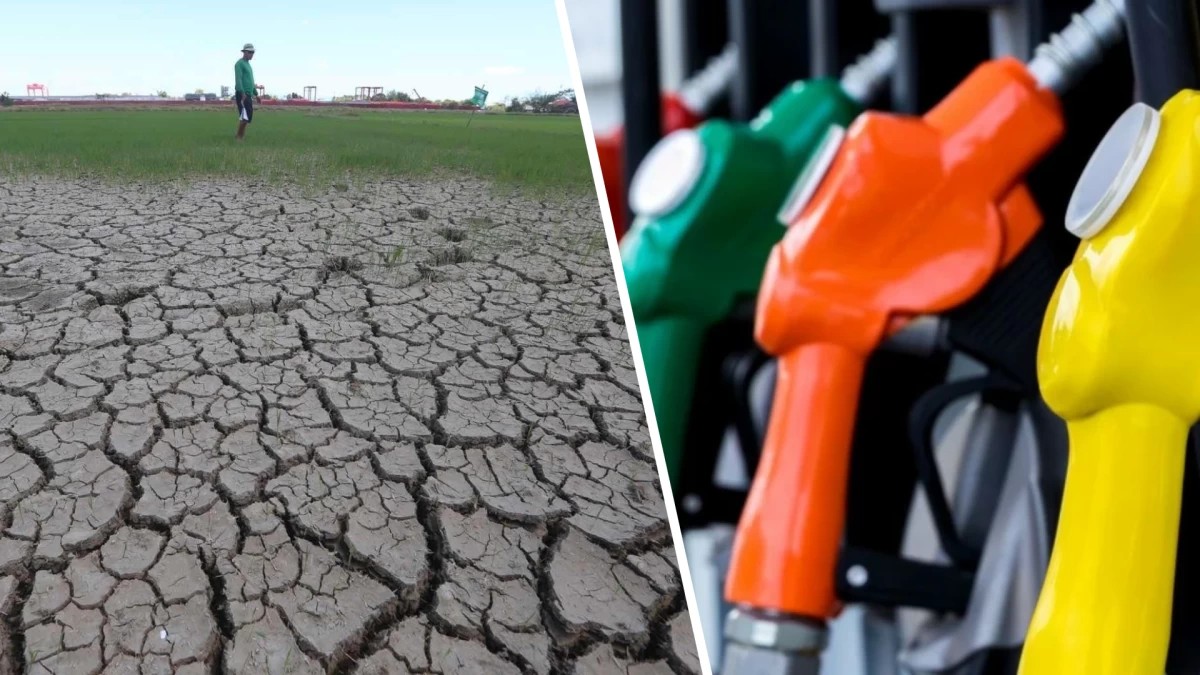
The research arm of Frankfurt-based Deutsche Bank sees a “super” El Niño developing from this month until July, threatening to further accelerate the surge in Philippine consumer prices already aggravated by the Middle East war.
Deutsche Bank Research hiked its inflation assumption for this year to 6.5 percent from just four percent previously. This higher projection exceeded that of the Bangko Sentral ng Pilipinas (BSP) at 6.3 percent, which, if achieved, would mark an 18-year high since the 8.2 percent recorded at the height of the global financial crisis (GFC) in 2008.
The German bank also revised its 2027 inflation forecast to 4.2 percent from 3.2 percent earlier. This is modestly slower than the 4.3-percent pace projected by the BSP.
These revisions came after the latest Philippine Statistics Authority (PSA) data showed headline inflation significantly jumped to 7.2 percent in April, the fastest year-on-year price increases in more than three years, breaching the government’s four-percent ceiling.
To curb the broader surge in consumer prices, local monetary authorities could raise lending costs to prevent inflation from overheating. Deutsche Bank Research has priced in two more interest rate hikes following the monetary tightening kick-off last month.
“While our baseline remains for 25-basis-point (bp) hikes in June and August, the persistent upside risk, particularly if future prints continue to exceed expectations, raises the probability of more aggressive tightening,” Deutsche Bank Research said in a report last week.
If realized, raising the benchmark rate by 25 bps twice more would bring the current 4.5-percent rate to five percent by the end of 2026.
FitchSolutions subsidiary BMI holds a rosier inflation outlook for this year, anticipating the headline rate to average 4.3 percent. Still, this projection exceeds the BSP’s two- to four-percent target range of manageable price hikes supportive of economic growth. BMI said the over three-year-high April inflation print, “alongside elevated oil prices from the Middle East conflict, can erode household purchasing power, weighing on domestic consumption.”
“Prolonged inflation, particularly in relation to food, will mean that consumers will have to increasingly allocate more of their disposable income toward meeting necessities,” BMI explained.
BMI’s outlook on spending among Filipino consumers remains cautious but positive. It expects household spending growth, adjusted for inflation, to moderate to 4.4 percent from 4.6 percent in 2025.
This is in line with BMI’s country risk expectation that inflation-adjusted Philippine economic growth would settle at 4.7 percent, higher than the post-pandemic-low 2025 expansion of 4.4 percent, but still short of the government’s minimum five-percent goal for the year.
In the first quarter, gross domestic product (GDP) growth slowed to a five-year low of 2.8 percent. This marked the third consecutive quarterly growth slowdown, fueling debates on whether the country is entering a period of stagflation or reverting to its historical status as the “sick man of Asia.”
The latest growth rate was lower than the three percent recorded in the final quarter of 2025 and a sharp deceleration from the 5.4 percent posted a year ago. The first-quarter growth pace also fell far short of the government target, leaving the Philippines trailing regional peers including Vietnam, Indonesia, and China.