







Davao Light revives an island ready to thrive
By Len Amadora
Published May 9, 2026 06:42 am
|
Updated May 9, 2026 04:06 pm


Just as blood carries oxygen to every organ to keep a body in motion, a steady electrical current delivers the “breath” required for the island’s infrastructure to thrive.
When power flows reliably, the island is healthy. Businesses flourish. Homes remain cool. And the community remains vibrant. However, without this vital flow, the island begins to deteriorate, much like a body losing its strength. On Samal, electricity isn’t just a convenience; it is the invisible force that keeps the lights burning and the heart of the island beating.
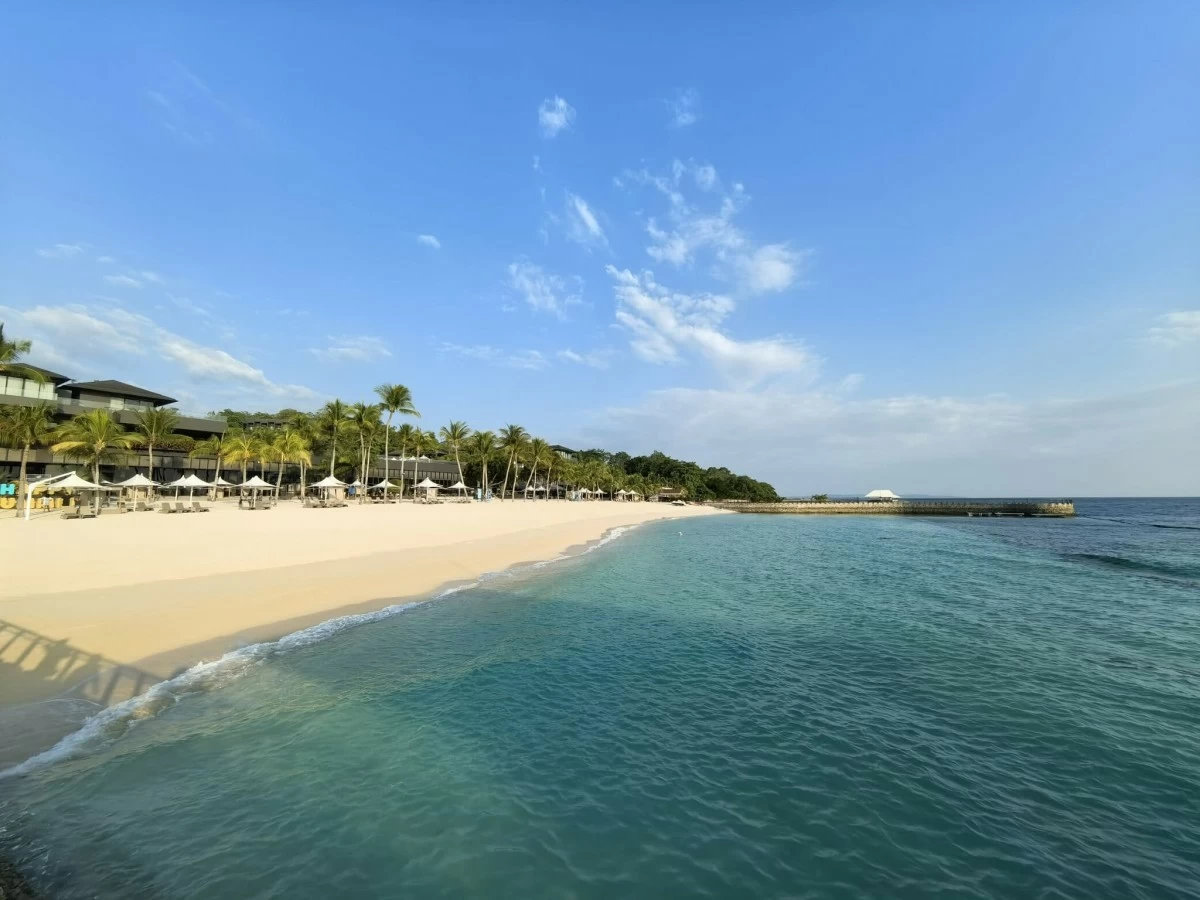
Discovery Samal
Samal Island, or the Island Garden City of Samal (IGaCoS), is a sanctuary nestled along the Gulf of Davao. Located just a 10-minute ferry ride from the bustle of Davao City, it offers a calm escape defined by pristine beaches, diverse wildlife, and vibrant local culture. It is a place where one can truly detach from urban chaos and bask in the island’s natural serenity.
Yet, despite its breathtaking beauty, Samal’s growth has long been stunted. The obstacle was never a lack of ambition, but something more fundamental: the challenge of reliable power. For decades, the island’s tourism sector held untapped promise, held back by an unstable grid.
In an interview with IGaCoS Special Adviser to the Mayor on Tourism and Investments, Dr. Noel Daquioag said residents and resort owners were forced to operate with intermittent power, enduring daily outages that stretched from minutes into agonizing hours. This reality has dampened its growth. While businesses and residents did their best to adapt, without stable power, daily life became increasingly difficult.
The crisis peaked in 2023 when IGaCoS was placed under a State of Calamity, leaving the local government to rely on emergency generator sets just to address the power crisis. Still, the island continued to struggle with rolling blackouts; a reminder that a destination cannot fully flourish when its demand for growth outpaces its energy supply and infrastructure.
With an energy supply that flickered and faded, life went on for Samalenyos. They were forced to adapt to what limited power could offer. While some establishments, such as Discovery Samal, Villa Amparo Beach Resort, and Paradise Island Park and Beach Resort, installed their own generator sets, others are left to endure the uncertainty of having no power.
Not only that, the reliance on diesel-powered generators raised environmental concerns, logistical fuel challenges, and high electricity costs that strained finances and limited growth potential.
For an island like Samal, a stable power supply is the difference between a community that is merely surviving and one that is truly alive.
Davao Light's entry into Samal represents a turning point for the island's economy and its path toward sustainable growth.
Light at the end of the tunnel
Davao Light and Power Company (Davao Light), a distribution arm of Aboitiz Power Corporation (Aboitiz Power), serves the cities of Davao and Panabo, plus the municipalities of Carmen, Dujali, and Sto. Tomas, and, recently, several areas in Davao del Norte and Davao de Oro, including Samal. As the country’s third-largest electric distribution utility, its energy mix reflects a move toward sustainability, with approximately 50 percent sourced from renewable hydropower and the rest from conventional power sources.
In a recent interview, Davao Light President Enriczar Tia captured the scale of the Davao-Samal interconnection project, describing an engineering feat that felt more like a movie plot. A team of technical experts, engineers, and divers carried out the delicate task of laying 1,015 meters of state-of-the-art cable across the Pakiputan Strait. By choosing the point where the two islands are closest together, the team ensured the project’s footprint was as small as possible, intentionally minimizing the impact on the marine environment.
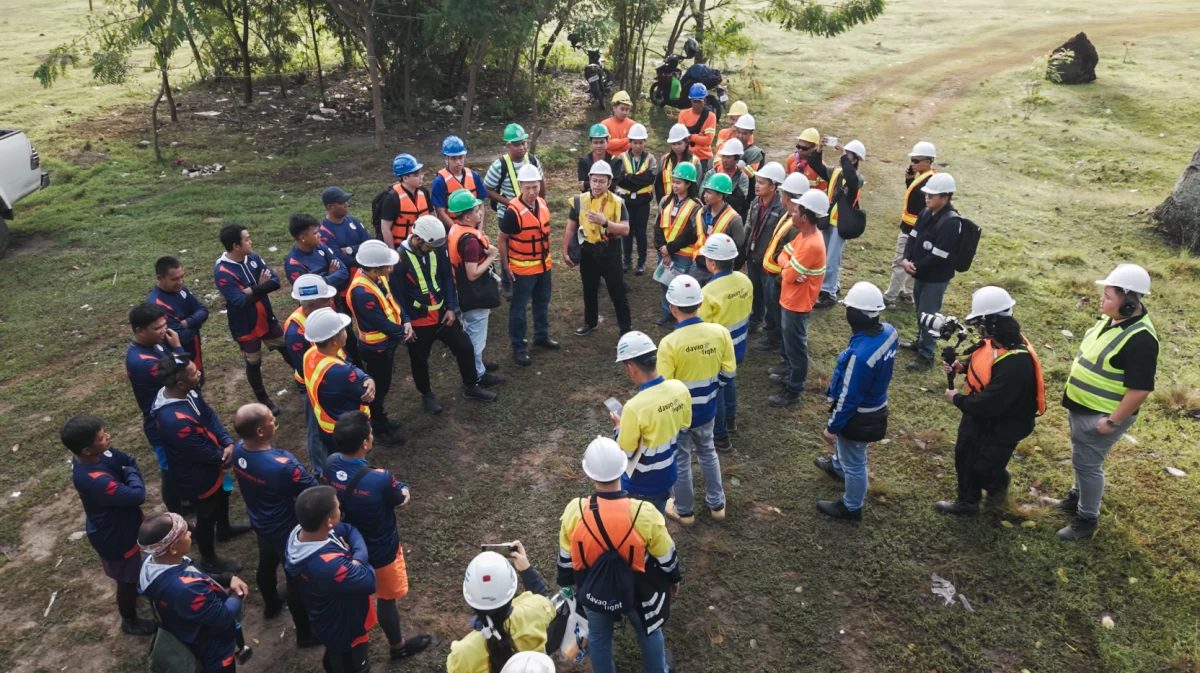
Engineers and project team members conduct a safety toolbox meeting before the critical task of connecting Samal to the mainland grid.
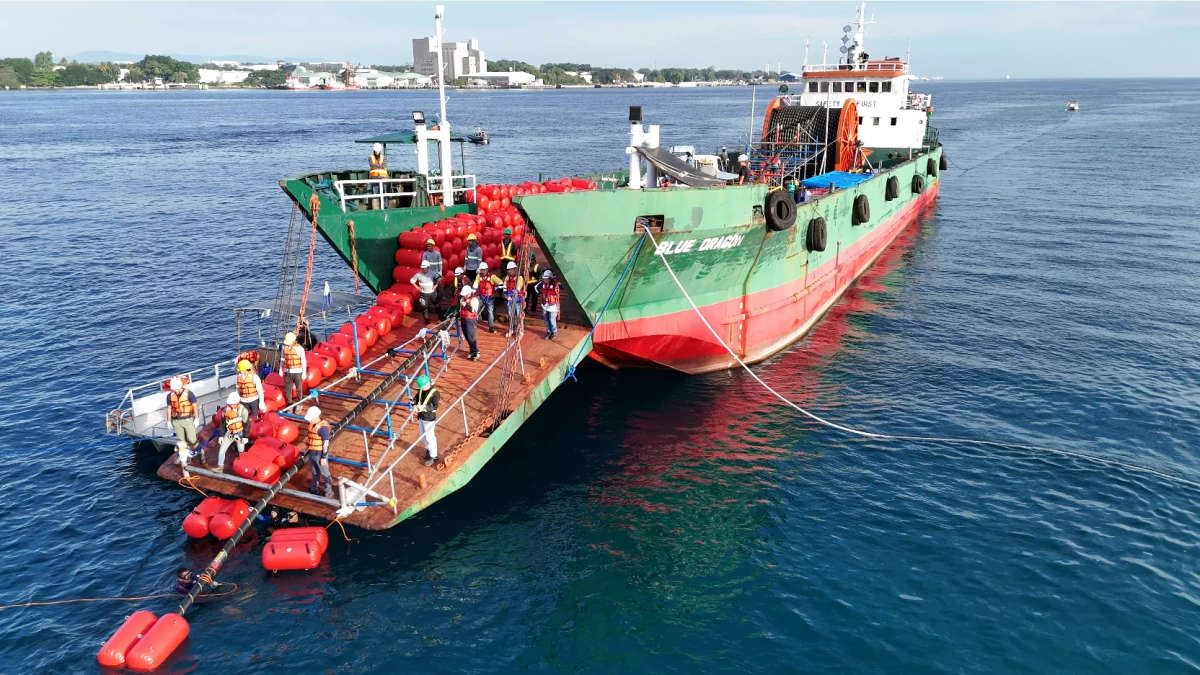
A team of technical experts and divers, led by Davao Light, initiates the long-awaited Davao-Samal power interconnection project—marking the official start of the island’s connection to the mainland grid.
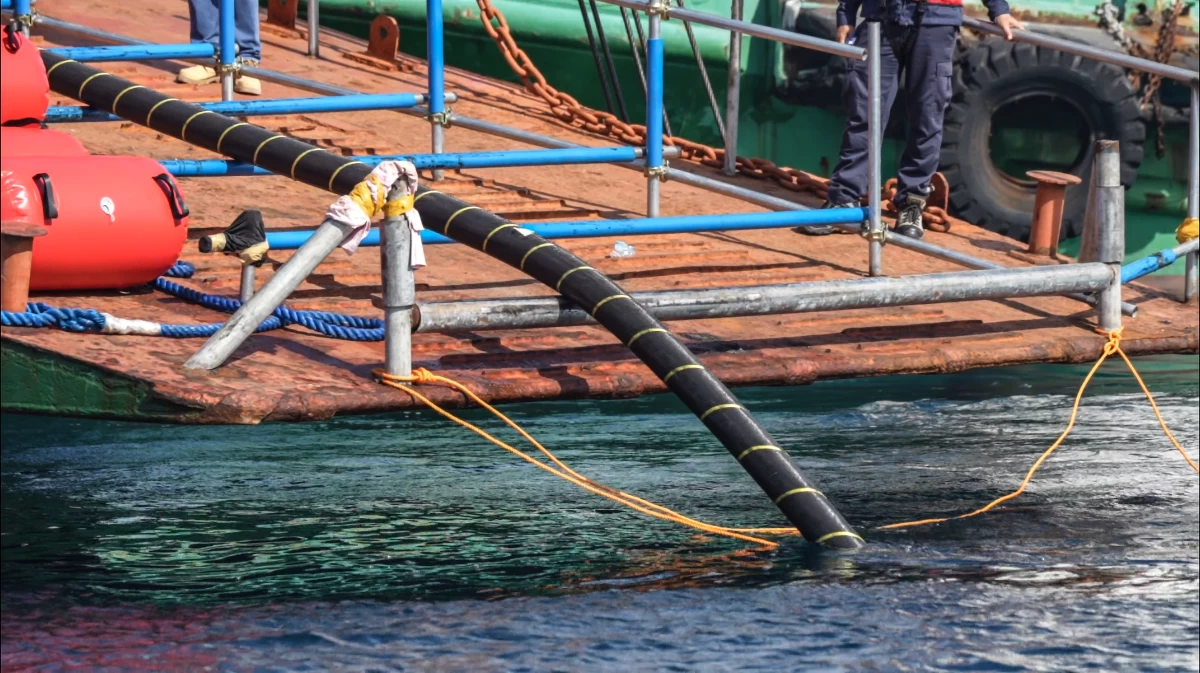
As the main vessel traverses the Pakiputan Strait, the submarine cable is deployed, rolling steadily into the depths.
This historic achievement physically connects Samal to the Davao City mainland grid, delivering a 69-kilovolt line with a massive 50-megawatt (MW) capacity. To put this in perspective, the island’s current peak demand is only about 12MW. With 50 MW now available, Tia said it is “more than enough to meet Samal’s current demand,” adding that the island is “ready for the future.”
The arrival of Davao Light is the breakthrough Samal has spent years waiting for. The transition is about more than just flipping a switch; it is a new lease on life for the island, providing the stable, sustainable energy needed to support the island’s growth.
However, as with any transition, challenges remain. Tia asked for understanding, as temporary power interruptions may occur during rehabilitation. These include clearing vegetation near power lines and repairing or replacing aging infrastructure.
Discovery Samal
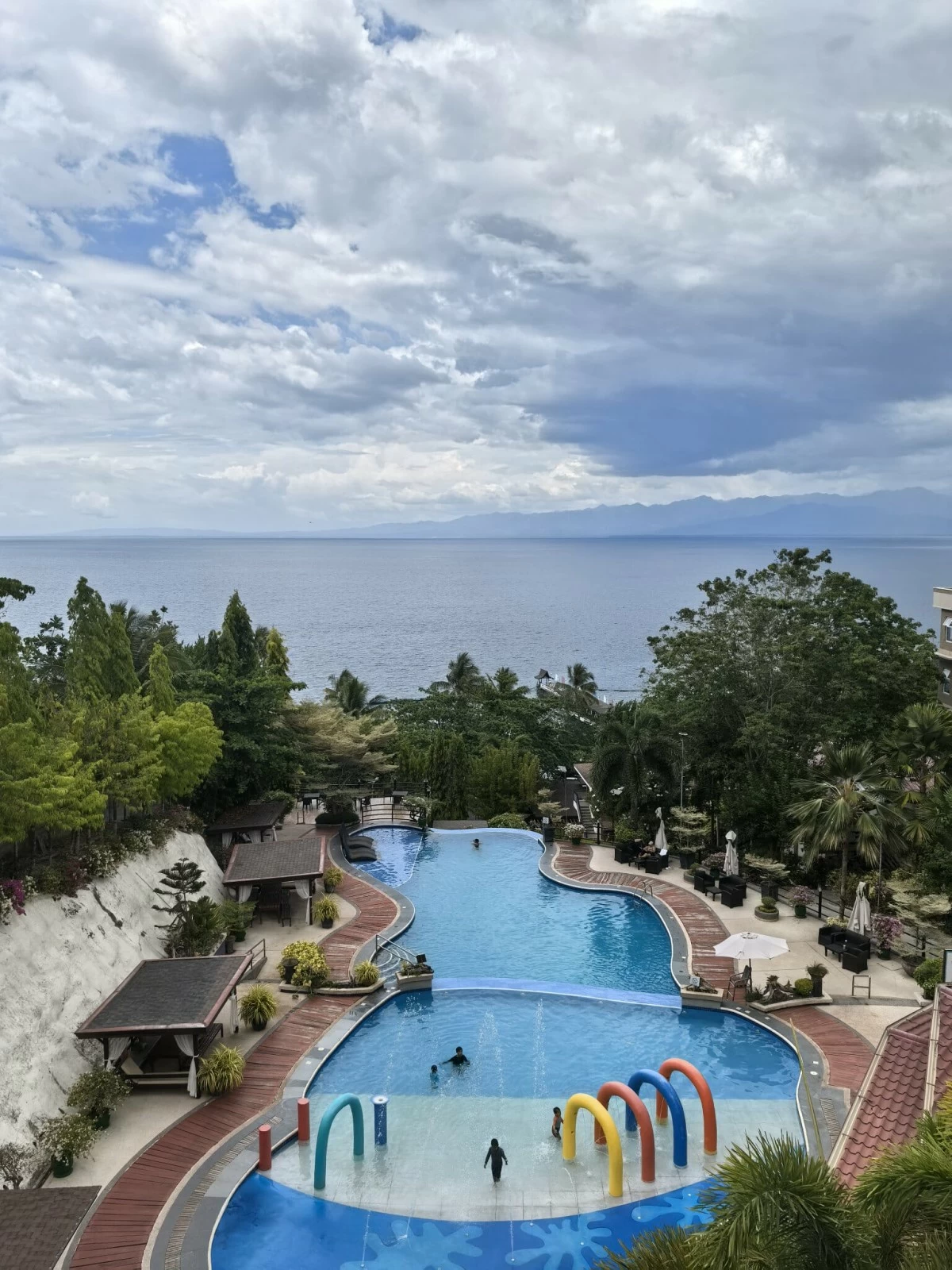
Villa Amparo Beach Resort
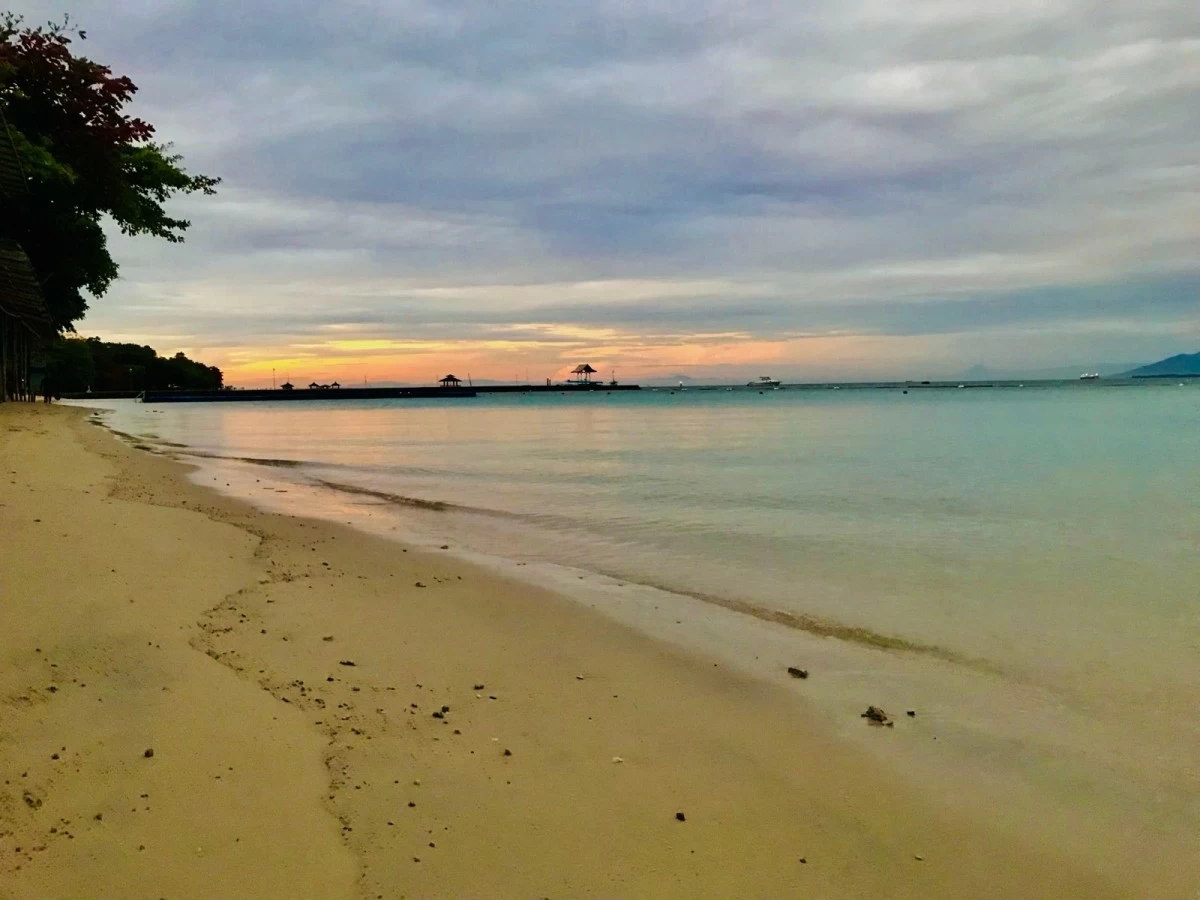
Paradise Island and Beach Resort
From survival to the promise of thriving
With Davao Light connecting Samal to Davao City’s mainland grid, an island once stuck in “survival mode” is finally set to thrive. This new narrative is about more than just wires and megawatts; it is about the resilient people who stood by the island through its darkest hours.
Imagine running a resort but having to constantly apologize to guests when the air conditioning cuts out in midday heat or while they sleep. Consider the financial drain of replacing appliances that succumb to constant power fluctuations. For years, this narrative has been a persistent situation among resort owners, managers and staff.
Julian Rodriguez, owner of Paradise Island Park and Beach Resort, knows exactly how vital power is to the leisure industry. His resort offers 82 rooms equipped with air conditioning, high-speed Wi-Fi and hot showers; amenities that guests consider basic, but Julian considers a massive operational feat. Above all, he values the safety and security that only a well-lit resort can provide at night.
Julian recalls when power interruptions became so frequent and unpredictable that the resort’s survival was at stake. “We had to put up three generator sets,” he says. “We had a gen set, then we needed a backup, and then another backup for the backup.” The instability not only increased fuel consumption but also damaged equipment. Appliances simply did not last.
“I am happy and thankful to Davao Light for coming in. With the Samal Island-Davao City Connector Bridge nearing completion in 2027, we expect business to pick up,” Rodriguez said.
Aliene Pearl Condez, marketing manager of Villa Amparo Beach Resort, shared a similar experience. She recalled experiencing daily blackouts, with the longest being 12 excruciating hours. The resort was forced to purchase two generators just to ensure utmost comfort to its guests. These operational costs were money that could’ve been used for resort upgrades or staff incentives. Since Davao Light’s entry, Pearl noticed fewer and shorter outages.
Even for 5-star establishments like Discovery Samal, power instability was a burden. “Discovery Samal has always operated in optimal power,” says General Manager Jonathan Michael Bartlet. While guests rarely felt the pinch, thanks to six discreetly located generators capable of powering 156 villas and suites, three restaurants, three swimming pools, a chapel, a spa, and a convention center, the behind-the-scenes cost was staggering. In the face of a global fuel crisis, running these generators meant constant operational adjustments just to maintain a luxury standard. With Davao Light’s stable connection, Jonathan feels confident that tourism will flourish as operating costs finally stabilize.
Breaking free
The shift away from costly diesel generators has broken the vicious cycle of unpredictable, constant lack of power, breakdowns, fuel shortages and all the consequences that go with all these. As the island begins to breathe again, the tourism sector can finally focus on what truly matters: delivering exceptional hospitality.
For resort owners, the money once “burned” on diesel can now be directed into building better guest amenities, hiring more local staff, and protecting the island’s beauty and biodiversity. It means investing in the people—through training, welfare programs, and better benefits—who make Samal’s hospitality possible.
Illuminated by possibilities
Stable electricity is the foundation Samal has been waiting for. Managers and staff no longer need to worry about spoiled food in the kitchen or apologizing to angry and frustrated guests in the lobby. The island is finally positioned to compete with the world’s top destinations. As local businesses gain confidence and new investors arrive, the economy will become more resilient.
Samal’s potential is no longer held back by power shortages. Thanks to Davao Light, it is now illuminated by possibilities.
Dependable power provided by Davao Light serves more than just convenience; it’ll trigger the transformation the island is long overdue for. Its lack thereof was the only thing that was holding it back. Now, it has the foundation it needs to grow consistently, confidently and cleanly.
As reliable energy flows into the island, Samal is poised for a future where tourism thrives, businesses grow, and communities prosper. As local businesses and investors gain confidence, new jobs are expected to emerge, further strengthening the local economy. Its potential is no longer held back by power shortages. It is now illuminated by possibilities.