







DOF: Gov't can still afford to borrow despite record debt
By Derco Rosal
Published May 8, 2026 06:30 pm
|
Updated May 8, 2026 02:31 pm


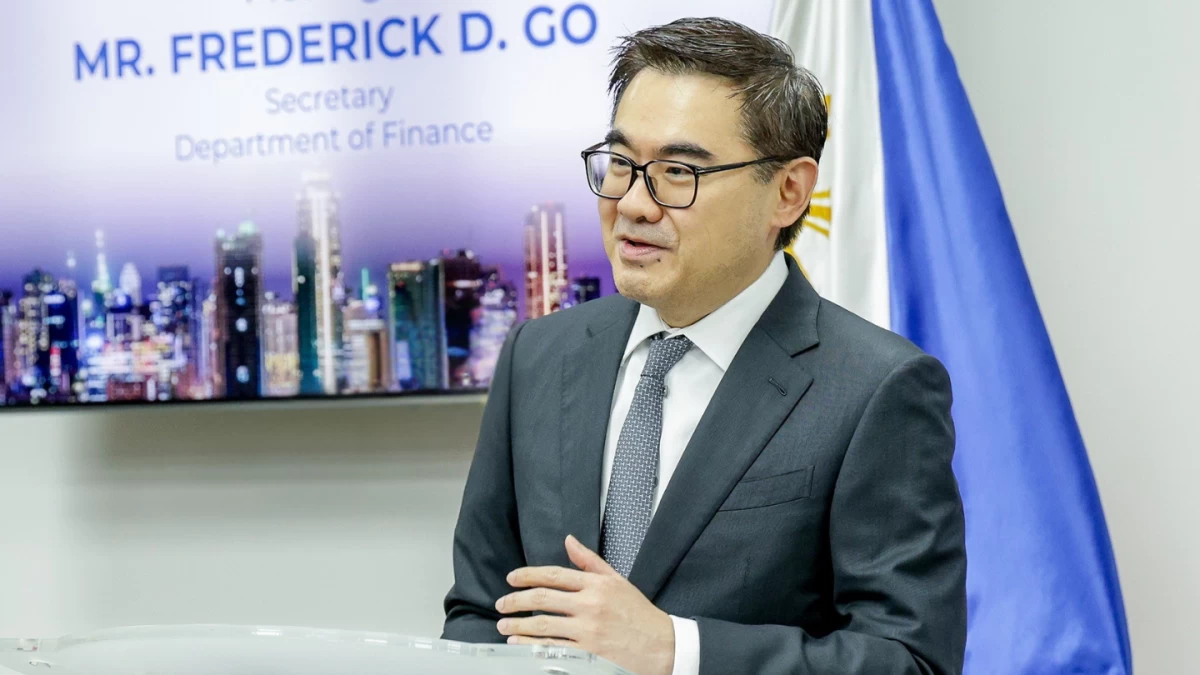
Finance Secretary Frederick D. Go
President Marcos’ chief economic manager brushed off concerns over the country’s fiscal position, assuring markets that the government remains financially stable and still has room to borrow further if needed to cushion the economy from energy shocks.
This comes against the backdrop of national government (NG) debt ballooning to historic highs, consequently swelling its share of the Philippines’ overall economic output, measured by gross domestic product (GDP).
Finance Secretary Frederick D. Go said during the 2026 Association of Southeast Asian Nations (ASEAN)-European Union (EU) sustainability forum in Lapu-Lapu City, Cebu, on Thursday, May 7, that the Philippines stands in “a good fiscal position and has room to leverage if it needs to.”
Go told Manila Bulletin on Friday, May 8, that it would be “correct” to assume that the Philippines’ fiscal buffers remain intact and far from being exhausted as the government implements measures to curb the impact of energy shocks on Filipino households and the overall economy.
Data from the Washington-based Institute of International Finance (IIF) showed that the share of general government (GG) debt to GDP increased to 59.6 percent in the first quarter from 58.8 percent in the previous quarter.
GG debt is the metric that credit rating agencies monitor for rating actions, as it excludes intra-governmental debt holdings. The current administration aims to trim GG debt to 54.7 percent of GDP by the end of President Ferdinand Marcos Jr.’s term in 2028.
He explained that the standard gauge of a sustainable threshold is 70 percent, set by the Washington-based World Bank. This fueled his upbeat assessment of the country’s fiscal health amid deepening economic shocks caused by the Middle East war.
Go noted that “all” macroeconomic fundamentals of the domestic economy remain solid despite global uncertainties closely tied to the war, which shows no clear sign of de-escalation.
According to the latest data from the Bureau of the Treasury (BTr), the NG debt stock climbed to a record ₱18.49 trillion as of end-March, driven by the peso’s depreciation—which inflated the value of foreign obligations—and continued issuance of debt papers.
This brought the NG debt-to-GDP ratio to 65.2 percent by the end of the first quarter, marking the highest ratio in two decades since 2005’s 65.7 percent. In nominal terms, GDP is estimated at ₱28.36 trillion.
Reyes Tacandong & Co. senior adviser Jonathan Ravelas told Manila Bulletin that while a 65.2-percent debt ratio signals that Philippine debt remains manageable, he warned that “it’s clearly in the caution zone.”
“Sustainability depends less on the headline number and more on fundamentals—strong growth, a largely peso‑denominated and long‑term debt profile, and controlled interest costs,” Ravelas said.
For the economist, the lingering risk is the persistent Middle East tensions which could push energy prices higher, widen the trade gap, and pressure the peso—”which could slow growth and nudge debt higher this year.”
He noted that the “real danger of a higher debt ratio is losing policy flexibility and market confidence.”
The International Monetary Fund (IMF) earlier urged the Philippines to exercise fiscal discipline and prioritize targeted spending, as the country’s debt ratio is projected to breach a critical threshold this year amid volatile global energy markets.
According to the latest Fiscal Monitor report, the Washington-based multilateral lender expects GG debt to hit 60.2 percent of GDP this year. This projection marks a deterioration from 59.4 percent in 2025 and signals a thinning of fiscal buffers that protected the economy during previous downturns.
Krishna Srinivasan, director of the IMF’s Asia-Pacific Department, earlier said that for the Philippines, “there’s not much by way of fiscal buffers.” He said this warrants a more efficient use of the country’s remaining resources.
Go noted that the Philippines has secured investment-grade credit ratings of A-minus and BBB-plus from leading global and Japanese debt watchers. These ratings, he said, validate the nation’s “strong macroeconomic and fiscal position.”
Credit ratings assess a government’s creditworthiness and reflect the stability of its finances, which is closely linked to overall economic performance. As such, they serve as a proxy indicator of the economy’s health.
An investment-grade rating allows the state to borrow at lower interest rates, helping reduce overall borrowing costs for consumers and businesses. Banks also use government bonds as a benchmark when pricing loans.
It can also be recalled that S&P Global Ratings revised the country’s outlook to “stable” from “positive” while affirming its “BBB+” rating—effectively narrowing the window for an upgrade. A “stable” outlook signals the likelihood of an unchanged rating within the next two years.
Fitch Ratings also downgraded its outlook on the Philippines’ investment-grade status from “stable” to “negative” due to stalling public investments, compounded by vulnerability to global shocks. This shift places the Philippines at risk of a potential credit rating downgrade.