






Manila Bulletin
 Lifestyle
Food
Why foodies are flocking to Mugen Ramenya's first-ever chef collaboration in QC this May
Lifestyle
Food
Why foodies are flocking to Mugen Ramenya's first-ever chef collaboration in QC this May
Lifestyle
Food
Why foodies are flocking to Mugen Ramenya's first-ever chef collaboration in QC this May
Why foodies are flocking to Mugen Ramenya's first-ever chef collaboration in QC this May
Chefs Jorge Mendez and Raul Forés brings together ramen precision and bold comfort food flavors in a limited-run menu at Maginhawa's sought-after 10-seater ramen bar
Published May 7, 2026 07:34 am


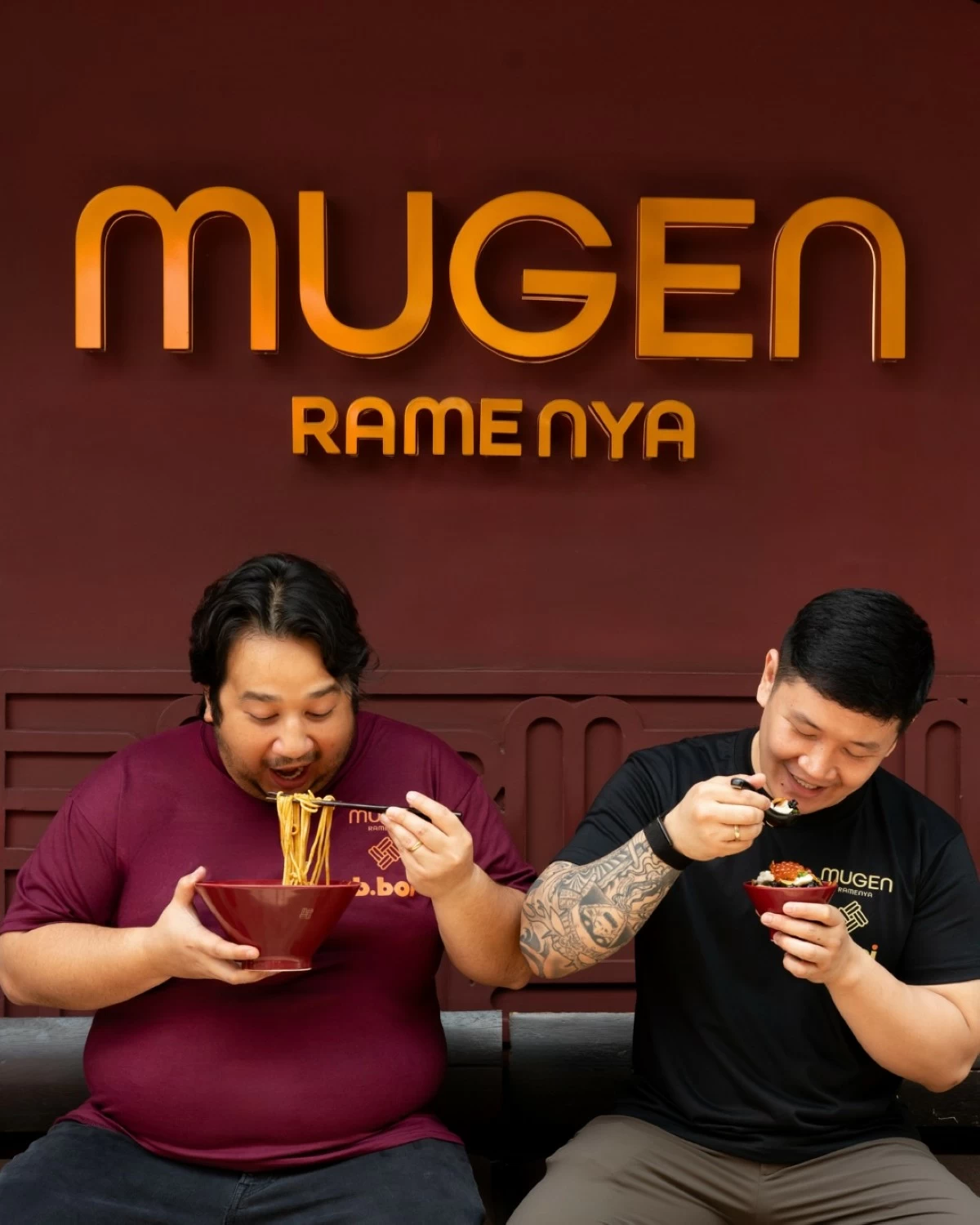
RAMEN REBELS Chefs Raul Forés and Jorge Mendez enjoy a bowl of ramen outside Mugen Ramenya in Maginhawa, Quezon City, where the two chefs recently launched their limited-run collaboration menu blending Japanese ramen techniques with bold comfort food flavors. (Photo: Mugen Ramenya)
Whenever I get an invite to an event in Quezon City (QC), I always silently rejoice in my head. “Finally, a food tasting in my ‘hood,” I would say to myself. No long drives to the south for this northern journalist today.
It is also a gladdening trend that more and more restaurants, both high-end and affordable, are popping up left and right in “Kyusi”—chef Bettina Arguelles opened a “turo-turo” style carinderya, Curio, in Maginhawa just a few months ago. No longer can one claim that all the good restos are in the south, like in Makati or Taguig. North, represent!
But learning and rejoicing that this latest collab between two excellent chefs will be in QC, is one thing, knowing who these chefs are is another, and all the more reason to be excited, indeed. In one corner is chef Jorge Mendez, of Modan, Makanai, Some Thai and Mugen Ramenya (the venue) fame, and the other is chef Raul Forés of b.boi, up and coming, but whose roots run deep in the industry (talent and passion indeed runs in the family).
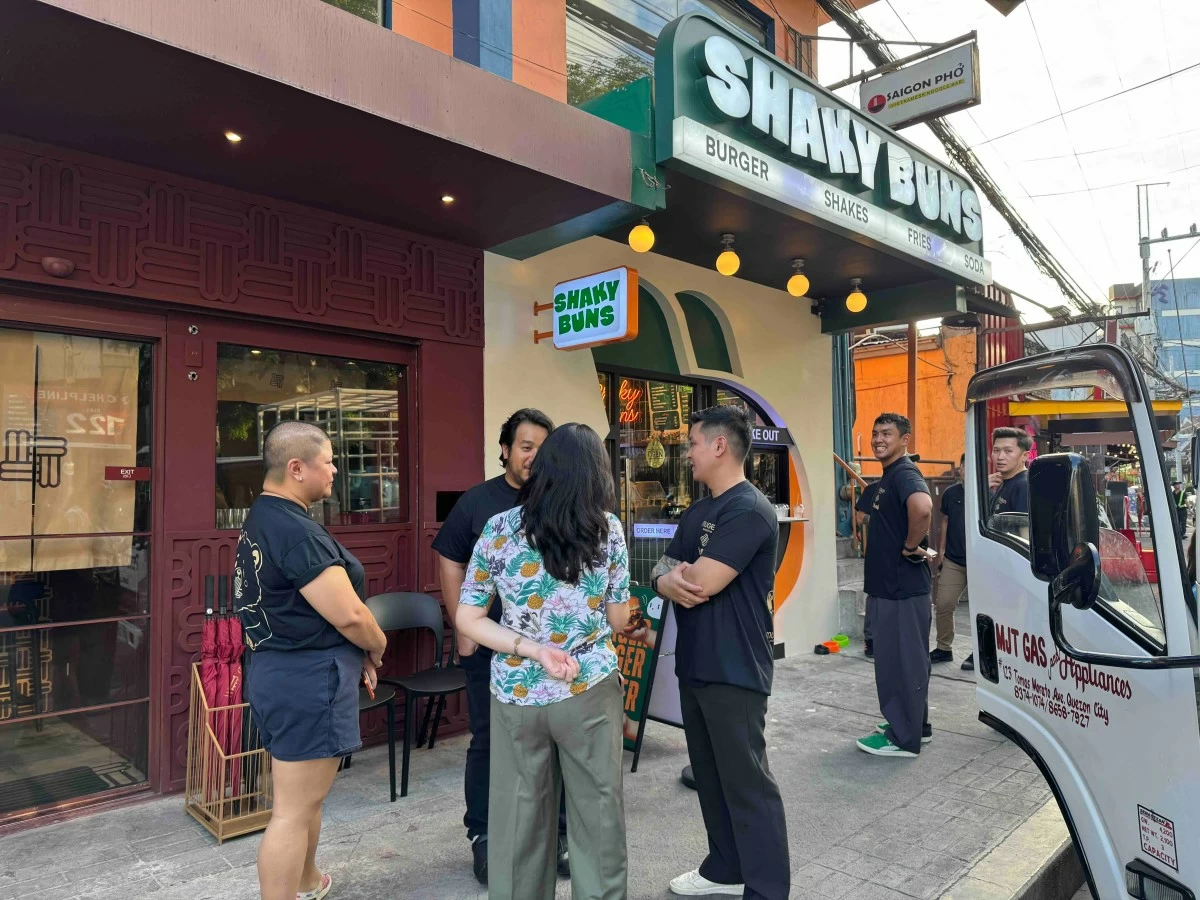
QUEUE SCENE Diners line up outside Mugen Ramenya in Maginhawa, Quezon City, as the 10-seater ramen bar continues to draw crowds for its limited-capacity dining experience (Photo: Feliciano Rodriguez III)
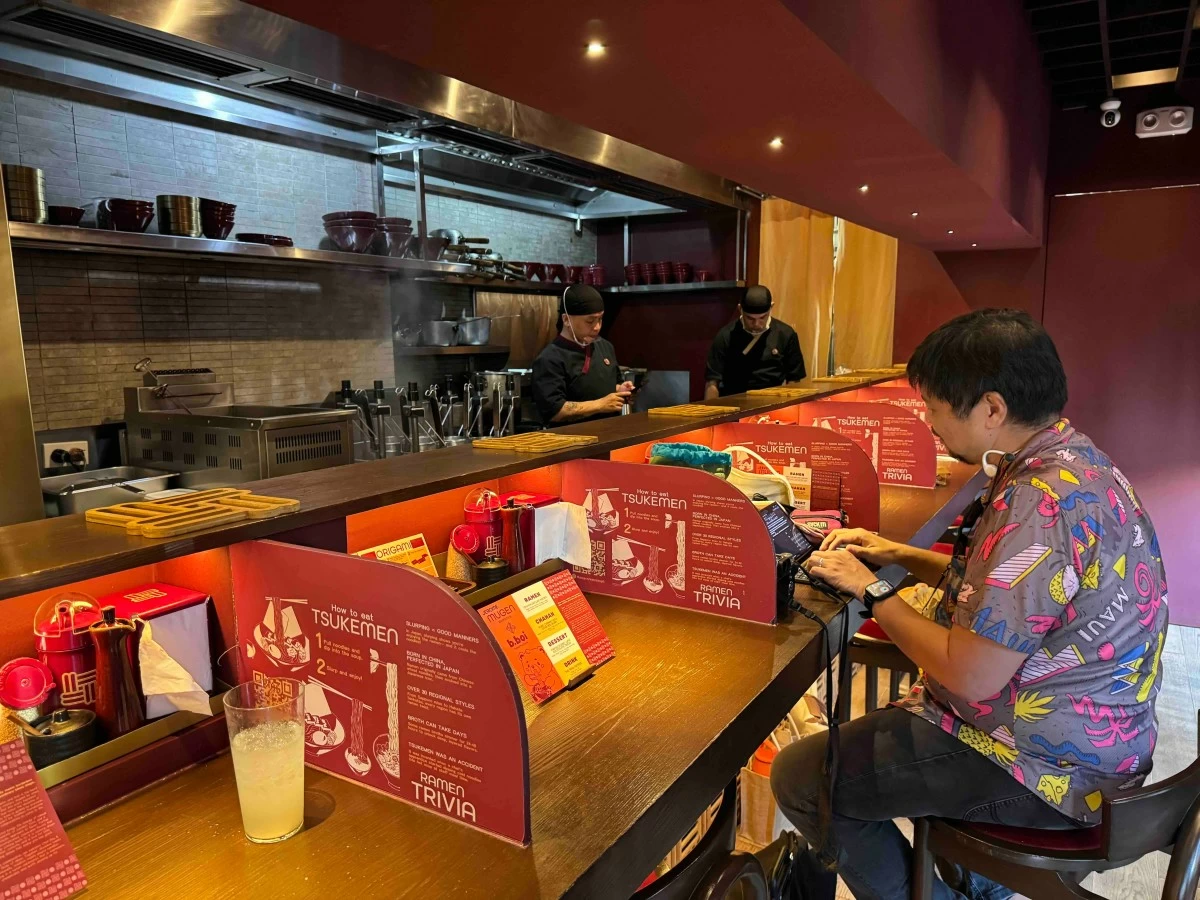
COUNTER CULTURE Inside Mugen Ramenya in Maginhawa, Quezon City, diners sit around the restaurant’s intimate L-shaped counter designed to mirror the compact ramen bars commonly found in Japan (Photo: Feliciano Rodriguez III)
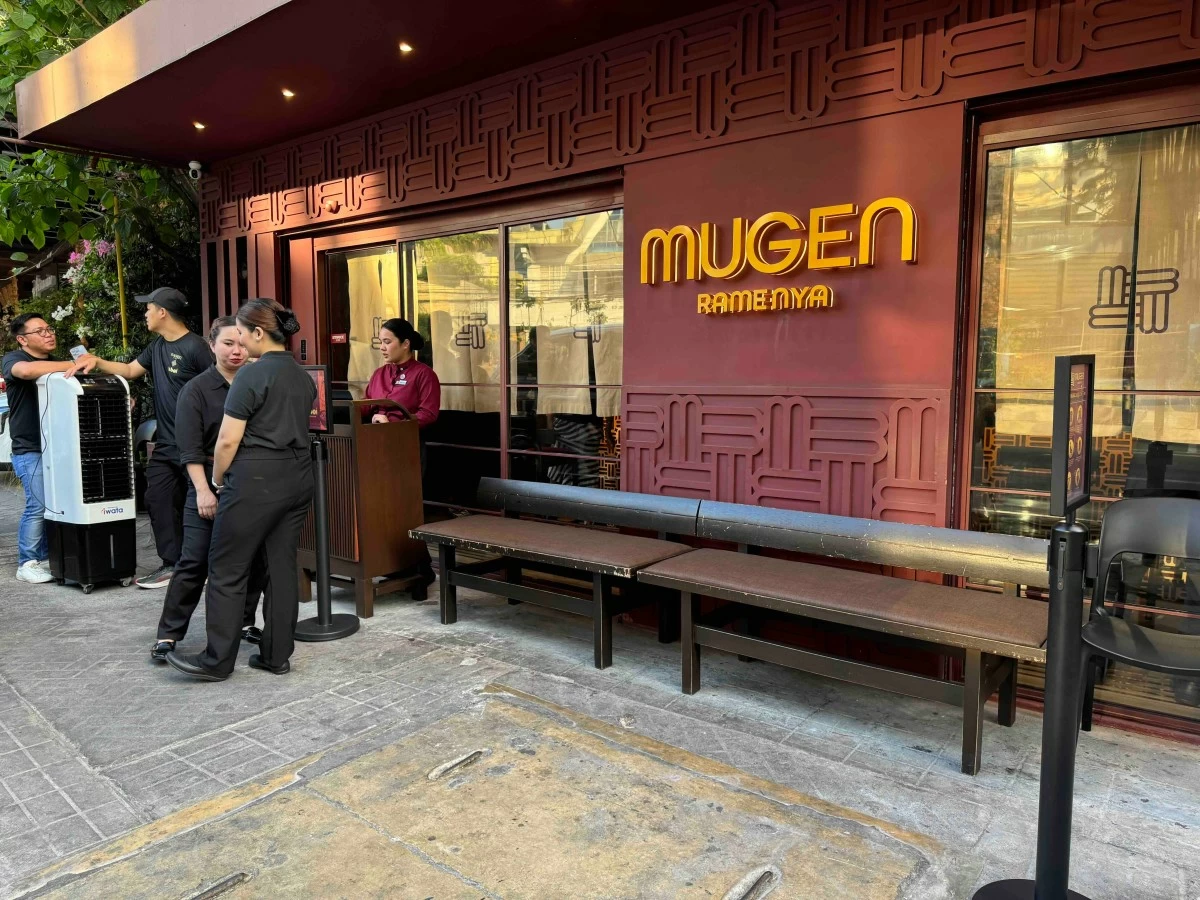
HIDDEN COUNTER The entrance to Mugen Ramenya in Maginhawa, Quezon City (Photo: Feliciano Rodriguez III)
Mugen Ramenya, located at Maginhawa Street, Quezon City, a stone’s throw away from the aforementioned Curio of chef Bettina, is a compact, almost secretive ramen bar that immediately transports diners away from the usual chaotic rhythm of the city outside. The restaurant only has 10 seats, all arranged around an L-shaped counter that recalls the intimate ramen bars tucked inside side streets in Japan.
The compactness is part of the charm. Diners sit shoulder to shoulder, yet each seat still feels private. Tiny dividers create the illusion of personal cubicles, while built-in water dispensers at every station speak to the restaurant’s obsession with efficiency and functionality. There is no excess here, no unnecessary flourish. The interiors are restrained, warm, with wood tones, and soft lighting.
Even the system is disciplined. Guests enter from one side, order and pay immediately, finish their meal, and exit through another door. Reservations are not accepted, and seats are filled as they open up, regardless of group size. It is a system that mirrors the ramen culture of Japan, where turnover is brisk, and the focus remains squarely on the bowl in front of you.
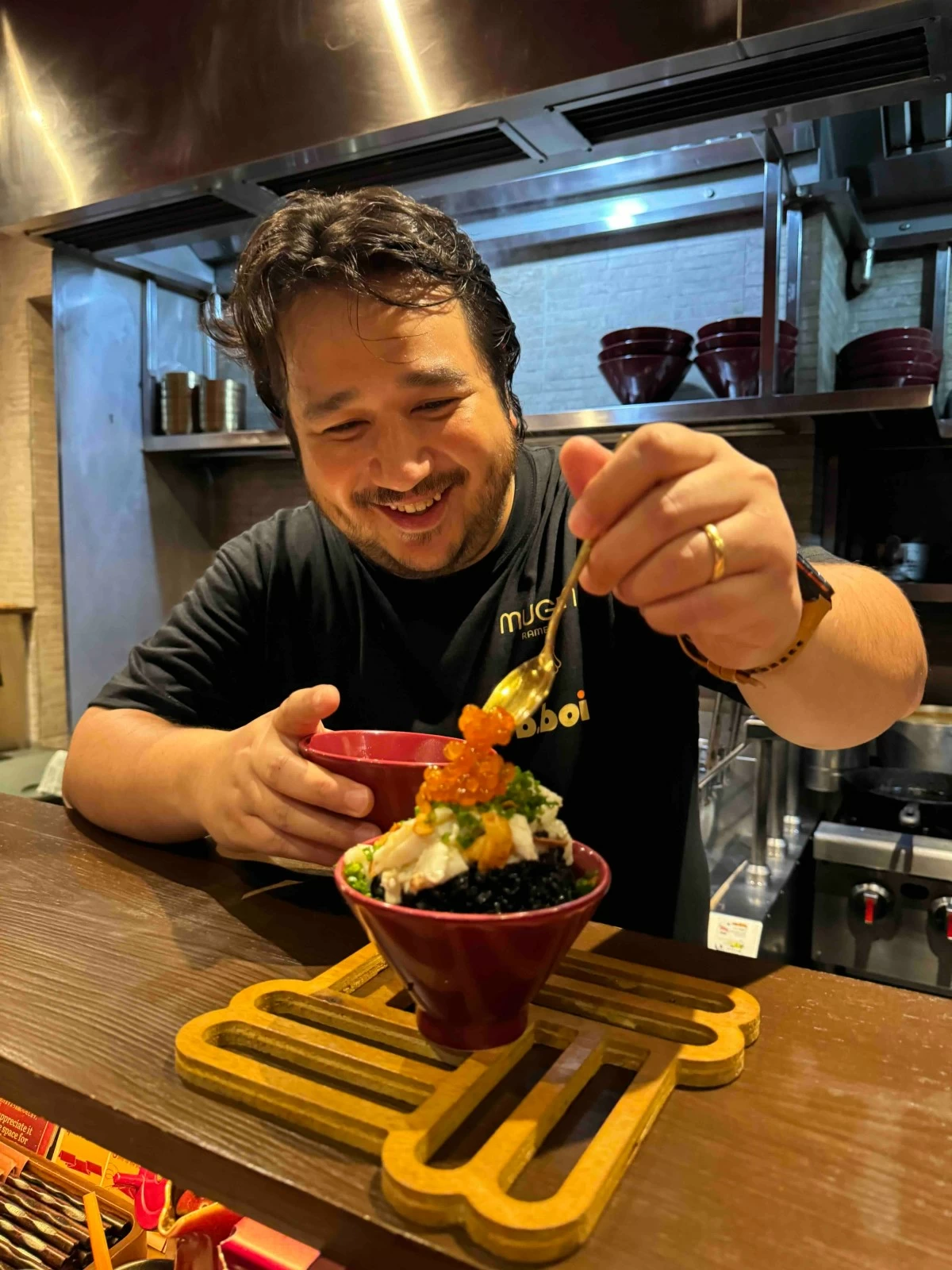
ROE SHOW Chef Raul Forés tops the Kuro Chahan with Crab & Ikura with generous spoonfuls of ikura during the launch of his collaboration menu with chef Jorge Mendez at Mugen Ramenya in Quezon City (Photo: Feliciano Rodriguez III/Manila Bulletin)
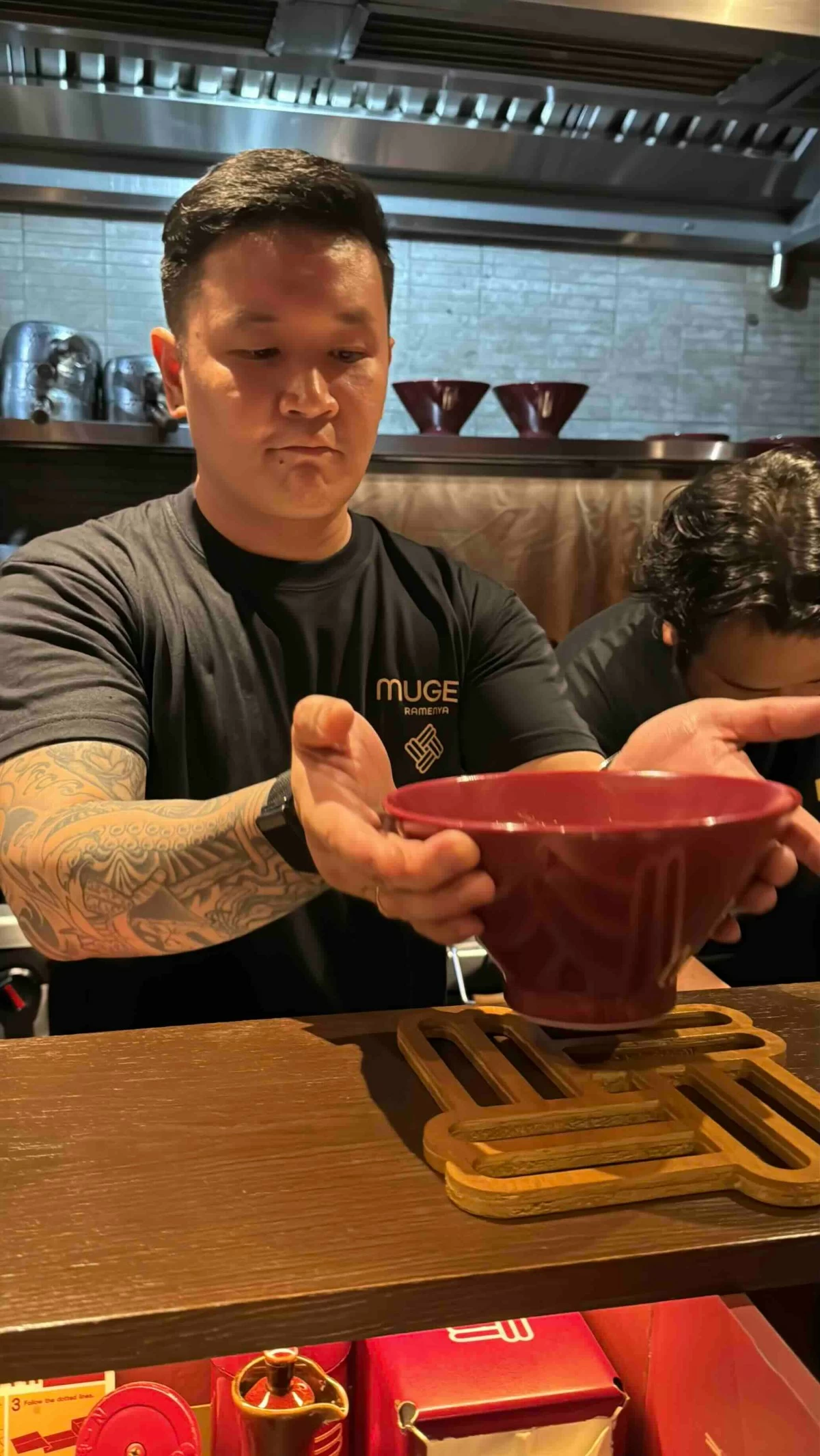
COUNTER SERVICE Chef Jorge Mendez serves ramen across the counter at Mugen Ramenya (Photo: Feliciano Rodriguez III/Manila Bulletin)
The restaurant’s name itself hints at the philosophy behind it. “Mugen,” which translates to “limitless” or “infinity,” reflects chef Jorge’s pursuit of constant refinement and creativity. That philosophy becomes especially evident in this collaboration with chef Raul, whose concept b.boi approaches food from the opposite, but complementary, direction. If Mugen is meticulous and restrained, b.boi is instinctive, comforting, and deliciously chaotic.
The collaboration menu, available until May 31, is not a gimmicky chef crossover, but two personalities genuinely finding common ground, I discovered that night. Japanese ramen discipline meets bold Filipino flavor memory, with both chefs clearly having fun while still respecting each other’s culinary identities.
The centerpiece of the collaboration is the Gyu-kai Batwan Ramen. At first glance, it looks like a luxurious bowl of gyokai ramen, but the flavors quickly reveal something deeper and more distinctly local. The broth carries layers of seafood richness before the unmistakable sourness of batwan enters. The Visayan fruit, more commonly associated with kansi, gives the bowl a bright acidity that cuts through the heaviness of the broth.
Chunks of tender short rib bring richness, while braised langka adds texture and a subtle sweetness. Floating on top is a batwan foam from b.boi, adding both aroma and theatricality. It is comforting and experimental all at once, familiar yet difficult to categorize. One can imagine ramen purists raising an eyebrow, but that rebelliousness is exactly what makes the dish memorable.
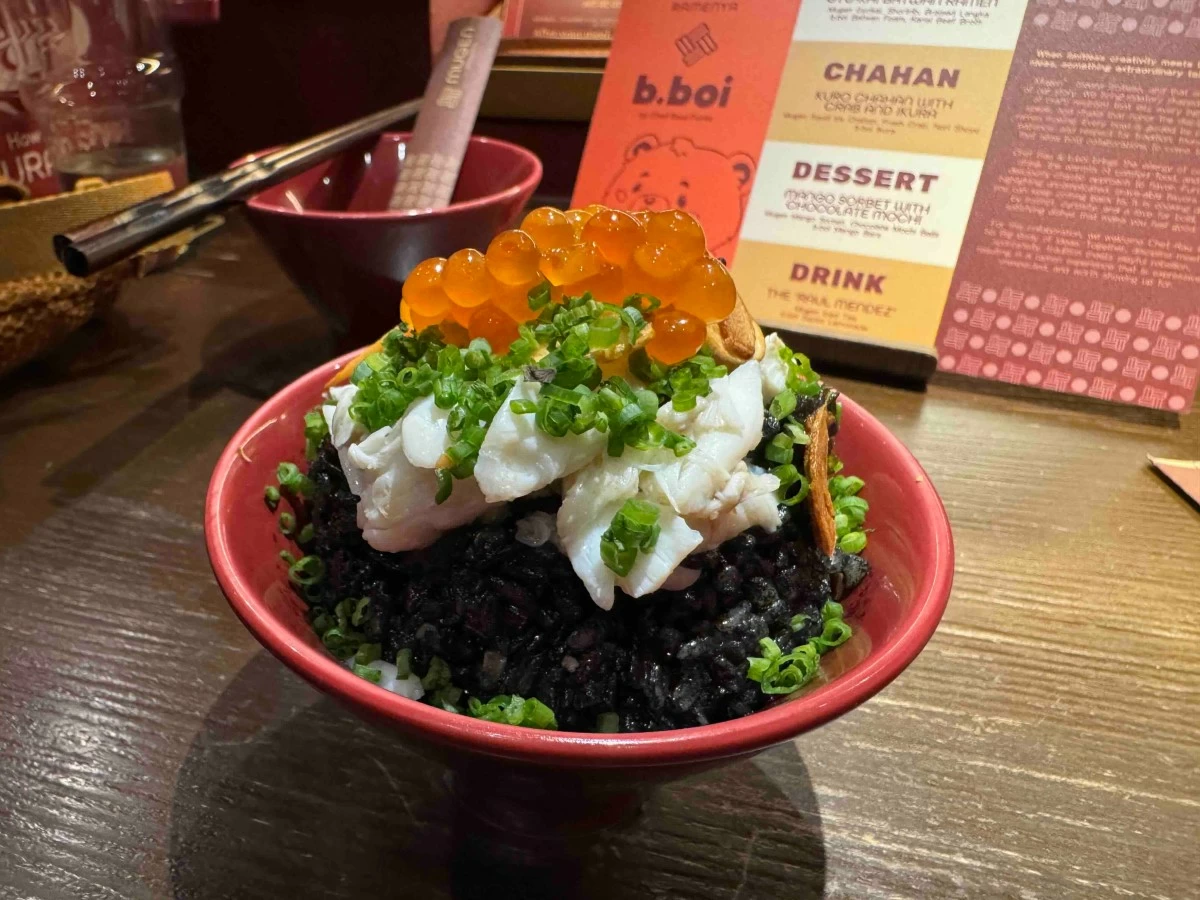
INKED GRAINS The Kuro Chahan with Crab and Ikura features squid ink Japanese fried rice topped with fresh crab, nori shoyu (Photo: Feliciano Rodriguez III)
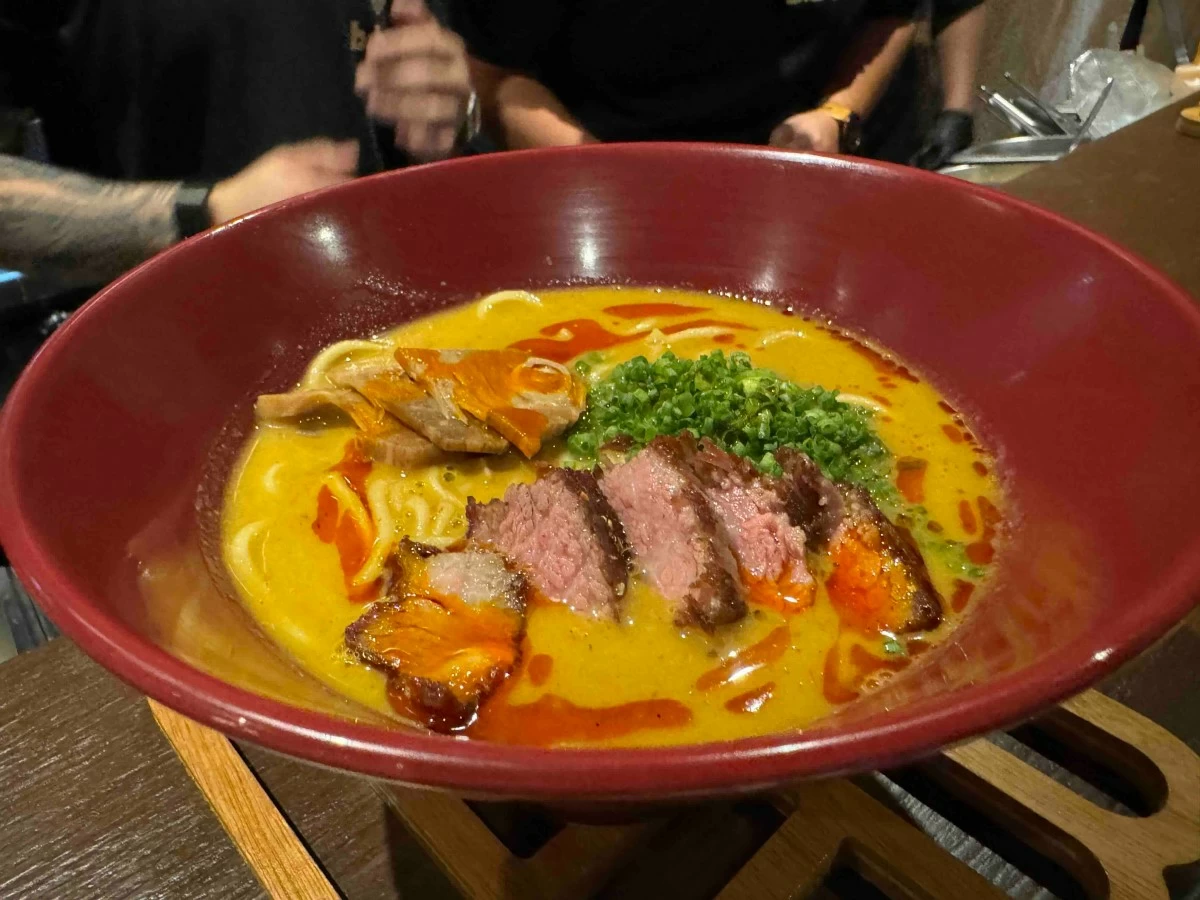
BOLD BROTH The Gyu-kai Batwan Ramen combines gyokai broth, short rib, braised langka, batwan foam, and kansi beef broth (Photo: Feliciano Rodriguez III)
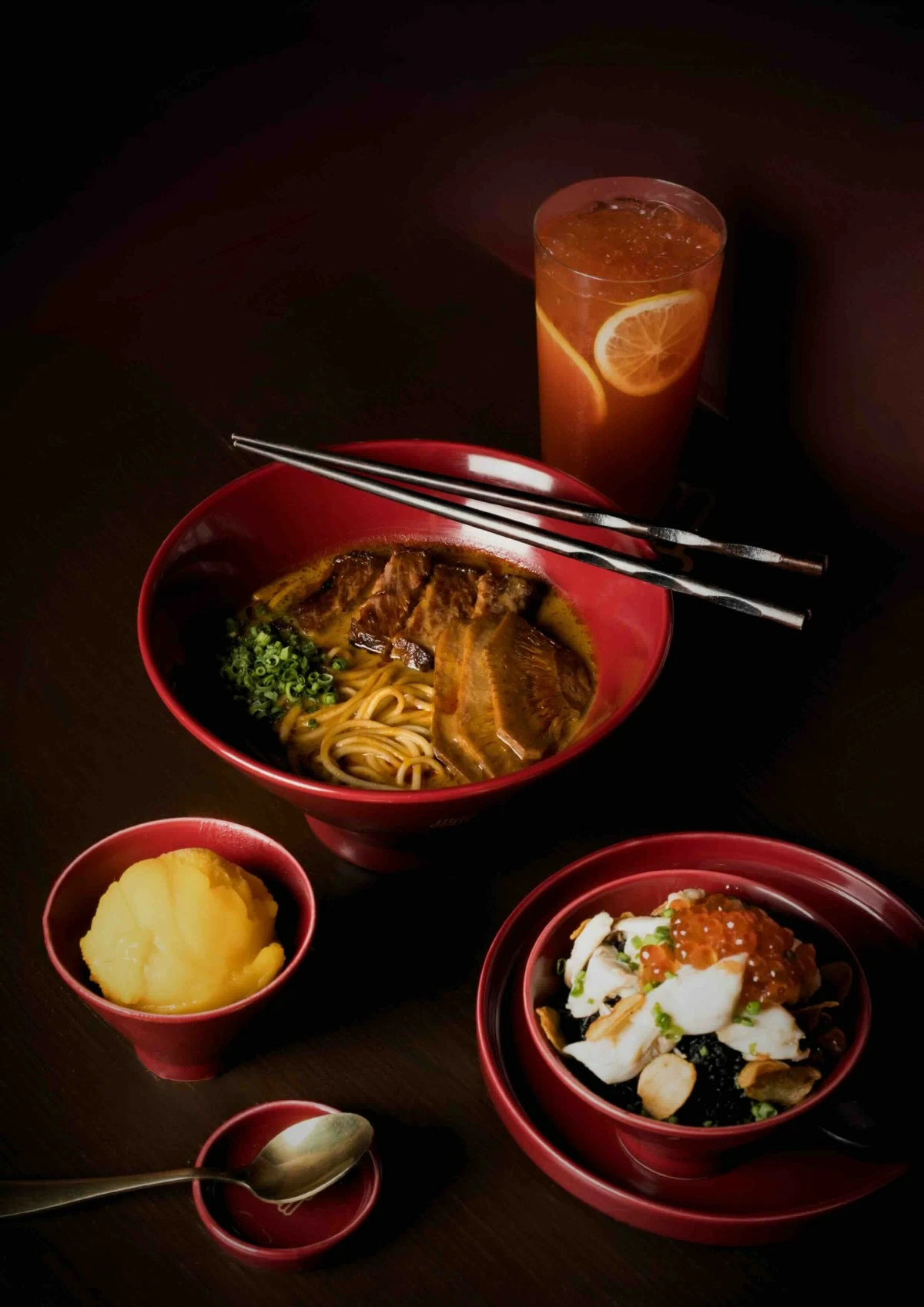
CHAOTIC BITES The four collaboration dishes of chefs Jorge Mendez and Raul Forés include the Gyu-kai Batwan Ramen, Kuro Chahan with Crab and Ikura, Mango Sorbet with Chocolate Mochi, and 'The Raul Mendez' drink, available at Mugen Ramenya until May 31. (Photo: Mugen Ramenya)
Another standout is the Kuro Chahan with Crab and Ikura. Blackened with squid ink, the Japanese fried rice arrives dramatically dark and glossy, crowned with fresh crab meat and bursts of ikura. The squid ink gives the dish a subtle brininess, while the nori shoyu adds layers of umami. The crab softens the intensity with sweetness, and the ikura pops sharply against the warm rice. Diners can even opt to double the ikura, a tempting proposition once the first spoonful hits.
The collaboration’s drink, cheekily named “The Raul Mendez,” merges Mugen iced tea with b.boi’s Squizz lemonade. It drinks like an Arnold Palmer gone tropical and slightly mischievous, refreshing enough to balance the heavier dishes on the table.
Dessert comes in the form of Mango Sorbet with Chocolate Mochi. The sorbet is bright and clean, while the chewy chocolate mochi balls add richness and texture. Mango bars from b.boi complete the plate, making for a dessert that feels playful without becoming cloying.
Maginhawa has long been associated with student-friendly cafés and casual comfort food, but places like Mugen show how the district is maturing into something more ambitious. The area is increasingly becoming a space where chefs are willing to take risks, experiment, and create concepts that can stand beside those in the more traditionally celebrated food districts down south. I’m excited to see how “Kyus” further evolves.