






Manila Bulletin
 Philippines
National
No change in Mayon alert status after May 2 lava collapse, says Phivolcs official
Philippines
National
No change in Mayon alert status after May 2 lava collapse, says Phivolcs official
Philippines
National
No change in Mayon alert status after May 2 lava collapse, says Phivolcs official
No change in Mayon alert status after May 2 lava collapse, says Phivolcs official
Published May 3, 2026 02:15 pm


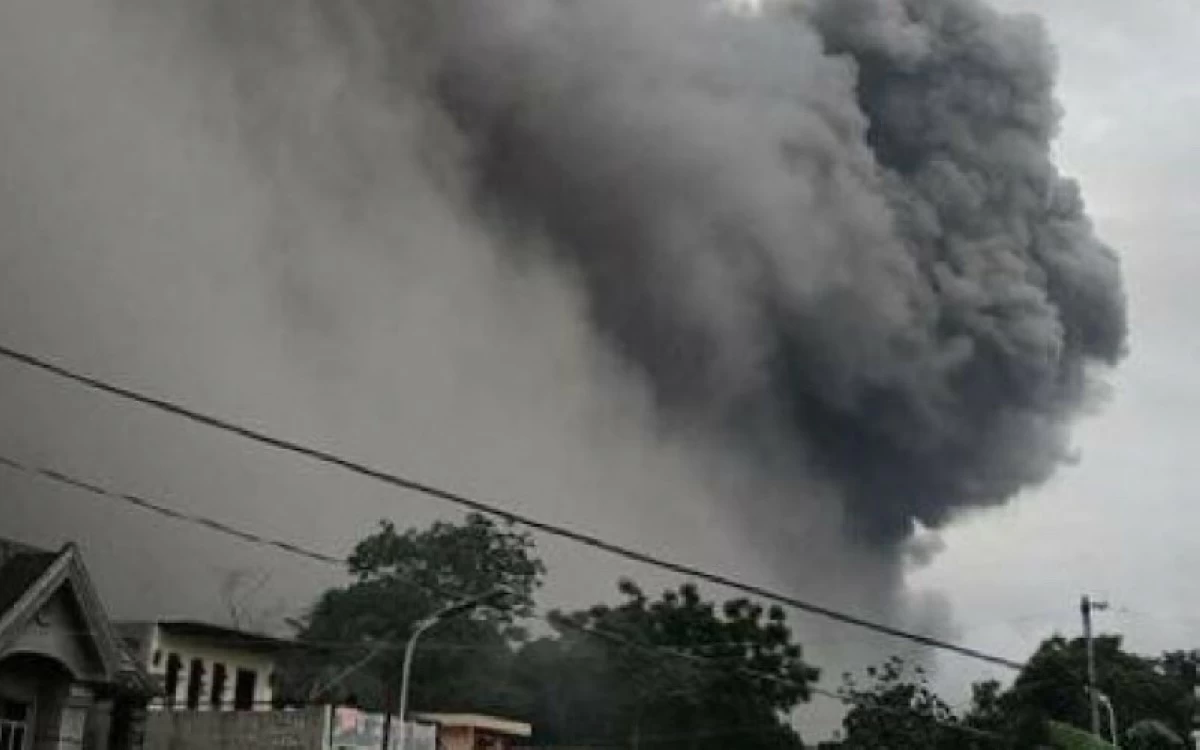
Philippine Red Cross photo
Mayon Volcano remains under Alert Level 3 despite a series of pyroclastic density currents (PDCs), as overall monitoring parameters have not shown any significant change, the Philippine Institute of Volcanology and Seismology (Phivolcs) said on Sunday, May 3.
Volcano Monitoring and Eruption Prediction Division chief Ma. Antonia Bornas said Alert Level 3 (intensified magmatic unrest) is being maintained as hazardous activity continues, while seismicity, ground deformation, and gas emissions have not shown significant changes.
“What happened [on Saturday, May 2] was that the newest lava flow in Mi-isi Gully being fed by lava effusion at the crater, instead of growing, advancing, or lengthening, like what has been happening since 6 January 2026, started collapsing,” Bornas said.
“So the new lava that was being fed to the young lava flow led to collapse or disgorgement of lava at the collapsed flow front and generation of successive pyroclastic density currents,” she added.
In its 24-hour monitoring from 12 a.m. May 2 to 12 a.m. May 3, Phivolcs reported continued eruptive activity, including a significant PDC and ongoing lava effusion on Saturday afternoon.
Lava flows extended up to 3.8 kilometers in Basud Gully, 3.2 kilometers in Bonga Gully, and 1.6 kilometers in Mi-isi Gully.
Successive PDCs, which are fast-moving clouds of hot gas, ash, and debris locally known as “uson,” were recorded along Mi-isi Gully within the six-kilometer Permanent Danger Zone, along with ash emissions affecting nearby slopes.
Phivolcs also recorded 32 volcanic earthquakes, including 25 tremors lasting two to 15 minutes, 284 rockfall events, and 14 PDC signals.
A faint crater glow was observed.
Alert Level 3 indicates that magma remains at shallow depth and that hazardous eruptions are possible, even without an imminent major explosive event.
Phivolcs reiterated that entry into the six-kilometer Permanent Danger Zone is strictly prohibited, while residents within the eight-kilometer radius were advised to remain alert and prepare for possible evacuation should conditions escalate.
READ MORE: