






Manila Bulletin
 Philippines
National
Mayon Volcano's eruption leaves over 5,000 persons in evacuation centers
Philippines
National
Mayon Volcano's eruption leaves over 5,000 persons in evacuation centers
Philippines
National
Mayon Volcano's eruption leaves over 5,000 persons in evacuation centers
Mayon Volcano's eruption leaves over 5,000 persons in evacuation centers
Published May 3, 2026 10:41 am
|
Updated May 3, 2026 02:04 pm


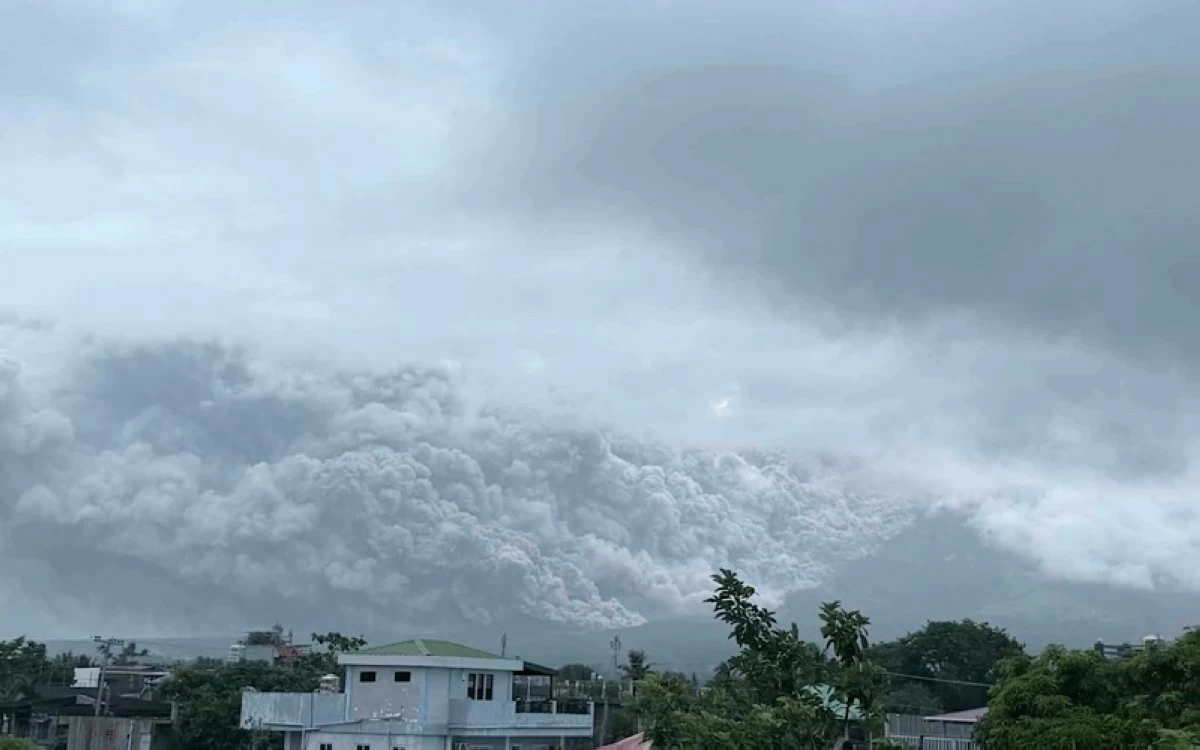
(Philippine Red Cross photo)
Evacuation centers sheltered thousands of residents as Mayon Volcano recorded renewed eruptive activity on Saturday, May2.
The Department of Social Welfare and Development (DSWD) said on Sunday, May 3, that 1,438 families or 5,440 individuals are currently staying in 14 evacuation centers across affected areas in Abay.
An additional 26 families or 85 persons remain displaced and are staying with relatives or friends outside evacuation facilities.
Since Alert Level 3 (intensified magmatic unrest) was raised on January 6, a total of 87 barangays have been affected, displacing 30,522 families or 102,406 persons, the agency said.
DSWD said it has already provided P71.6 million worth of humanitarian assistance to affected communities.
It added that sufficient standby resources remain available, including P6.1 billion in funds and stockpiles, composed of P4.5 billion worth of food and non-food items and P1.6 billion in quick response funds.
Based on its 24-hour monitoring from 12 a.m. on May 2 to 12 a.m. on May 3, the Philippine Institute of Volcanology and Seismology (PHIVOLCS) reported continued eruptive activity at Mayon Volcano, including a significant pyroclastic density current (PDC) and associated lava flows on Saturday afternoon.
PDCs are fast-moving clouds of hot gas, ash, and volcanic debris locally known as “uson.”
Phivolcs said lava effusion persisted along several gullies, with flows reaching 3.8 kilometers in Basud, 3.2 kilometers in Bonga, and 1.6 kilometers in Mi-isi.
The activity was accompanied by episodic minor strombolian eruptions and short-lived lava fountaining.
Phivolcs recorded successive PDCs along the Mi-isi gully within the six-kilometer Permanent Danger Zone, along with ash emissions affecting surrounding slopes during the eruptive episode.
A total of 32 volcanic earthquakes were detected, including 25 volcanic tremors lasting two to 15 minutes.
The agency also logged 284 rockfall events and 14 PDC signals, while a faint crater glow was observed.
Authorities reiterated that entry into the six-kilometer Permanent Danger Zone remains strictly prohibited.
Phivolcs warned of possible hazards including rockfalls, landslides or avalanches, ballistic fragments, lava flows and lava fountaining, pyroclastic density currents, moderate explosions, and lahars during heavy and prolonged rainfall.
Residents within the eight-kilometer radius were also advised to remain alert and prepare for possible evacuation should activity escalate further or if Alert Level 4 is raised.