







Opascor workers mark Labor Day with festive celebration
Published May 1, 2026 05:39 pm


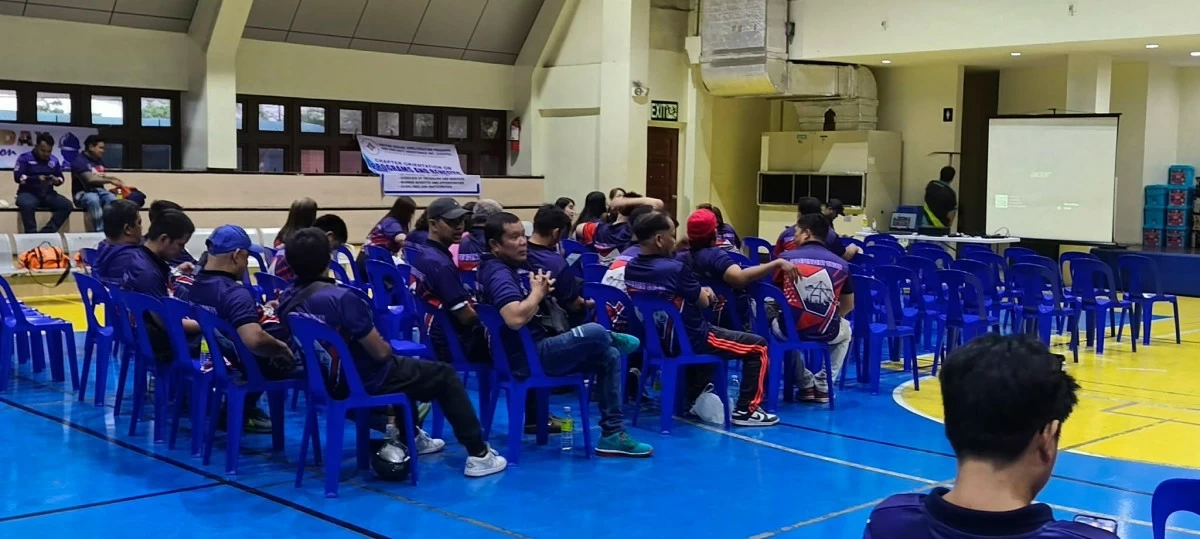
WORKERS of the Oriental Port and Allied Services Corp. gather at the Cebu Port Authority Gym to celebrate Labor Day on Friday, May 1. (Photo via Calvin Cordova)
CEBU CITY – While they are affected by rising fuel costs, workers of Oriental Port and Allied Services Corp. (Opascor) marked Labor Day with a festive celebration on Friday, May 1.
Members of the Opascor Workers’ Union (OWU) and the Opascor Supervisory, Technical, and Responsible Alliance Union (OSTRA-Union) gathered as early as 6 a.m. to join a parade and a motorcade that ended at Cebu Port Authority Gym.
“This is our first Labor Day celebration since we became independent unions,” said Vivencio Ybañez Jr., president of OSTRA-Union.
At the CPA Gym, close to 500 members of the two unions were treated to fun-filled events such as raffle draws. Awarding of winners of the unions’ sportsfest was also conducted.
“Our sportsfest started on April 17 and ended on April 30. It featured basketball, pickleball, chess, and dart tournaments. We intended to add more sporting events next year like badminton and volleyball,” said Ybañez.
The two unions disaffiliated from the Associated Labor Union-Trade Union Congress of the Philippines (ALU-TUCP), one of the biggest labor groups in the country.
“This is a very significant Labor Day celebration for us because this is the first time that we are having this as independent unions. At least now, we manage all the benefits, managing the contributions that were supposed to be given to the mother union,” Ybañez added.
The two unions are composed of close to 500 members with 395 coming from OWU.
“We are overwhelmed by the number of participants who showed up for this event. As we celebrate Labor Day, we are looking forward to stronger relations between the members and management,” said Michella May Tamondong, president of OWU.
Ybañez disclosed that the global crisis has affected Opascor. “The crisis has cost Opascor P300 to P400 million in revenues but we are thankful to the management that despite the losses, there was no reduction in terms of benefits and income of the workers,” Ybañez said.
To cushion the impact of the crisis, management has implemented austerity measures such as enforcing compressed work and maintaining skeleton workforce.
“Some workers were allowed to work from home so they could also save on fuel,” Ybañez said.