ADVERTISEMENT

Philippines leads region in oil-shock policy actions—ADB report

Published Apr 30, 2026 11:05 am
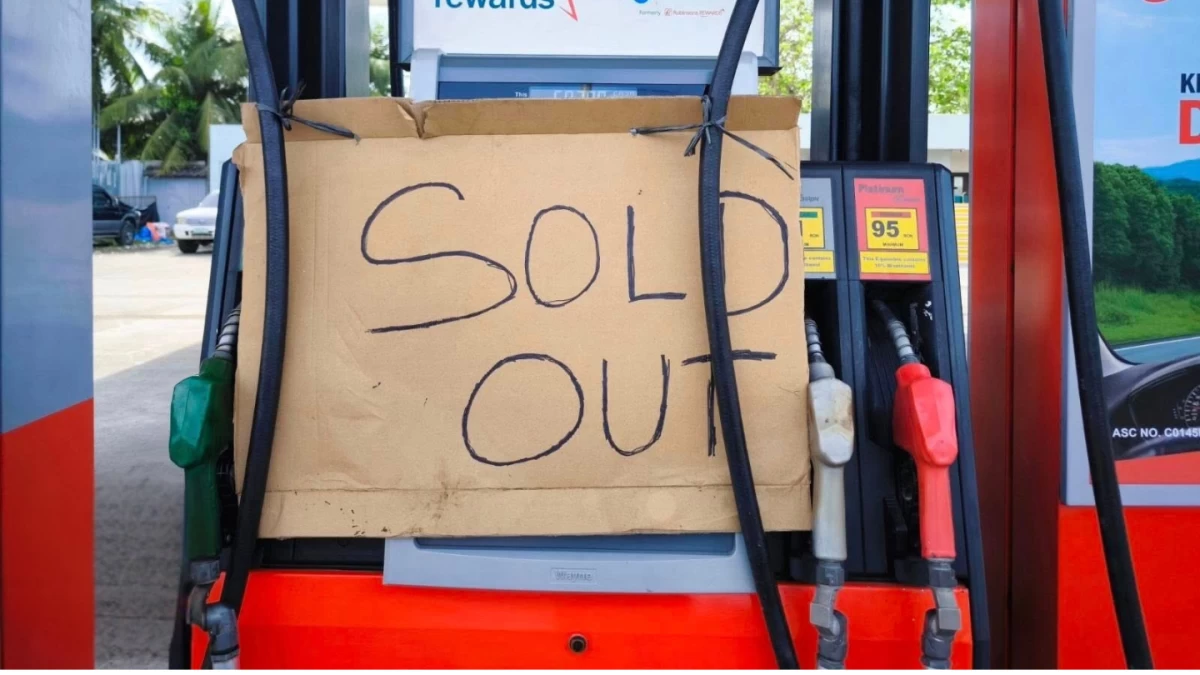
A gas station in Jaro, Iloilo City, displays “sold out” sign on its pump last March 10. The fuel depletion comes as the country faces a historic energy crisis, with industry experts warning that domestic supplies may only last until late April due to escalating conflict in the Middle East and regional export bans.

The Philippines rolled out one of the most extensive policy responses in Asia-Pacific to cushion the impact of global oil price and supply shocks, even as the country recorded among the steepest increases in fuel prices in the region, according to the Manila-based Asian Development Bank (ADB).

An ADB brief published on Wednesday, April 29, showed that domestic fuel prices in its host country surged sharply following the escalation of the Middle East conflict, with diesel prices rising by nearly 120 percent and gasoline by almost 60 percent between Feb. 23 and April 20—ranking among the highest increases in the region, behind only Myanmar and Laos.

Despite these price pressures, the Philippines implemented seven out of eight major policy responses identified across Asia-Pacific economies, making it one of the most active responders to the energy shock. The country is currently under a state of national energy emergency.

Among the most widely adopted measures in the region, including the Philippines, were fuel subsidies and excise tax cuts, which aim to directly reduce pump prices or ease the burden on consumers. These include government support for specific fuel users and temporary reductions in taxes on petroleum products. President Ferdinand R. Marcos Jr. this month issued Executive Order (EO) No. 114, which suspended excise taxes on liquefied petroleum gas (LPG) and kerosene for three months.

The Philippines also imposed price control mechanisms, such as staggered fuel price adjustments in coordination with oil companies, to temper the immediate impact of global price spikes. The government, through the Department of Energy (DOE), likewise set indicative ranges for fuel price rollbacks.

To manage demand, authorities rolled out conservation measures, including remote work arrangements, transport management policies, and other initiatives designed to reduce fuel consumption.

Strategic reserve adjustments were also undertaken, including building up fuel inventories and securing supply buffers to ensure continued availability of petroleum products.

Targeted assistance programs were also deployed, including support for the transportation sector and vulnerable households, while efforts to accelerate renewable energy (RE) investments were pursued to reduce long-term dependence on imported fuel.

On the supply side, the Philippines adopted measures such as diversifying energy import sources and allowing temporary adjustments in fuel standards to ensure supply continuity.

Other initiatives included price monitoring and exploring alternative trade routes to navigate disruptions in global energy logistics.

The ADB brief outlined four key policy responses: allowing partial pass-through of higher energy prices, providing targeted and time-bound fiscal support, ensuring measured central bank action to manage inflation and market volatility, as well as promoting energy conservation to curb demand.

But across the region, the ADB noted that policy responses have largely relied on broad-based measures such as subsidies, tax cuts, and price controls, which provide short-term relief but may carry fiscal costs and distort market incentives.

In a separate April 29 statement, the ADB said the prolonged Middle East conflict has significantly worsened Asia-Pacific’s economic outlook, as higher energy prices continue to weigh on growth and push inflation higher.

The ADB now expects growth in developing Asia-Pacific to slow to 4.7 percent in 2026 and 4.8 percent in 2027, down from the 5.1-percent forecasts for both years released earlier in April, while inflation is projected to accelerate to 5.2 percent this year from three percent in 2025.

The lender said the outlook reflects persistent risks to energy supply and transport routes, which continue to drive up oil and gas prices and tighten financial conditions.

Oil prices are assumed to average about $96 per barrel this year, significantly higher than the pre-conflict average of $69, before easing to around $80 per barrel in 2027.

“Our revised outlook is a significant downward revision for growth and a sharp increase in inflation following a special update to reflect the deepening crisis. We are confronting systemic, long-lasting disruptions to global energy and trade networks, not just temporary volatility,” ADB president Masato Kanda said.

“The ADB will remain an agile partner in protecting the region’s economy; tracking fast-moving risks, and moving with urgency to scale up our support,” he added.

Under a more severe downside scenario, the ADB warned that regional growth could slow further to 4.2 percent this year, while inflation could surge to as high as 7.4 percent, underscoring the risks posed by prolonged disruptions in global energy markets.

For the Philippines, the ADB had downgraded its 2026 gross domestic product (GDP) growth forecast to a post-pandemic low of 4.4 percent, matching last years flood-control scandal-weakened expansion, while raising its inflation projection to a possibly 18-year high of 6.3 percent, reflecting the economy’s exposure to imported fuel and external price shocks.

Related Tags

Asian Development Bank (ADB) state of national energy emergency Ferdinand Marcos Jr. Department of Energy (DOE)
ADVERTISEMENT
.most-popular .layout-ratio{ padding-bottom: 79.13%; } @media (min-width: 768px) and (max-width: 1024px) { .widget-title { font-size: 15px !important; } }

{{ articles_filter_1561_widget.title }}

.most-popular .layout-ratio{ padding-bottom: 79.13%; } @media (min-width: 768px) and (max-width: 1024px) { .widget-title { font-size: 15px !important; } }

{{ articles_filter_1562_widget.title }}

.most-popular .layout-ratio{ padding-bottom: 79.13%; } @media (min-width: 768px) and (max-width: 1024px) { .widget-title { font-size: 15px !important; } }

{{ articles_filter_1563_widget.title }}

{{ articles_filter_1564_widget.title }}

.mb-article-details { position: relative; } .mb-article-details .article-body-preview, .mb-article-details .article-body-summary{ font-size: 17px; line-height: 30px; font-family: "Libre Caslon Text", serif; color: #000; } .mb-article-details .article-body-preview iframe , .mb-article-details .article-body-summary iframe{ width: 100%; margin: auto; } .read-more-background { background: linear-gradient(180deg, color(display-p3 1.000 1.000 1.000 / 0) 13.75%, color(display-p3 1.000 1.000 1.000 / 0.8) 30.79%, color(display-p3 1.000 1.000 1.000) 72.5%); position: absolute; height: 200px; width: 100%; bottom: 0; display: flex; justify-content: center; align-items: center; padding: 0; } .read-more-background a{ color: #000; } .read-more-btn { padding: 17px 45px; font-family: Inter; font-weight: 700; font-size: 18px; line-height: 16px; text-align: center; vertical-align: middle; border: 1px solid black; background-color: white; } .hidden { display: none; }
function initializeAllSwipers() { // Get all hidden inputs with cms_article_id document.querySelectorAll('[id^="cms_article_id_"]').forEach(function (input) { const cmsArticleId = input.value; const articleSelector = '#article-' + cmsArticleId + ' .body_images'; const swiperElement = document.querySelector(articleSelector); if (swiperElement && !swiperElement.classList.contains('swiper-initialized')) { new Swiper(articleSelector, { loop: true, pagination: false, navigation: { nextEl: '#article-' + cmsArticleId + ' .swiper-button-next', prevEl: '#article-' + cmsArticleId + ' .swiper-button-prev', }, }); } }); } setTimeout(initializeAllSwipers, 3000); const intersectionObserver = new IntersectionObserver( (entries) => { entries.forEach((entry) => { if (entry.isIntersecting) { const newUrl = entry.target.getAttribute("data-url"); if (newUrl) { history.pushState(null, null, newUrl); let article = entry.target; // Extract metadata const author = article.querySelector('.author-section').textContent.replace('By', '').trim(); const section = article.querySelector('.section-info ').textContent.replace(' ', ' '); const title = article.querySelector('.article-title h1').textContent; // Parse URL for Chartbeat path format const parsedUrl = new URL(newUrl, window.location.origin); const cleanUrl = parsedUrl.host + parsedUrl.pathname; // Update Chartbeat configuration if (typeof window._sf_async_config !== 'undefined') { window._sf_async_config.path = cleanUrl; window._sf_async_config.sections = section; window._sf_async_config.authors = author; } // Track virtual page view with Chartbeat if (typeof pSUPERFLY !== 'undefined' && typeof pSUPERFLY.virtualPage === 'function') { try { pSUPERFLY.virtualPage({ path: cleanUrl, title: title, sections: section, authors: author }); } catch (error) { console.error('ping error', error); } } // Optional: Update document title if (title && title !== document.title) { document.title = title; } } } }); }, { threshold: 0.1 } ); function showArticleBody(button) { const article = button.closest("article"); const summary = article.querySelector(".article-body-summary"); const body = article.querySelector(".article-body-preview"); const readMoreSection = article.querySelector(".read-more-background"); // Hide summary and read-more section summary.style.display = "none"; readMoreSection.style.display = "none"; // Show the full article body body.classList.remove("hidden"); } document.addEventListener("DOMContentLoaded", () => { let loadCount = 0; // Track how many times articles are loaded const offset = [1, 2, 3, 4, 5, 6, 7, 8, 9, 10]; // Offset values const currentUrl = window.location.pathname.substring(1); let isLoading = false; // Prevent multiple calls if (!currentUrl) { console.log("Current URL is invalid."); return; } const sentinel = document.getElementById("load-more-sentinel"); if (!sentinel) { console.log("Sentinel element not found."); return; } function isSentinelVisible() { const rect = sentinel.getBoundingClientRect(); return ( rect.top < window.innerHeight && rect.bottom >= 0 ); } function onScroll() { if (isLoading) return; if (isSentinelVisible()) { if (loadCount >= offset.length) { console.log("Maximum load attempts reached."); window.removeEventListener("scroll", onScroll); return; } isLoading = true; const currentOffset = offset[loadCount]; window.loadMoreItems().then(() => { let article = document.querySelector('#widget_1690 > div:nth-last-of-type(2) article'); intersectionObserver.observe(article) loadCount++; }).catch(error => { console.error("Error loading more items:", error); }).finally(() => { isLoading = false; }); } } window.addEventListener("scroll", onScroll); });

Sign up by email to receive news.