ADVERTISEMENT

World Bank: Middle East war to trigger biggest energy shock in four years

Published Apr 29, 2026 10:48 am  |  Updated Apr 29, 2026 02:17 pm
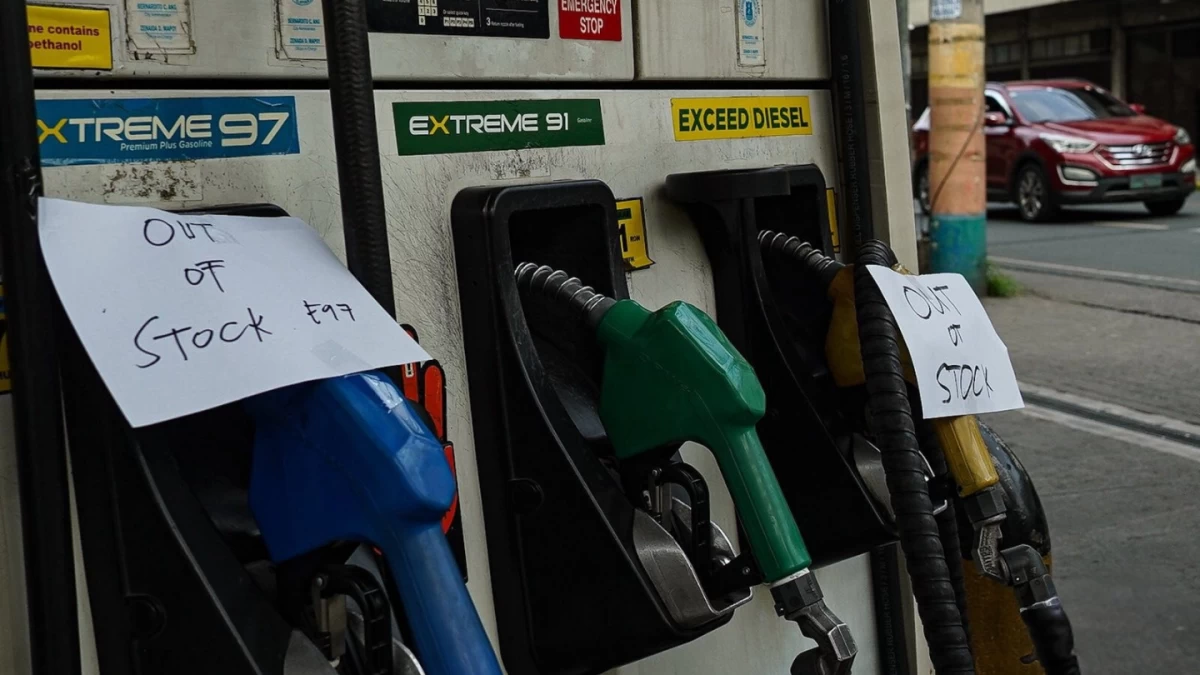
A fuel station in Paco, Manila stands dormant after exhausting its supply on Monday, March 9, 2026. Domestic energy concerns have intensified following the effective closure of the Strait of Hormuz, a move that has sent global crude prices toward $100 a barrel and triggered a “risk-off” contagion across Philippine financial markets. (Photo: John Louie Abrina I MB)

The World Bank Group (WBG) has warned that the war in the Middle East is set to trigger the biggest energy price surge in four years, fueling inflation, slowing economic growth, and worsening food insecurity across developing economies.

In an April 28 statement, the Washington-based multilateral lender said energy prices are projected to surge 24 percent this year to their highest level since Russia’s invasion of Ukraine in 2022, as attacks on energy infrastructure and shipping disruptions in the Strait of Hormuz send severe shocks through global commodity markets.

In its latest Commodity Markets Outlook, the World Bank said overall commodity prices are forecast to rise 16 percent in 2026, driven by soaring energy and fertilizer prices and record-high prices for several key metals.

The lender said the resulting shock would have serious implications for job creation and development.

The Strait of Hormuz, which handles about 35 percent of global seaborne crude oil trade, has been at the center of the disruption, with attacks and shipping constraints triggering what the World Bank described as the largest oil supply shock on record.

The report estimated an initial reduction in global oil supply of about 10 million barrels per day.

Even after moderating from recent peaks, Brent crude prices remained more than 50 percent higher in mid-April than at the start of the year.

The World Bank forecasts Brent crude to average $86 per barrel in 2026, sharply higher than the $69 average in 2025, assuming the most acute disruptions end in May and shipping through the Strait of Hormuz gradually returns to pre-war levels by late 2026.

“The war is hitting the global economy in cumulative waves: first through higher energy prices, then higher food prices, and finally, higher inflation, which will push up interest rates and make debt even more expensive,” said Indermit Gill, the WBG’s chief economist and senior vice president for development economics.

“The poorest people, who spend the highest share of their income on food and fuels, will be hit the hardest, as will developing economies already struggling under heavy debt burdens. All of this is a reminder of a stark truth: war is development in reverse,” Gill added.

Fertilizer prices are projected to increase 31 percent this year, driven by a 60-percent jump in urea prices.

The World Bank said fertilizer affordability would fall to its worst level since 2022, eroding farmers’ incomes and threatening future crop yields.

If the conflict drags on, the World Food Program (WFP) estimates that up to 45 million more people could fall into acute food insecurity this year.

Prices for base metals such as aluminum, copper, and tin are also expected to hit all-time highs, reflecting strong demand from data centers, electric vehicles, and renewable energy industries.

Meanwhile, precious metals are forecast to rise 42 percent in 2026 as geopolitical uncertainty boosts demand for safe-haven assets.

The World Bank warned that rising commodity prices would increase inflation and dampen growth worldwide.

Inflation in developing economies is now projected to average 5.1 percent in 2026 under baseline assumptions, a full percentage point higher than pre-war estimates and up from 4.7 percent last year.

Growth in developing economies is expected to slow to 3.6 percent in 2026, a downward revision of 0.4 percentage point (ppt) from the World Bank’s January forecast.

Economies directly impacted by the conflict will be hardest hit, while 70 percent of commodity importers and more than 60 percent of commodity exporters could post weaker growth than earlier projected.

The lender warned that commodity prices could rise even further if hostilities escalate or supply disruptions last longer than expected.

Under a more severe scenario, Brent crude could average as high as $115 per barrel this year if critical oil and gas facilities suffer additional damage and export volumes recover more slowly.

In that scenario, inflation in developing economies could rise to 5.8 percent this year—the highest level since 2022.

“The succession of shocks over the decade has sharply reduced the fiscal space available to respond to the current historic energy supply crisis,” said Ayhan Kose, the World Bank’s deputy chief economist and director of the prospects group.

“Governments must resist the temptation of broad, untargeted fiscal support measures that could distort markets and erode fiscal buffers. Instead, they should focus on rapid, temporary support targeted to the most vulnerable households,” Kose added.

The report also found that oil-price volatility during periods of rising geopolitical risk is roughly twice as high as during calmer periods.

A geopolitically driven one-percent decline in oil production pushes prices up by an average of 11.5 percent, with spillover effects about 50 percent larger than under normal market conditions.

According to the report, a 10-percent oil price increase caused by a geopolitical supply shock leads to natural gas price increases peaking at about seven percent and fertilizer price increases peaking at over five percent around a year later, worsening food security and poverty reduction efforts.

Related Tags

Middle East war World Bank Group (WBG) World Bank inflation rate
ADVERTISEMENT
.most-popular .layout-ratio{ padding-bottom: 79.13%; } @media (min-width: 768px) and (max-width: 1024px) { .widget-title { font-size: 15px !important; } }

{{ articles_filter_1561_widget.title }}

.most-popular .layout-ratio{ padding-bottom: 79.13%; } @media (min-width: 768px) and (max-width: 1024px) { .widget-title { font-size: 15px !important; } }

{{ articles_filter_1562_widget.title }}

.most-popular .layout-ratio{ padding-bottom: 79.13%; } @media (min-width: 768px) and (max-width: 1024px) { .widget-title { font-size: 15px !important; } }

{{ articles_filter_1563_widget.title }}

{{ articles_filter_1564_widget.title }}

.mb-article-details { position: relative; } .mb-article-details .article-body-preview, .mb-article-details .article-body-summary{ font-size: 17px; line-height: 30px; font-family: "Libre Caslon Text", serif; color: #000; } .mb-article-details .article-body-preview iframe , .mb-article-details .article-body-summary iframe{ width: 100%; margin: auto; } .read-more-background { background: linear-gradient(180deg, color(display-p3 1.000 1.000 1.000 / 0) 13.75%, color(display-p3 1.000 1.000 1.000 / 0.8) 30.79%, color(display-p3 1.000 1.000 1.000) 72.5%); position: absolute; height: 200px; width: 100%; bottom: 0; display: flex; justify-content: center; align-items: center; padding: 0; } .read-more-background a{ color: #000; } .read-more-btn { padding: 17px 45px; font-family: Inter; font-weight: 700; font-size: 18px; line-height: 16px; text-align: center; vertical-align: middle; border: 1px solid black; background-color: white; } .hidden { display: none; }
function initializeAllSwipers() { // Get all hidden inputs with cms_article_id document.querySelectorAll('[id^="cms_article_id_"]').forEach(function (input) { const cmsArticleId = input.value; const articleSelector = '#article-' + cmsArticleId + ' .body_images'; const swiperElement = document.querySelector(articleSelector); if (swiperElement && !swiperElement.classList.contains('swiper-initialized')) { new Swiper(articleSelector, { loop: true, pagination: false, navigation: { nextEl: '#article-' + cmsArticleId + ' .swiper-button-next', prevEl: '#article-' + cmsArticleId + ' .swiper-button-prev', }, }); } }); } setTimeout(initializeAllSwipers, 3000); const intersectionObserver = new IntersectionObserver( (entries) => { entries.forEach((entry) => { if (entry.isIntersecting) { const newUrl = entry.target.getAttribute("data-url"); if (newUrl) { history.pushState(null, null, newUrl); let article = entry.target; // Extract metadata const author = article.querySelector('.author-section').textContent.replace('By', '').trim(); const section = article.querySelector('.section-info ').textContent.replace(' ', ' '); const title = article.querySelector('.article-title h1').textContent; // Parse URL for Chartbeat path format const parsedUrl = new URL(newUrl, window.location.origin); const cleanUrl = parsedUrl.host + parsedUrl.pathname; // Update Chartbeat configuration if (typeof window._sf_async_config !== 'undefined') { window._sf_async_config.path = cleanUrl; window._sf_async_config.sections = section; window._sf_async_config.authors = author; } // Track virtual page view with Chartbeat if (typeof pSUPERFLY !== 'undefined' && typeof pSUPERFLY.virtualPage === 'function') { try { pSUPERFLY.virtualPage({ path: cleanUrl, title: title, sections: section, authors: author }); } catch (error) { console.error('ping error', error); } } // Optional: Update document title if (title && title !== document.title) { document.title = title; } } } }); }, { threshold: 0.1 } ); function showArticleBody(button) { const article = button.closest("article"); const summary = article.querySelector(".article-body-summary"); const body = article.querySelector(".article-body-preview"); const readMoreSection = article.querySelector(".read-more-background"); // Hide summary and read-more section summary.style.display = "none"; readMoreSection.style.display = "none"; // Show the full article body body.classList.remove("hidden"); } document.addEventListener("DOMContentLoaded", () => { let loadCount = 0; // Track how many times articles are loaded const offset = [1, 2, 3, 4, 5, 6, 7, 8, 9, 10]; // Offset values const currentUrl = window.location.pathname.substring(1); let isLoading = false; // Prevent multiple calls if (!currentUrl) { console.log("Current URL is invalid."); return; } const sentinel = document.getElementById("load-more-sentinel"); if (!sentinel) { console.log("Sentinel element not found."); return; } function isSentinelVisible() { const rect = sentinel.getBoundingClientRect(); return ( rect.top < window.innerHeight && rect.bottom >= 0 ); } function onScroll() { if (isLoading) return; if (isSentinelVisible()) { if (loadCount >= offset.length) { console.log("Maximum load attempts reached."); window.removeEventListener("scroll", onScroll); return; } isLoading = true; const currentOffset = offset[loadCount]; window.loadMoreItems().then(() => { let article = document.querySelector('#widget_1690 > div:nth-last-of-type(2) article'); intersectionObserver.observe(article) loadCount++; }).catch(error => { console.error("Error loading more items:", error); }).finally(() => { isLoading = false; }); } } window.addEventListener("scroll", onScroll); });

Sign up by email to receive news.