ADVERTISEMENT

A decade after Diwata-1: From crisis to capability

Published Apr 27, 2026 08:21 am
In the aftermath of Yolanda in 2013, the Philippines faced one of its most devastating disasters. Entire communities were flattened, and the country urgently needed satellite imagery to assess damage and guide response efforts. At the time, however, access to space data was constrained, highlighting a critical gap in the country’s disaster management capabilities.
From this challenge emerged a vision: for the Philippines to develop its own space-based tools to better respond to national needs. Multiple satellite imaging initiatives were set in motion to address this gap. Yes, satellite data from other countries are available, but there are benefits to being able to produce these ourselves: control and direct access to data.
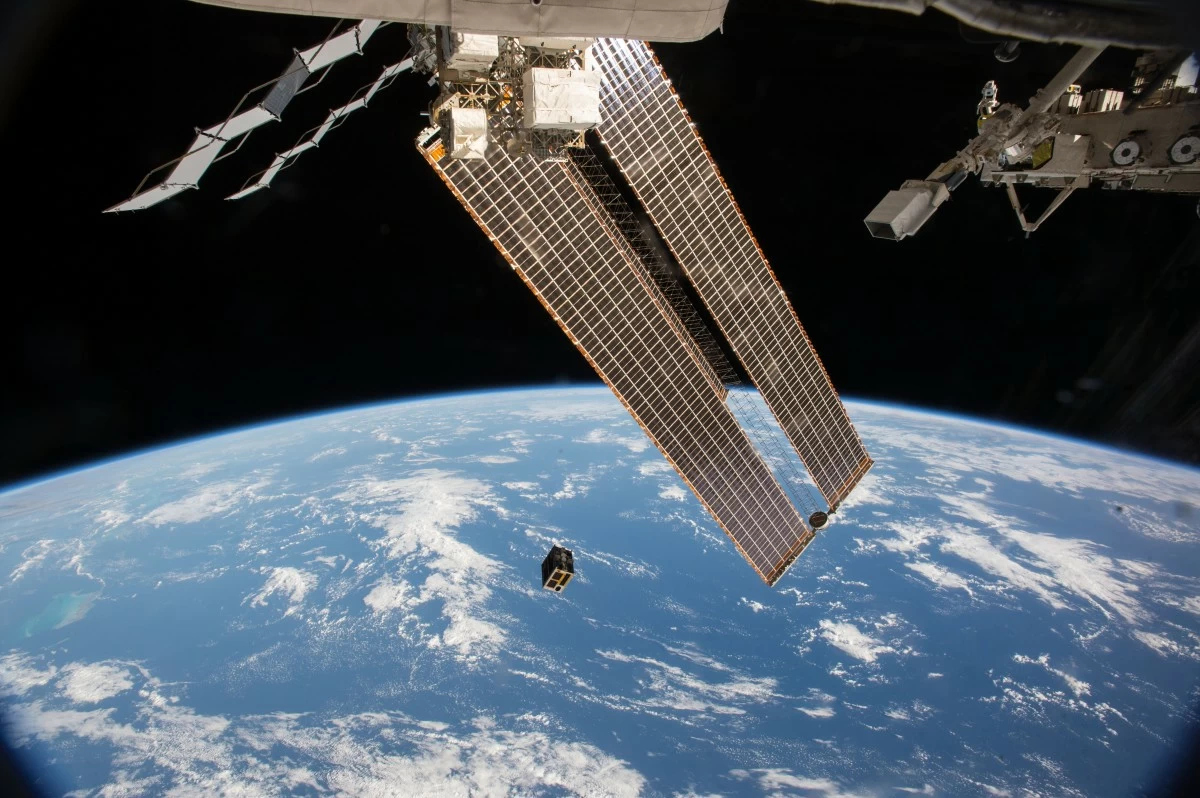
Filipinos embarked on creating capability for satellite development. Engineers were sent to Japan to learn how to build Earth observation satellites, and in March 2016, the country reached a historic milestone with the launch of the Diwata-1 microsatellite into space. Exactly ten years ago, on April 27, 2016, Diwata-1 was successfully deployed into orbit from the International
Space Station, becoming the first Filipino-built object in space, and marking the Philippines’ entry into the space age.
"The historical significance of Diwata-1's ISS release is that we became a spacefaring nation. The Philippines established a presence in space through a satellite built and operated by Filipinos,” shared Gay Jane P. Perez, project scientist of Diwata-1. She is now the Ad Interim Director General of the Philippine Space Agency. Perez adds, “Naramdaman natin, tayong mga Pilipino, na kaya pala nating marating ang space,” breaking the psychological barrier that space is only for high-income countries.
Because of Diwata-1, Filipinos learned how to become satellite data producers. In addition to satellite development, it trained local teams across the full chain of satellite operations—from tasking the satellite, to processing downlinked data from digital numbers into maps that may be useful for different applications.
It did not stop there. Succeeding programs trained teams of engineers with the know-how and skillset of building increasingly complex satellites. The success of Diwata-1 paved the way for Diwata-2, which had improved imaging and broader mission applications. And since 2016, the Maya CubeSats (nanosatellites) has been a cost-effective way to cultivate more space engineers.
These efforts are sustained with the establishment of the Philippine Space Agency (PhilSA) in 2019, which now leads and drives the country’s national space program. Initiatives include knowledge transfer to strengthen local satellite manufacturing, and efforts to enable private sector participation in the supply chain through the production of space-grade components and subsystems, further developing the country’s space capability.
In addition to building our own satellites, PhilSA leverages international partnerships, and allocates a part of the national budget for commercial satellite subscription to serve various data needs. But more importantly, are teams of PhilSA scientists who process satellite data into useful information. The value of the capability built is evident in how satellite data now routinely supports disaster response and environmental monitoring efforts across the country.
In response to the recent Navotas landfill fire, PhilSA has been providing satellite-derived information to assess the extent of the fire and its potential impacts on surrounding communities, including air quality considerations. Other maps such as landslide extent and damage detection for the 6.9 magnitude earthquake in Cebu, oil spill extent in Manila Bay, burnt area coverage of grass fires in Isabela, flood extents of Super Typhoon Uwan, and more have also been provided by PhilSA to the National Disaster Risk Reduction and Management Council (NDRRMC) and affected local government units (LGUs). PhilSA is growing Filipino expertise and access to space-based information.
A decade after the deployment of the experimental microsatellite Diwata-1, the country looks ahead to the next chapter of its space journey. The Multispectral Unit for Land Assessment (MULA) satellite, a high-capability operational platform, will be launched by early 2027. MULA will further enhance the country’s ability to monitor land, environment, and resources with greater precision and frequency.
This progress reflects the enduring legacy of Diwata-1, not just as a satellite, but as a symbol of national innovation. Diwata-1 is the beginning of a story of how Filipinos became empowered to take matters into our own hands. To learn the skills needed to become more independent, to build our own satellites and launch them into space, and to take concrete steps in improving disaster response through satellite data.
Ten years on, what began as a response to crisis has become a sustained commitment to harness space science and technology for the benefit of every Filipino.

Related Tags

Space Diwata Diwata-1 Philippine Space Agency PhilSA
ADVERTISEMENT
.most-popular .layout-ratio{ padding-bottom: 79.13%; } @media (min-width: 768px) and (max-width: 1024px) { .widget-title { font-size: 15px !important; } }

{{ articles_filter_1561_widget.title }}

.most-popular .layout-ratio{ padding-bottom: 79.13%; } @media (min-width: 768px) and (max-width: 1024px) { .widget-title { font-size: 15px !important; } }

{{ articles_filter_1562_widget.title }}

.most-popular .layout-ratio{ padding-bottom: 79.13%; } @media (min-width: 768px) and (max-width: 1024px) { .widget-title { font-size: 15px !important; } }

{{ articles_filter_1563_widget.title }}

{{ articles_filter_1564_widget.title }}

.mb-article-details { position: relative; } .mb-article-details .article-body-preview, .mb-article-details .article-body-summary{ font-size: 17px; line-height: 30px; font-family: "Libre Caslon Text", serif; color: #000; } .mb-article-details .article-body-preview iframe , .mb-article-details .article-body-summary iframe{ width: 100%; margin: auto; } .read-more-background { background: linear-gradient(180deg, color(display-p3 1.000 1.000 1.000 / 0) 13.75%, color(display-p3 1.000 1.000 1.000 / 0.8) 30.79%, color(display-p3 1.000 1.000 1.000) 72.5%); position: absolute; height: 200px; width: 100%; bottom: 0; display: flex; justify-content: center; align-items: center; padding: 0; } .read-more-background a{ color: #000; } .read-more-btn { padding: 17px 45px; font-family: Inter; font-weight: 700; font-size: 18px; line-height: 16px; text-align: center; vertical-align: middle; border: 1px solid black; background-color: white; } .hidden { display: none; }
function initializeAllSwipers() { // Get all hidden inputs with cms_article_id document.querySelectorAll('[id^="cms_article_id_"]').forEach(function (input) { const cmsArticleId = input.value; const articleSelector = '#article-' + cmsArticleId + ' .body_images'; const swiperElement = document.querySelector(articleSelector); if (swiperElement && !swiperElement.classList.contains('swiper-initialized')) { new Swiper(articleSelector, { loop: true, pagination: false, navigation: { nextEl: '#article-' + cmsArticleId + ' .swiper-button-next', prevEl: '#article-' + cmsArticleId + ' .swiper-button-prev', }, }); } }); } setTimeout(initializeAllSwipers, 3000); const intersectionObserver = new IntersectionObserver( (entries) => { entries.forEach((entry) => { if (entry.isIntersecting) { const newUrl = entry.target.getAttribute("data-url"); if (newUrl) { history.pushState(null, null, newUrl); let article = entry.target; // Extract metadata const author = article.querySelector('.author-section').textContent.replace('By', '').trim(); const section = article.querySelector('.section-info ').textContent.replace(' ', ' '); const title = article.querySelector('.article-title h1').textContent; // Parse URL for Chartbeat path format const parsedUrl = new URL(newUrl, window.location.origin); const cleanUrl = parsedUrl.host + parsedUrl.pathname; // Update Chartbeat configuration if (typeof window._sf_async_config !== 'undefined') { window._sf_async_config.path = cleanUrl; window._sf_async_config.sections = section; window._sf_async_config.authors = author; } // Track virtual page view with Chartbeat if (typeof pSUPERFLY !== 'undefined' && typeof pSUPERFLY.virtualPage === 'function') { try { pSUPERFLY.virtualPage({ path: cleanUrl, title: title, sections: section, authors: author }); } catch (error) { console.error('ping error', error); } } // Optional: Update document title if (title && title !== document.title) { document.title = title; } } } }); }, { threshold: 0.1 } ); function showArticleBody(button) { const article = button.closest("article"); const summary = article.querySelector(".article-body-summary"); const body = article.querySelector(".article-body-preview"); const readMoreSection = article.querySelector(".read-more-background"); // Hide summary and read-more section summary.style.display = "none"; readMoreSection.style.display = "none"; // Show the full article body body.classList.remove("hidden"); } document.addEventListener("DOMContentLoaded", () => { let loadCount = 0; // Track how many times articles are loaded const offset = [1, 2, 3, 4, 5, 6, 7, 8, 9, 10]; // Offset values const currentUrl = window.location.pathname.substring(1); let isLoading = false; // Prevent multiple calls if (!currentUrl) { console.log("Current URL is invalid."); return; } const sentinel = document.getElementById("load-more-sentinel"); if (!sentinel) { console.log("Sentinel element not found."); return; } function isSentinelVisible() { const rect = sentinel.getBoundingClientRect(); return ( rect.top < window.innerHeight && rect.bottom >= 0 ); } function onScroll() { if (isLoading) return; if (isSentinelVisible()) { if (loadCount >= offset.length) { console.log("Maximum load attempts reached."); window.removeEventListener("scroll", onScroll); return; } isLoading = true; const currentOffset = offset[loadCount]; window.loadMoreItems().then(() => { let article = document.querySelector('#widget_1690 > div:nth-last-of-type(2) article'); intersectionObserver.observe(article) loadCount++; }).catch(error => { console.error("Error loading more items:", error); }).finally(() => { isLoading = false; }); } } window.addEventListener("scroll", onScroll); });

Sign up by email to receive news.