






Manila Bulletin
 Philippines
National
Smoke lingers: Air quality yet to return to pre-fire levels after Navotas landfill fire—PhilSA
Philippines
National
Smoke lingers: Air quality yet to return to pre-fire levels after Navotas landfill fire—PhilSA
Philippines
National
Smoke lingers: Air quality yet to return to pre-fire levels after Navotas landfill fire—PhilSA
Smoke lingers: Air quality yet to return to pre-fire levels after Navotas landfill fire—PhilSA
By Jel Santos
Published Apr 23, 2026 03:40 pm


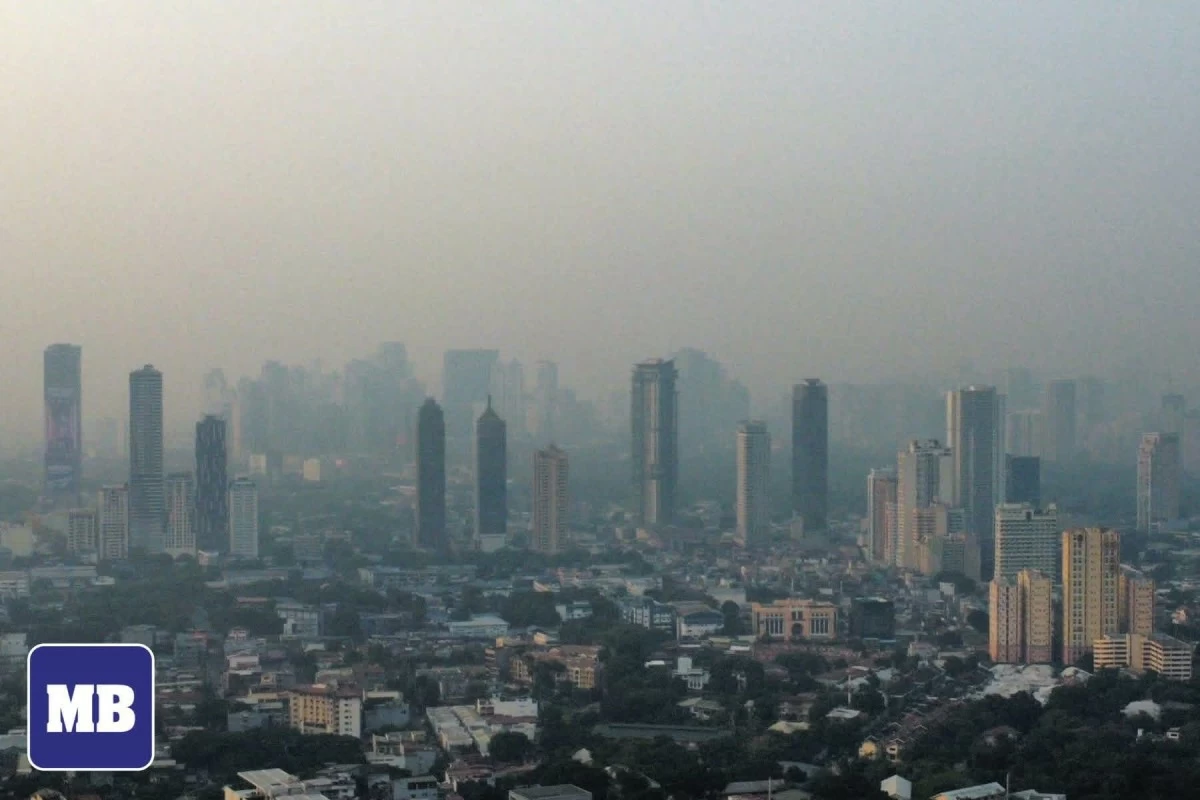
(MB FILE PHOTO)
Air quality in Metro Manila has yet to return to pre-fire levels nearly two weeks after the blaze at the Navotas Sanitary Landfill, with satellite monitoring showing nitrogen dioxide (NO₂) levels still higher than those recorded before the fire as of Thursday, April 23, the Philippine Space Agency (PhilSA) said.
The landfill fire, which reportedly broke out on April 10, continues to affect air quality, as the Bureau of Fire Protection (BFP) noted “smoldering conditions” at the site.
PhilSA said daily satellite-based monitoring of NO₂ levels, taken at 8:45 a.m. for consistent comparison, showed that pollution remains higher than levels recorded on April 6, prior to the fire.
“Nitrogen dioxide is a pollutant produced from burning and is a component of smoke,” it stated.
Likewise, satellite data showed the estimated extent of smoke over Metro Manila and nearby provinces as of 8:45 a.m. on Thursday, with darker red areas indicating higher concentrations of nitrogen dioxide.
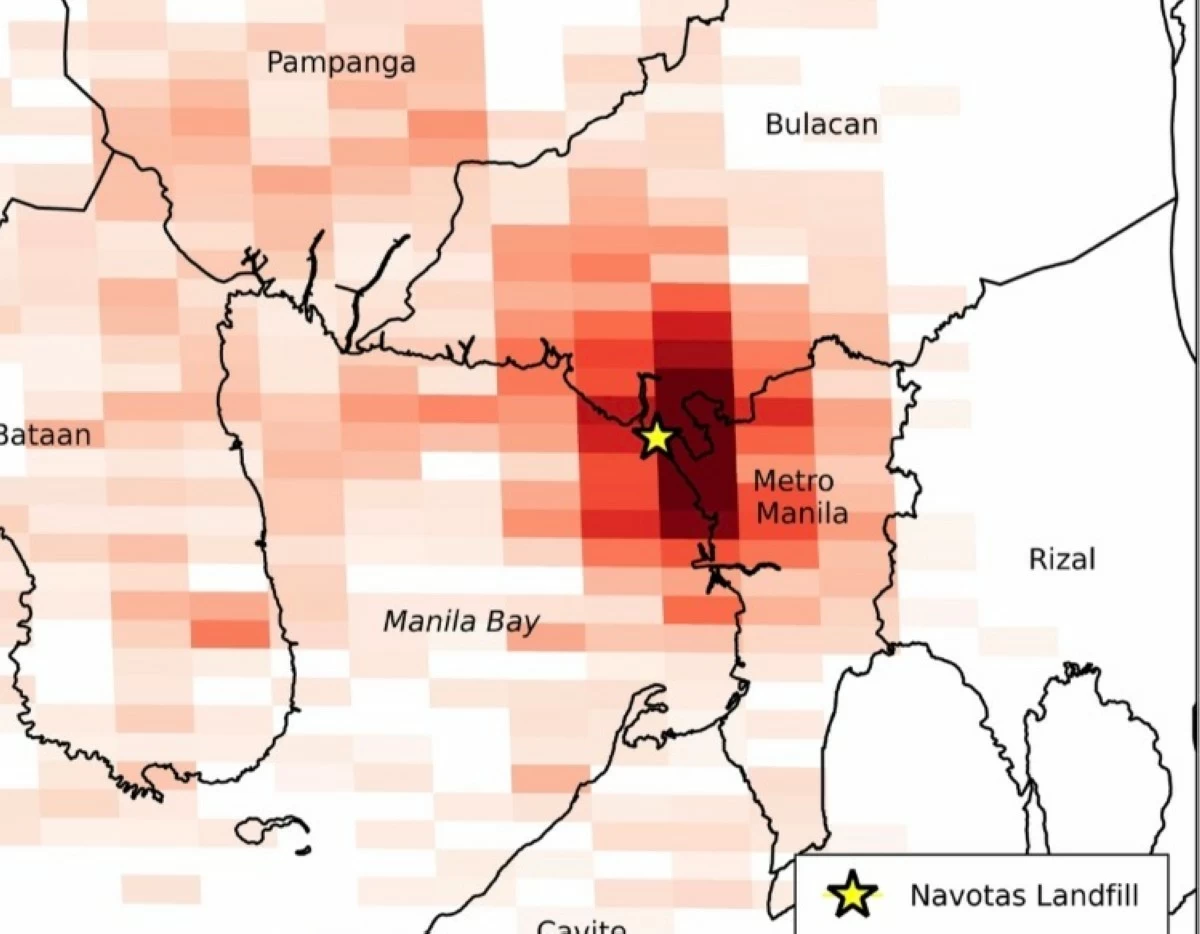
(COURTESY: PHILSA)
PhilSA said observations were standardized at 8:45 a.m. daily, noting that NO₂ levels generally decrease throughout the day.
“This pattern is called a diurnal cycle which may be attributed to atmospheric processes such as easterlies, sea breeze and land breeze, and the dissolution of the inversion layer,” the agency explained.
It added that its satellite analysis provides wide-area coverage to support the National Disaster Risk Reduction and Management Council (NDRRMC) Health Cluster in monitoring air quality and identifying priority areas for response.
“PhilSA’s support through the analysis of satellite data provides wide-area coverage that assists the NDRRMC Health Cluster in monitoring the situation and prioritizing areas for response,” the agency said.
“By making space data accessible to stakeholders, PhilSA enables informed decision-making and strengthens disaster response,” it added.
On April 20, environmental and health groups called for an expanded investigation into air quality, warning that toxic smoke from the Navotas landfill fire continues to worsen and threaten public health.
Dr. Geminn Louis Apostol, program head for environmental health at the Ateneo School of Medicine and Public Health Center for Research and Innovation (ACRI), warned that the situation remains serious and unresolved, with impacts not limited to Navotas.
The EcoWaste Coalition echoed the call for an expanded probe, urging authorities to assess broader environmental risks, including possible contamination of nearby water bodies.
It can be recalled that the Department of Environment and Natural Resources (DENR) launched a probe into the Navotas Sanitary Landfill fire to determine its cause and assess its impact on air quality and nearby communities.