






Manila Bulletin
 Business
Trade & Industry
Energy companies step in to stop blackouts after plant outage
Business
Trade & Industry
Energy companies step in to stop blackouts after plant outage
Business
Trade & Industry
Energy companies step in to stop blackouts after plant outage
Energy companies step in to stop blackouts after plant outage
Published Apr 17, 2026 05:08 pm


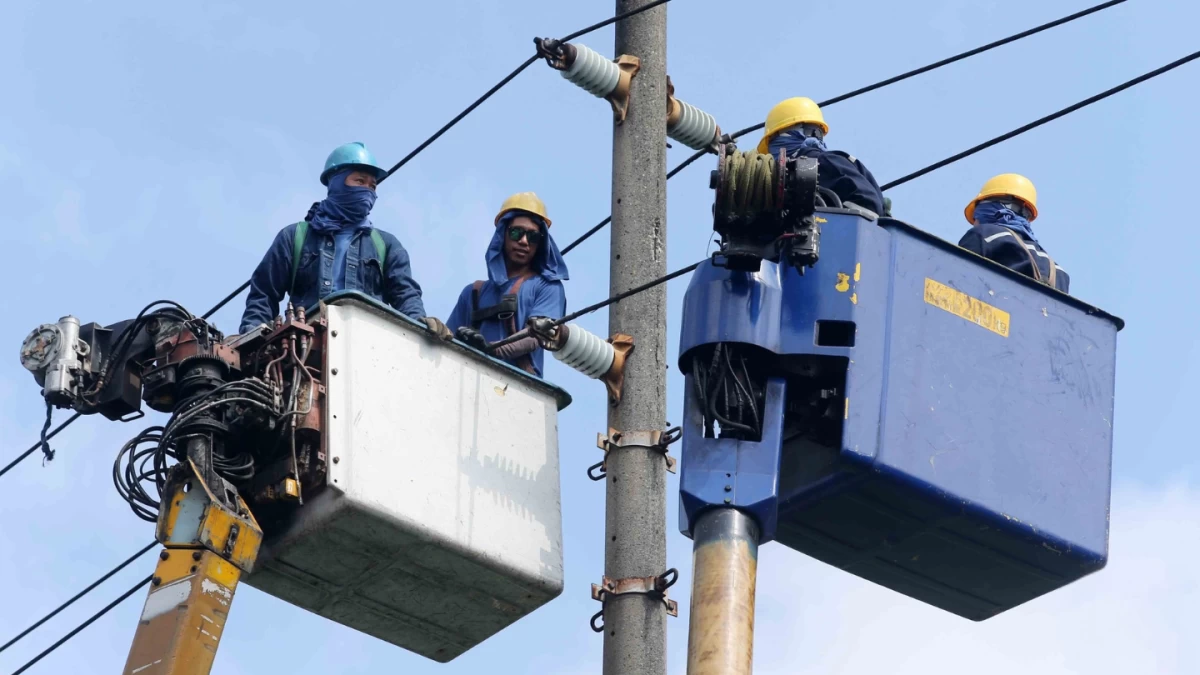
The Department of Energy (DOE) ordered an immediate ramp-up in electricity generation at several major facilities on Friday, April 17, tapping natural gas, oil, and coal-fired plants to stabilize the power grid following a series of unplanned outages in Batangas.
The directive followed the tripping of several units on Thursday, April 16, including Ilijan Blocks A and B and three units of Excellent Energy Resources Inc. Both facilities are operated by LNGPH, a consortium comprising San Miguel Global Power, Meralco PowerGen Corp., and AboitizPower.
The technical failures prompted the National Grid Corp. of the Philippines to issue the first yellow alert of the year for the Luzon grid and the second for the Visayas grid, signaling that thin power reserves had fallen below a required safety margin.
To mitigate the shortfall, the DOE mobilized major generation players including San Miguel Corp., Global Power Holdings Inc., Aboitiz Power Corp., PHINMA Energy, and ACEN Corp. to bolster supply.
Natural gas facilities, which are now being managed by Razon-led Prime Infrastructure Capital Inc.’s subsidiary Prime CoreGen following a landmark 2025 deal with First Gen Corp., operated at approximately 95 percent of their generating capacity to meet the surge in demand. These assets include the Sta. Rita, San Gabriel, and Avion plants.
Oil-based assets were also dispatched to provide ancillary services and grid stabilization. The DOE confirmed that supply increases were logged from the Limay plant in Bataan, the Therma Mobile Inc. plant in Navotas, the Ingrid plant in Rizal, and the Subic power station in Zambales.
By 3 p.m., additional capacity was brought online from the Bauang oil-fired plants and several coal-fired facilities, including GNPower Dinginin, Pagbilao, and the Quezon Power (Philippines) Ltd. Co. plant.
In a statement, LNGPH confirmed that the affected units were successfully synchronized back to the grid by late Thursday evening. The consortium has dispatched technical teams to investigate the root cause of the unplanned outages and ensure long-term reliability.
While the DOE expects the supply situation to normalize as these large units return to full commercial operations, the agency remains in close coordination with the grid operator to prevent further constraints on the 15,000-megawatt Luzon system.
The department noted that the immediate activation of diverse fuel sources was critical in preventing the yellow alerts from escalating into “red alerts,” which would have required rotating power interruptions across the capital and neighboring provinces.