






Manila Bulletin
 Environment and Sustainability
ClientEarth pushes accountability in shift to clean energy
Environment and Sustainability
ClientEarth pushes accountability in shift to clean energy
Environment and Sustainability
ClientEarth pushes accountability in shift to clean energy
ClientEarth pushes accountability in shift to clean energy
By Len Amadora
Published Apr 17, 2026 05:19 am


Do you wish for a better world and seek meaningful change?
Every transformation begins with a spark of intention. We tell ourselves to recycle, to be mindful, and to care not only for ourselves but for the planet we all share. But intentions alone do not clean rivers or shrink carbon footprints. Action does. Real change happens only when intentions turn into action.
As the country faces rising temperatures, stronger typhoons, and growing energy insecurity, it is becoming increasingly vulnerable to climate risks. While ambitious sustainability goals have been set, that is only half the story. Setting targets is one thing; making them work on the ground is another. A spark of intention, once turned into action, must also be supported by regulation. Without it, even the best intentions can fall apart.
This is where ClientEarth steps in, using the power of the law to push for systemic change. To understand how, we spoke with Tim Guanzon, acting associate director for Japan and Southeast Asia at ClientEarth.
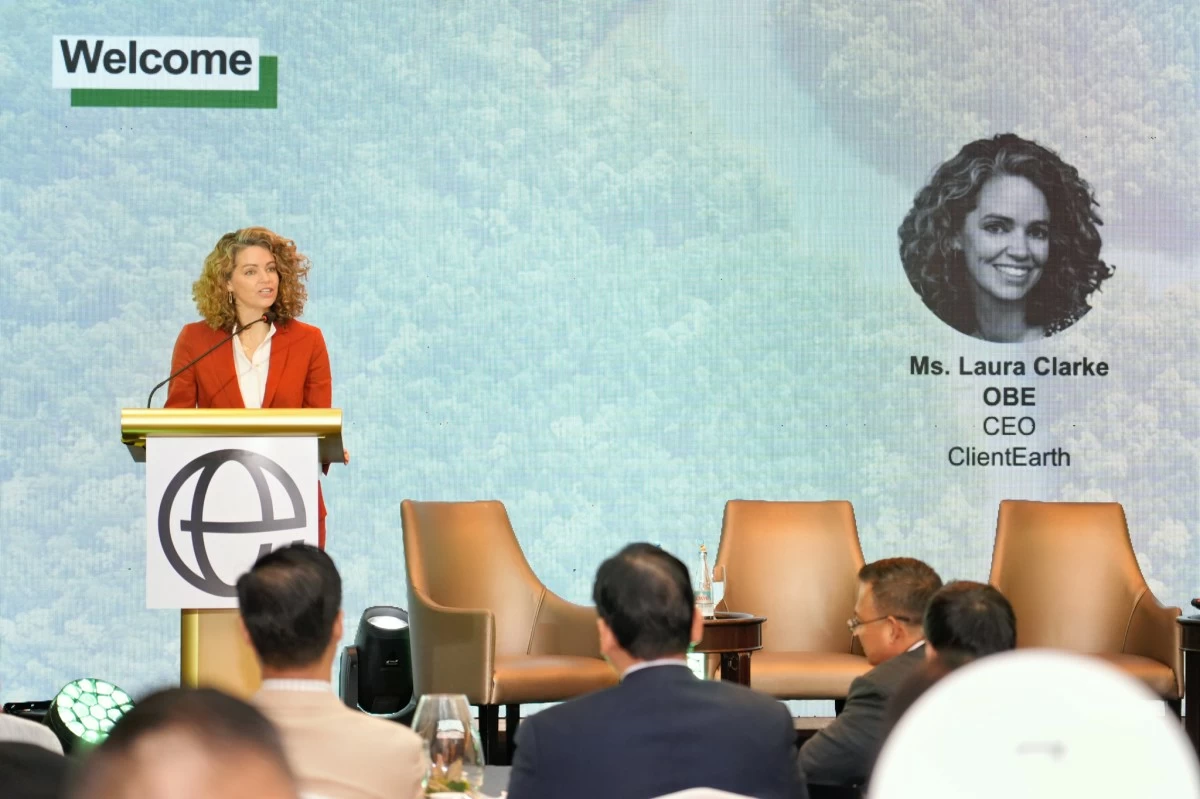
Laura Clarke OBE, CEO of ClientEarth
What is ClientEarth?
ClientEarth is a global legal organization headquartered in London, with offices across Europe and Asia, including Tokyo. Its team is composed of lawyers and policy experts working in areas such as energy, climate, finance, corporate governance, chemicals, oceans and forests. Its mission is to use the law to protect people and nature.
In Southeast Asia and Japan, Guanzon said ClientEarth focuses on accelerating a just energy transition, shifting to clean energy in a way that protects nature and ensures that low-income communities are not left behind. The goal is a transition that is fair for everyone, not just the wealthy or the privileged.
ClientEarth stands out for combining global legal expertise with a strong understanding of local realities. It works closely with communities to understand how systems operate on the ground and adapt legal strategies to each country's culture, politics and economic conditions. It not only helps develop better policies but also works to ensure these are properly enforced. The organization partners with governments, businesses, and civil society to find legal solutions that are practical and effective.

Tim Guanzon, acting associate director for Japan and Southeast Asia at ClientEarth.

Tim Guanzon, acting associate director for Japan and Southeast Asia at ClientEarth.
Tim Guanzon's role in shaping a sustainable future
As regional head, Guanzon oversees ClientEarth's strategy on energy and nature. She helps design the legal foundations needed for a just energy transition. Her work ensures that as countries move from fossil fuels to clean energy, they do so in a way that is fast, fair and legally enforceable, with accountability at every step.
In the Philippines, Guanzon works closely with government agencies to strengthen corporate, financial and energy regulations. She emphasized that real change cannot happen only in boardrooms. ClientEarth also supports communities through partnerships with green legal clinics, such as those at the Manila Observatory and the Philippine Earth Justice Center, helping train the next generation of environmental lawyers.
Where is the Philippines making progress?
Guanzon said the Philippines has made "great strides in increasing the renewable energy share, ensuring that the grid is ready to accommodate this increase, and distributing more benefits to local communities."
She cited key developments. The government has awarded 1,366 commercial renewable energy projects, representing a potential capacity of 139.84 gigawatts (GW), marking a significant shift away from fossil fuels. To modernize the power grid, the Department of Energy now allows generation companies to build associated transmission projects. A draft circular also proposes allowing the National Transmission Corporation to build priority transmission lines.
The government is also recognizing that sustainability is not just about reducing carbon emissions; it is also about people. The Department of Energy has increased direct financial benefits for host communities from one centavo per kilowatt-hour to three centavos. This ensures that communities hosting clean energy projects receive tangible benefits.
In a warming world, the law matters
The law plays a key role in ensuring that climate and sustainability commitments lead to real results. It sets clear rights for individuals and communities and defines the responsibilities of companies, financial institutions and government. When rules are broken, the law provides a way for people to seek justice and imposes penalties on those who violate environmental laws. Without the legal structures, accountability would be difficult to enforce.
In building a fairer energy future
ClientEarth sees its role in Southeast Asia as that of a partner working with governments, businesses and communities to design and implement stronger laws and regulations that protect nature, enable the energy transition, and ensure that the benefits are shared widely across society.
The Philippines is moving toward a green future. But lasting progress will depend on strong legal frameworks that protect people and nature. ClientEarth aims to help build these foundations so that clean energy becomes not just a goal, but a reality.
The era of awareness is over; the era of enforcement has now begun. Laws must not remain on paper, and commitments must not stop at intention. As climate risks intensify, the responsibility falls on all sectors to ensure that all solutions are implemented, enforced and sustained.