ADVERTISEMENT

Energy crisis risks pushing 1.3-million Filipinos into poverty

Published Apr 16, 2026 12:29 pm  |  Updated Apr 16, 2026 01:02 pm
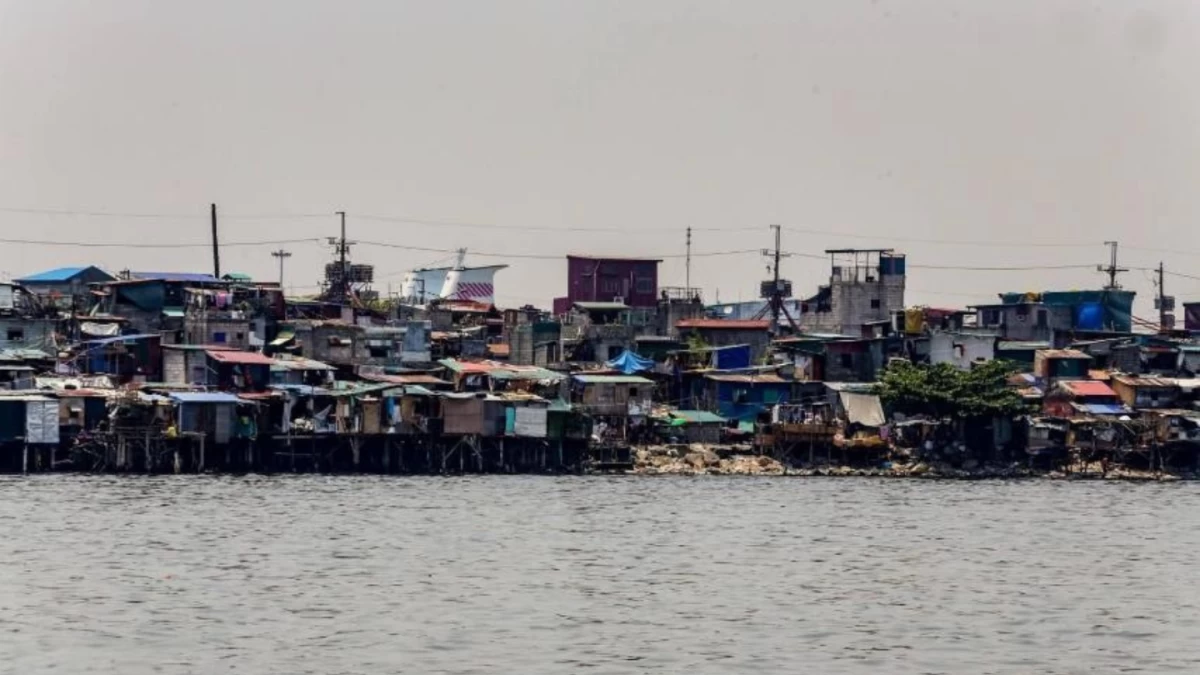
(Manila Bulletin file photo I Arnold Quizol)
The country risks pushing 1.3 million more people into poverty as an energy crisis and record-high fuel prices threaten to drive the national poverty rate to 14.4 percent, the state-run Philippine Institute for Development Studies (PIDS) warned.
Before the Middle East conflict triggered a national energy emergency in 2026, the government projected this rate would continue its decline from 15.5 percent in 2023, reaching a pre-shock baseline of 13.2 percent by 2025.
This projection, detailed in a policy note published on April 15, indicated that the crisis will primarily impact “households just above the poverty line” who are most vulnerable to consumer price swings.
“Being classified as lower middle income does not mean a household is secure,” PIDS senior research fellow Jose Ramon G. Albert, the author of the study, said in a virtual press briefing on Thursday, April 16.
“In fact, many middle-income households are still quite vulnerable, especially when there is only one income earner supporting the family. A health shock like hospitalization can quickly strain finances, and because the household is not classified as poor, access to support can be limited,” Albert further explained.
If tensions in the Middle East escalate or cause severe disruption, the Philippines risks drifting further from the single-digit poverty incidence goal that President Ferdinand Marcos Jr. aims to achieve by 2028.
This becomes even more concerning as the country transitions toward upper-middle-income status, where higher benchmarks—such as around ₱500 per person per day—would reveal that as many as three of five Filipinos could be considered poor by those standards, Albert said.
Filipinos have so far experienced a dual shock coming from external geopolitical tensions and recent peso depreciation, pushing domestic diesel prices to “an all-time high of ₱103–₱117 per liter.”
Albert noted that the burden of these costs is unevenly distributed. “The shock is deeply regressive: poor households lose 16.2 percent of their annual income in real purchasing power, compared with 3.4 percent for the richest households,” he said.
While all households feel the impact, “the poor are likely to become even poorer and bear the brunt through food more than transport expenses,” whereas higher-income households are generally on a more stable footing to absorb these shocks.
Under a severe disruption scenario, national poverty could climb to 16.3 percent, while the rural incidence could spike to 22.5 percent. Higher increases for people living in rural areas reflect a heavy reliance on fuel to sustain agriculture-based livelihoods.
“Agriculture remains most vulnerable,” Albert said, not only due to fuel costs but also persistent climate risks.
PIDS has advised against universal measures such as fuel excise tax cuts, with Albert arguing that “universal fuel subsidies can worsen inequity, delivering about four times more benefits in absolute peso terms to rich households than to poor households.”
Instead, the think tank advocates targeted cash transfers, which it calls “the most equitable and cost-effective response.” This intervention involves a single tranche of ₱6,000 per household, calibrated to compensate for the loss of purchasing power among poor families.
As low-income households tend to spend most of their money immediately on food and basic goods, the funds circulate more quickly through the domestic economy. Such spending could create a robust multiplier effect, generating up to ₱2.8 in economic output for every peso spent.
According to the think tank, the government must deploy these scalable responses through existing registries “before the shock fully manifests as deeper poverty.”
For Albert, the most urgent policy shift is to move beyond short-term aid and focus on building long-term resilience, including expanding social insurance for informal workers and setting up systems to identify at-risk households early.

Related Tags

Philippine Institute for Development Studies (PIDS) poverty poverty reduction Middle East Energy crisis
ADVERTISEMENT
.most-popular .layout-ratio{ padding-bottom: 79.13%; } @media (min-width: 768px) and (max-width: 1024px) { .widget-title { font-size: 15px !important; } }

{{ articles_filter_1561_widget.title }}

.most-popular .layout-ratio{ padding-bottom: 79.13%; } @media (min-width: 768px) and (max-width: 1024px) { .widget-title { font-size: 15px !important; } }

{{ articles_filter_1562_widget.title }}

.most-popular .layout-ratio{ padding-bottom: 79.13%; } @media (min-width: 768px) and (max-width: 1024px) { .widget-title { font-size: 15px !important; } }

{{ articles_filter_1563_widget.title }}

{{ articles_filter_1564_widget.title }}

.mb-article-details { position: relative; } .mb-article-details .article-body-preview, .mb-article-details .article-body-summary{ font-size: 17px; line-height: 30px; font-family: "Libre Caslon Text", serif; color: #000; } .mb-article-details .article-body-preview iframe , .mb-article-details .article-body-summary iframe{ width: 100%; margin: auto; } .read-more-background { background: linear-gradient(180deg, color(display-p3 1.000 1.000 1.000 / 0) 13.75%, color(display-p3 1.000 1.000 1.000 / 0.8) 30.79%, color(display-p3 1.000 1.000 1.000) 72.5%); position: absolute; height: 200px; width: 100%; bottom: 0; display: flex; justify-content: center; align-items: center; padding: 0; } .read-more-background a{ color: #000; } .read-more-btn { padding: 17px 45px; font-family: Inter; font-weight: 700; font-size: 18px; line-height: 16px; text-align: center; vertical-align: middle; border: 1px solid black; background-color: white; } .hidden { display: none; }
function initializeAllSwipers() { // Get all hidden inputs with cms_article_id document.querySelectorAll('[id^="cms_article_id_"]').forEach(function (input) { const cmsArticleId = input.value; const articleSelector = '#article-' + cmsArticleId + ' .body_images'; const swiperElement = document.querySelector(articleSelector); if (swiperElement && !swiperElement.classList.contains('swiper-initialized')) { new Swiper(articleSelector, { loop: true, pagination: false, navigation: { nextEl: '#article-' + cmsArticleId + ' .swiper-button-next', prevEl: '#article-' + cmsArticleId + ' .swiper-button-prev', }, }); } }); } setTimeout(initializeAllSwipers, 3000); const intersectionObserver = new IntersectionObserver( (entries) => { entries.forEach((entry) => { if (entry.isIntersecting) { const newUrl = entry.target.getAttribute("data-url"); if (newUrl) { history.pushState(null, null, newUrl); let article = entry.target; // Extract metadata const author = article.querySelector('.author-section').textContent.replace('By', '').trim(); const section = article.querySelector('.section-info ').textContent.replace(' ', ' '); const title = article.querySelector('.article-title h1').textContent; // Parse URL for Chartbeat path format const parsedUrl = new URL(newUrl, window.location.origin); const cleanUrl = parsedUrl.host + parsedUrl.pathname; // Update Chartbeat configuration if (typeof window._sf_async_config !== 'undefined') { window._sf_async_config.path = cleanUrl; window._sf_async_config.sections = section; window._sf_async_config.authors = author; } // Track virtual page view with Chartbeat if (typeof pSUPERFLY !== 'undefined' && typeof pSUPERFLY.virtualPage === 'function') { try { pSUPERFLY.virtualPage({ path: cleanUrl, title: title, sections: section, authors: author }); } catch (error) { console.error('ping error', error); } } // Optional: Update document title if (title && title !== document.title) { document.title = title; } } } }); }, { threshold: 0.1 } ); function showArticleBody(button) { const article = button.closest("article"); const summary = article.querySelector(".article-body-summary"); const body = article.querySelector(".article-body-preview"); const readMoreSection = article.querySelector(".read-more-background"); // Hide summary and read-more section summary.style.display = "none"; readMoreSection.style.display = "none"; // Show the full article body body.classList.remove("hidden"); } document.addEventListener("DOMContentLoaded", () => { let loadCount = 0; // Track how many times articles are loaded const offset = [1, 2, 3, 4, 5, 6, 7, 8, 9, 10]; // Offset values const currentUrl = window.location.pathname.substring(1); let isLoading = false; // Prevent multiple calls if (!currentUrl) { console.log("Current URL is invalid."); return; } const sentinel = document.getElementById("load-more-sentinel"); if (!sentinel) { console.log("Sentinel element not found."); return; } function isSentinelVisible() { const rect = sentinel.getBoundingClientRect(); return ( rect.top < window.innerHeight && rect.bottom >= 0 ); } function onScroll() { if (isLoading) return; if (isSentinelVisible()) { if (loadCount >= offset.length) { console.log("Maximum load attempts reached."); window.removeEventListener("scroll", onScroll); return; } isLoading = true; const currentOffset = offset[loadCount]; window.loadMoreItems().then(() => { let article = document.querySelector('#widget_1690 > div:nth-last-of-type(2) article'); intersectionObserver.observe(article) loadCount++; }).catch(error => { console.error("Error loading more items:", error); }).finally(() => { isLoading = false; }); } } window.addEventListener("scroll", onScroll); });

Sign up by email to receive news.