






Manila Bulletin
 Philippines
National
'Sabotahe para maubos ang isda at bahura?' Cyanide bottles from Chinese boats found near Ayungin Shoal, says NSC
Philippines
National
'Sabotahe para maubos ang isda at bahura?' Cyanide bottles from Chinese boats found near Ayungin Shoal, says NSC
Philippines
National
'Sabotahe para maubos ang isda at bahura?' Cyanide bottles from Chinese boats found near Ayungin Shoal, says NSC
'Sabotahe para maubos ang isda at bahura?' Cyanide bottles from Chinese boats found near Ayungin Shoal, says NSC
Published Apr 13, 2026 11:28 am


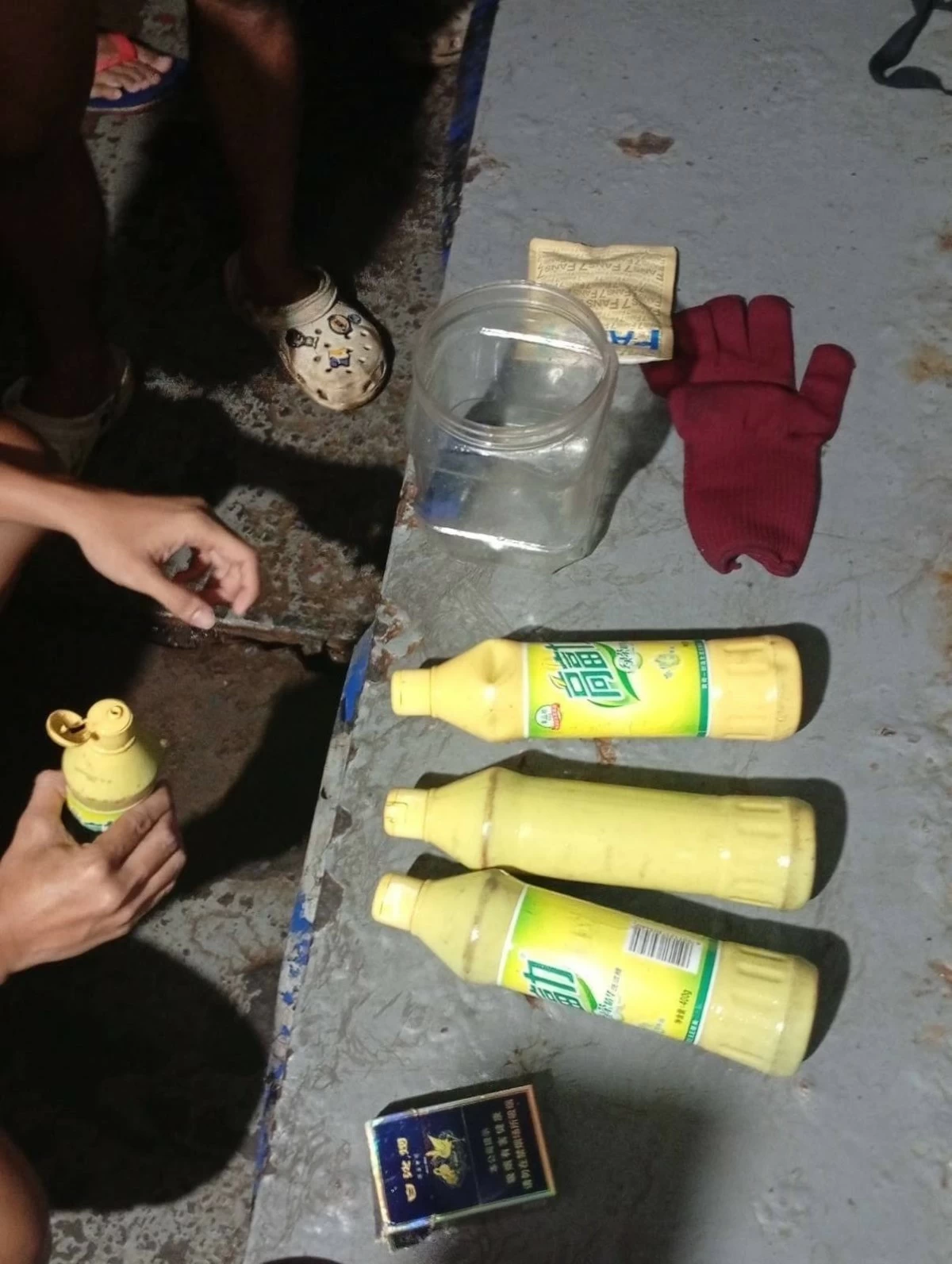
Authorities confiscate suspected cyanide-based chemicals, gloves, and assorted fishing paraphernalia from Chinese fishing boats operating near Ayungin Shoal in the West Philippine Sea on Oct. 24, 2025. (Photo: Armed Forces of the Philippines)
Several bottles recovered from traditional Chinese boats near Ayungin (Second Thomas) Shoal in the West Philippine Sea (WPS) last year were confirmed to have contained cyanide, a highly toxic chemical compound, raising fears of possible sabotage targeting fish supplies and coral reef in the area, the National Security Council (NSC) announced on Monday, April 13.
NSC spokesperson Assistant Director General Cornelio Valencia Jr. said Philippine Navy (PN) forces recovered in February 2025 and on Oct. 24, 2025 a number of yellow bottles from Chinese “sampans” operating near the BRP Sierra Madre (LS 57), which is grounded on Ayungin Shoal.
“The National Security Council hereby announces that laboratory testing has confirmed that the yellow bottles recovered by the Philippine Navy from Chinese sampans operating in the immediate vicinity of BRP Sierra Madre (LS 57) at Ayungin Shoal tested positive for the presence of cyanide,” Valencia said.
According to the NSC, the confirmation was done after a laboratory analysis performed by the National Bureau of Investigation (NBI)’s Forensic and Scientific Research Service.
The NSC raised the alarm over the intentional use of the chemical in the WPS as it believes the substance was intended to destroy the local ecosystem.
“We wish to underscore that the use of cyanide in Ayungin Shoal is a form of sabotage that seeks to kill local fish populations, depriving Navy personnel of a vital food source,” Valencia noted.
Aside from this, he warned of wider consequences if the practice continues since cyanide can also damage the reef, which can ultimately compromise BRP Sierra Madre’s structural foundation.
“If the reef is severely damaged, it not only threatens LS 57’s stability, it also allows Beijing to fabricate an environmental crisis which it can then blame on the Philippines,” Valencia said. “It has in the past accused LS 57 of polluting the shoal in an effort to distract from its own illegal activities.”
The BRP Sierra Madre is a commissioned PN ship that was intentionally grounded on Ayungin Shoal in 1999. It serves as a permanent station for a small contingent of Marines and these troops rely on the surrounding waters for sustenance.
Beijing has long demanded the ship’s removal as it frequently deploys coast guard and maritime militia vessels to block resupply missions delivering food and water to the Filipino troops.
Valencia reiterated that Ayungin Shoal lies well within the Philippines’ EEZ, “where the country exercises sovereign rights and jurisdiction.”
Ayungin Shoal is located approximately 105 nautical miles from Palawan and falls within the Philippines’ 200-nautical-mile exclusive economic zone (EEZ). The 2016 Arbitral Ruling invalidated China’s expansive claims in the region but Chinese vessels continue to swarm the area.
“The operation of Chinese vessels engaging in activities involving hazardous substances in this area is both irresponsible and unacceptable,” Valencia said.
The council said it has directed the Armed Forces of the Philippines (AFP), Philippine Coast Guard (PCG), and all relevant agencies to heighten maritime domain awareness, strengthen patrols, and take all necessary measures to prevent further environmental harm and safeguard national security interests in the area.
“Let it be clear: the Philippines will not tolerate any act—whether by state or non-state actors—that endangers its personnel or the marine environment, violates its sovereign rights, or undermines peace and stability in the West Philippine Sea,” Valencia said.