






Manila Bulletin
 Philippines
National
AFP stops Chinese boats allegedly engaged in cyanide fishing near Ayungin Shoal
Philippines
National
AFP stops Chinese boats allegedly engaged in cyanide fishing near Ayungin Shoal
Philippines
National
AFP stops Chinese boats allegedly engaged in cyanide fishing near Ayungin Shoal
AFP stops Chinese boats allegedly engaged in cyanide fishing near Ayungin Shoal
Published Oct 27, 2025 03:09 pm


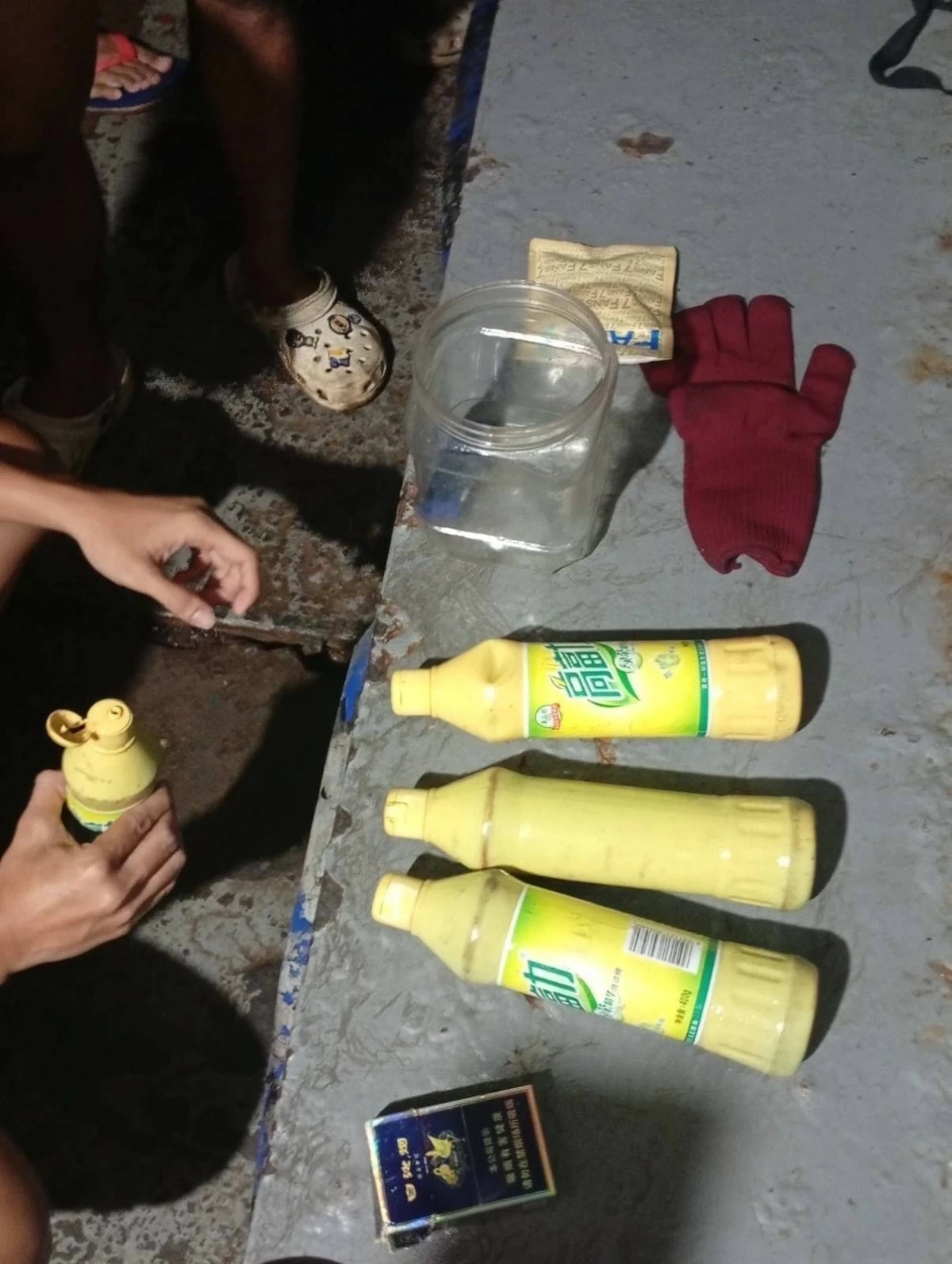
Authorities confiscate suspected cyanide-based chemicals, gloves, and assorted fishing paraphernalia from Chinese fishing boats operating near Ayungin Shoal in the West Philippine Sea on Oct. 24, 2025. (Photo: Armed Forces of the Philippines)
The Armed Forces of the Philippines (AFP) said on Monday, Oct. 27, that it has intercepted Chinese fishing vessels allegedly engaged in illegal fishing activities near Ayungin (Second Thomas) Shoal in the West Philippine Sea (WPS).
The AFP said personnel of the Western Command (Wescom) based in Palawan acted swiftly upon spotting the unauthorized boats conducting suspected cyanide fishing, a highly destructive method that severely damages coral reefs and marine ecosystems, near Ayungin Shoal on Oct. 24.
“In adherence to established protocols, AFP personnel promptly escorted the unauthorized fishing boats out of the area and confiscated bottles containing suspected cyanide chemicals reportedly used for destructive fishing,” the military said.
The AFP said the prompt action of its personnel prevented further damage to coral reefs and marine life in the area.
Ayungin Shoal has been a flashpoint in the long-running maritime dispute between the Philippines and China.
The shoal lies about 105 nautical miles off Palawan, well within the Philippines’ 200-nautical-mile exclusive economic zone (EEZ), but it is also being claimed by China under its sweeping “nine-dash line” assertion which covers almost the entire South China Sea.
In 2016, the Permanent Court of Arbitration in The Hague invalidated China’s expansive claims, ruling that its nine-dash line had no basis in international law. The tribunal also affirmed that features such as Ayungin Shoal lie within the Philippines’ EEZ.
Despite the ruling, China continued to ignore the decision and maintain a heavy maritime presence in contested areas, often through coast guard and militia vessels that shadow or block Philippine patrols.
Environmental concerns have become a major aspect of the maritime dispute. Over the years, Philippine authorities and independent scientists have reported massive damage to coral reefs in the WPS due to illegal fishing, clam harvesting, and dredging activities attributed to Chinese operations.
Such activities have resulted in the destruction of thousands of hectares of coral ecosystems and the loss of vital fish stocks.
“The Armed Forces of the Philippines reiterates that its continuous presence and patrols in the West Philippine Sea are lawful and primarily focused on ensuring the safety of personnel, upholding territorial integrity, and advancing the protection and preservation of the marine environment within the country’s maritime domain,” the AFP said.