ADVERTISEMENT

Barclays flags risks to Philippine semiconductor supply chains amid war

Published Apr 13, 2026 03:11 pm
(Unsplash)
(Unsplash)

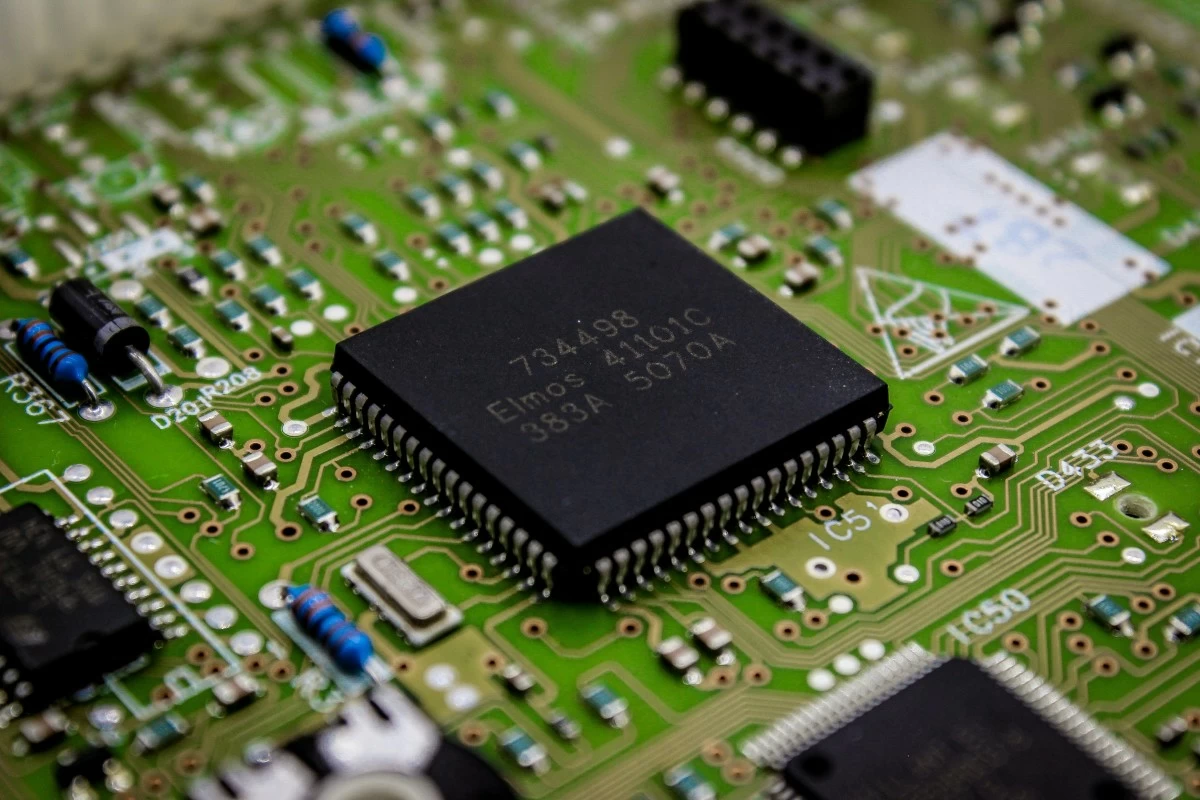
The collapse of peace talks between the United States (US) and Iran over the weekend could hurt semiconductor manufacturers in Asia, including the Philippines, according to British banking giant Barclays.

“A prolonged energy disruption could lead to a tail-risk scenario that hits semiconductor output, costs, or both—turbulence in the [South] Korean or Taiwanese upstream would likely cascade quickly into the Southeast Asian downstream of the global semiconductor supply chain, including in Malaysia, Singapore, and the Philippines,” Asia-based Barclays economists Brian Tan, Bum Ki Son, Aastha Gudwani, and Amruta Ghare said in an April 13 report obtained by Manila Bulletin.

Manila Bulletin reported earlier that exporters are bracing for the impact of soaring jet fuel prices, especially on electronics—the country’s top export commodity, which is mostly transported by air to overseas markets.

In particular, Semiconductor and Electronics Industries in the Philippines Foundation Inc. (SEIPI) president Danilo Lachica told Manila Bulletin last month that escalating conflict in the Middle East could disrupt cargo flights, threatening semiconductor exports that rely on just-in-time (JIT) delivery.

Export industry leaders warn that grounded planes could break global supply chains, halt overseas production, and lead to significant revenue losses.

Trade Secretary Cristina Roque told Manila Bulletin early this month that the country’s merchandise exports may post flat growth this year, slowing down after last year’s record-high performance, as the ongoing war drives up fuel costs and disrupts supply chains.

Based on Barclays’ latest assessment, emerging Asia, including the Philippines, “is unlikely to escape at least some lasting economic drags from persistent supply constraints,” as the bank cited recent news headlines pointing to limited visibility on a near-term resolution to the Middle East conflict, alongside mounting signs of strain in global energy supplies.

“We think the economic scarring from the attacks on energy facilities and ports in Iran and other Gulf nations could continue to keep supply under stress in emerging Asia,” Barclays said.

As such, Barclays maintained that the Bangko Sentral ng Pilipinas (BSP) “is likely to stay on hold when it releases its policy statement on April 23.”

“It is unclear if the [US-Iran] peace talks would have resulted in a resolution by then. Even if diplomacy succeeds, we doubt the central bank would be able to quickly shift back to rate cuts while the CPI [consumer price index] inflation reading—which surged to 4.1 percent year-on-year in March—remains in breach of the BSP’s two- to four-percent target range,” Barclays explained.

“Conversely, disappointment—implying higher global commodity prices for longer—may still not be enough to tilt the BSP into immediate rate hikes, given seeming resistance from the more dovish members of the Monetary Board (MB) to tighten in the off-cycle meeting held on March 26,” it added.

As Manila Bulletin reported last week, Barclays expects the BSP to keep key interest rates, including the 4.25-percent policy rate, steady at this month’s policy meeting before possibly hiking in June.

After an April pause and a 25-basis-point (bp) hike on June 18, Barclays sees two BSP rate cuts in early 2027.

Meanwhile, Deutsche Bank Research economist Junjie Huang noted in an April 10 report that in the Philippines, the March oil shock transmitted faster and more severely than expected, with fuel inflation surging nearly 40 percent month-on-month.
With faster and more severe-than-expected first-round transmission of higher oil prices to the domestic economy, proposed fuel excise tax cuts are expected to take at least a month or longer to be felt due to existing excise-paid inventories, while second-round spillover effects on inflation are likely to emerge in the near term, similar to previous oil shocks in the Philippines, Deutsche Bank Research said.

Related Tags

Barclays Bangko Sentral ng Pilipinas (BSP) Monetary Board (MB) consumer price index (CPI) inflation rate interest rates Semiconductor and Electronics Industries in the Philippines Foundation Inc. (SEIPI) Cristina Roque Deutsche Bank Research Middle East war
ADVERTISEMENT
.most-popular .layout-ratio{ padding-bottom: 79.13%; } @media (min-width: 768px) and (max-width: 1024px) { .widget-title { font-size: 15px !important; } }

{{ articles_filter_1561_widget.title }}

.most-popular .layout-ratio{ padding-bottom: 79.13%; } @media (min-width: 768px) and (max-width: 1024px) { .widget-title { font-size: 15px !important; } }

{{ articles_filter_1562_widget.title }}

.most-popular .layout-ratio{ padding-bottom: 79.13%; } @media (min-width: 768px) and (max-width: 1024px) { .widget-title { font-size: 15px !important; } }

{{ articles_filter_1563_widget.title }}

{{ articles_filter_1564_widget.title }}

.mb-article-details { position: relative; } .mb-article-details .article-body-preview, .mb-article-details .article-body-summary{ font-size: 17px; line-height: 30px; font-family: "Libre Caslon Text", serif; color: #000; } .mb-article-details .article-body-preview iframe , .mb-article-details .article-body-summary iframe{ width: 100%; margin: auto; } .read-more-background { background: linear-gradient(180deg, color(display-p3 1.000 1.000 1.000 / 0) 13.75%, color(display-p3 1.000 1.000 1.000 / 0.8) 30.79%, color(display-p3 1.000 1.000 1.000) 72.5%); position: absolute; height: 200px; width: 100%; bottom: 0; display: flex; justify-content: center; align-items: center; padding: 0; } .read-more-background a{ color: #000; } .read-more-btn { padding: 17px 45px; font-family: Inter; font-weight: 700; font-size: 18px; line-height: 16px; text-align: center; vertical-align: middle; border: 1px solid black; background-color: white; } .hidden { display: none; }
function initializeAllSwipers() { // Get all hidden inputs with cms_article_id document.querySelectorAll('[id^="cms_article_id_"]').forEach(function (input) { const cmsArticleId = input.value; const articleSelector = '#article-' + cmsArticleId + ' .body_images'; const swiperElement = document.querySelector(articleSelector); if (swiperElement && !swiperElement.classList.contains('swiper-initialized')) { new Swiper(articleSelector, { loop: true, pagination: false, navigation: { nextEl: '#article-' + cmsArticleId + ' .swiper-button-next', prevEl: '#article-' + cmsArticleId + ' .swiper-button-prev', }, }); } }); } setTimeout(initializeAllSwipers, 3000); const intersectionObserver = new IntersectionObserver( (entries) => { entries.forEach((entry) => { if (entry.isIntersecting) { const newUrl = entry.target.getAttribute("data-url"); if (newUrl) { history.pushState(null, null, newUrl); let article = entry.target; // Extract metadata const author = article.querySelector('.author-section').textContent.replace('By', '').trim(); const section = article.querySelector('.section-info ').textContent.replace(' ', ' '); const title = article.querySelector('.article-title h1').textContent; // Parse URL for Chartbeat path format const parsedUrl = new URL(newUrl, window.location.origin); const cleanUrl = parsedUrl.host + parsedUrl.pathname; // Update Chartbeat configuration if (typeof window._sf_async_config !== 'undefined') { window._sf_async_config.path = cleanUrl; window._sf_async_config.sections = section; window._sf_async_config.authors = author; } // Track virtual page view with Chartbeat if (typeof pSUPERFLY !== 'undefined' && typeof pSUPERFLY.virtualPage === 'function') { try { pSUPERFLY.virtualPage({ path: cleanUrl, title: title, sections: section, authors: author }); } catch (error) { console.error('ping error', error); } } // Optional: Update document title if (title && title !== document.title) { document.title = title; } } } }); }, { threshold: 0.1 } ); function showArticleBody(button) { const article = button.closest("article"); const summary = article.querySelector(".article-body-summary"); const body = article.querySelector(".article-body-preview"); const readMoreSection = article.querySelector(".read-more-background"); // Hide summary and read-more section summary.style.display = "none"; readMoreSection.style.display = "none"; // Show the full article body body.classList.remove("hidden"); } document.addEventListener("DOMContentLoaded", () => { let loadCount = 0; // Track how many times articles are loaded const offset = [1, 2, 3, 4, 5, 6, 7, 8, 9, 10]; // Offset values const currentUrl = window.location.pathname.substring(1); let isLoading = false; // Prevent multiple calls if (!currentUrl) { console.log("Current URL is invalid."); return; } const sentinel = document.getElementById("load-more-sentinel"); if (!sentinel) { console.log("Sentinel element not found."); return; } function isSentinelVisible() { const rect = sentinel.getBoundingClientRect(); return ( rect.top < window.innerHeight && rect.bottom >= 0 ); } function onScroll() { if (isLoading) return; if (isSentinelVisible()) { if (loadCount >= offset.length) { console.log("Maximum load attempts reached."); window.removeEventListener("scroll", onScroll); return; } isLoading = true; const currentOffset = offset[loadCount]; window.loadMoreItems().then(() => { let article = document.querySelector('#widget_1690 > div:nth-last-of-type(2) article'); intersectionObserver.observe(article) loadCount++; }).catch(error => { console.error("Error loading more items:", error); }).finally(() => { isLoading = false; }); } } window.addEventListener("scroll", onScroll); });

Sign up by email to receive news.